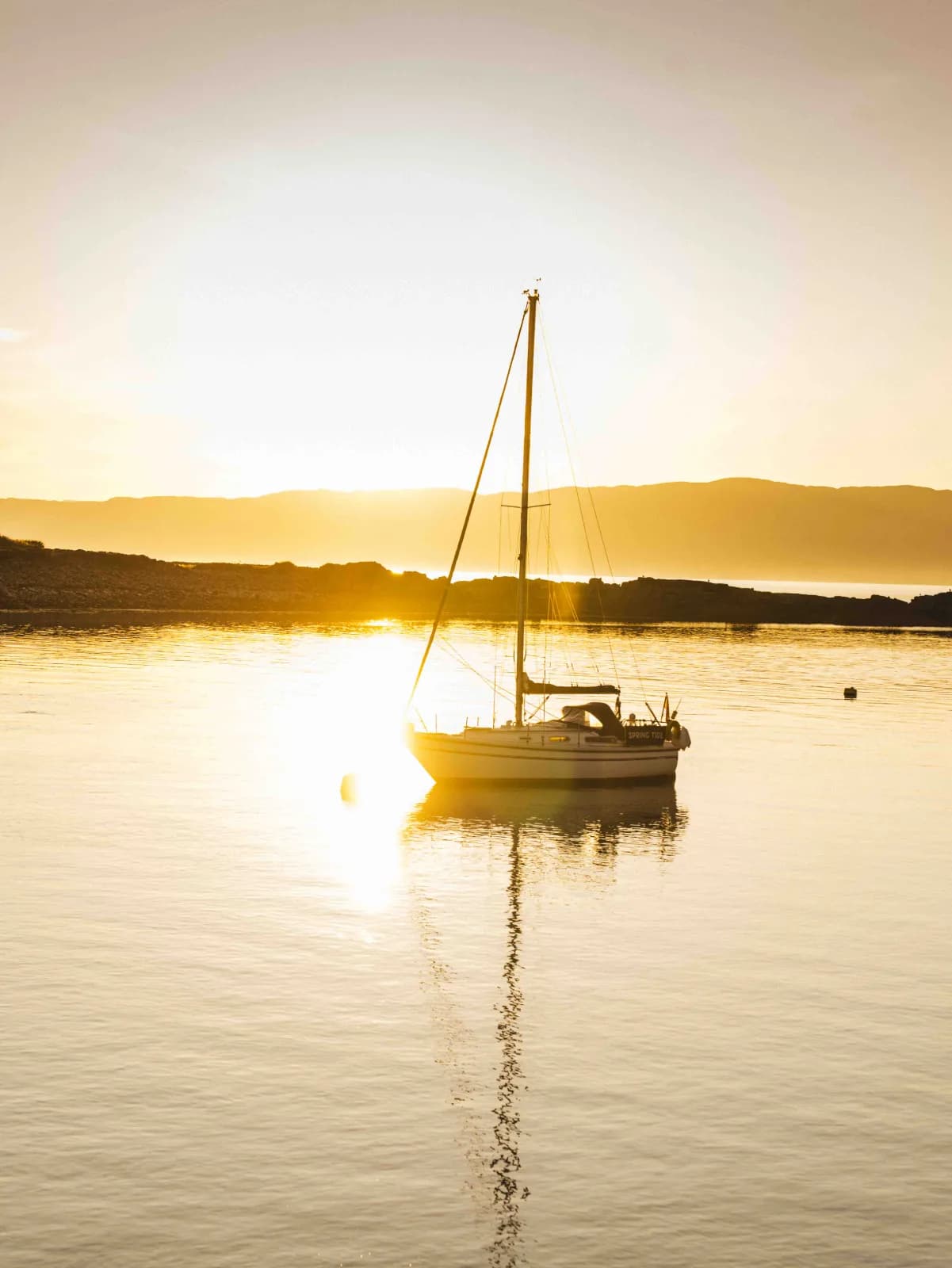
For some time now it has seemed to me that the two questions we should ask of any strong landscape are these: firstly, what do I know when I am in this place that I can know nowhere else? And then, vainly, what does this place know of me that I cannot know of myself?
Reaching the Studio
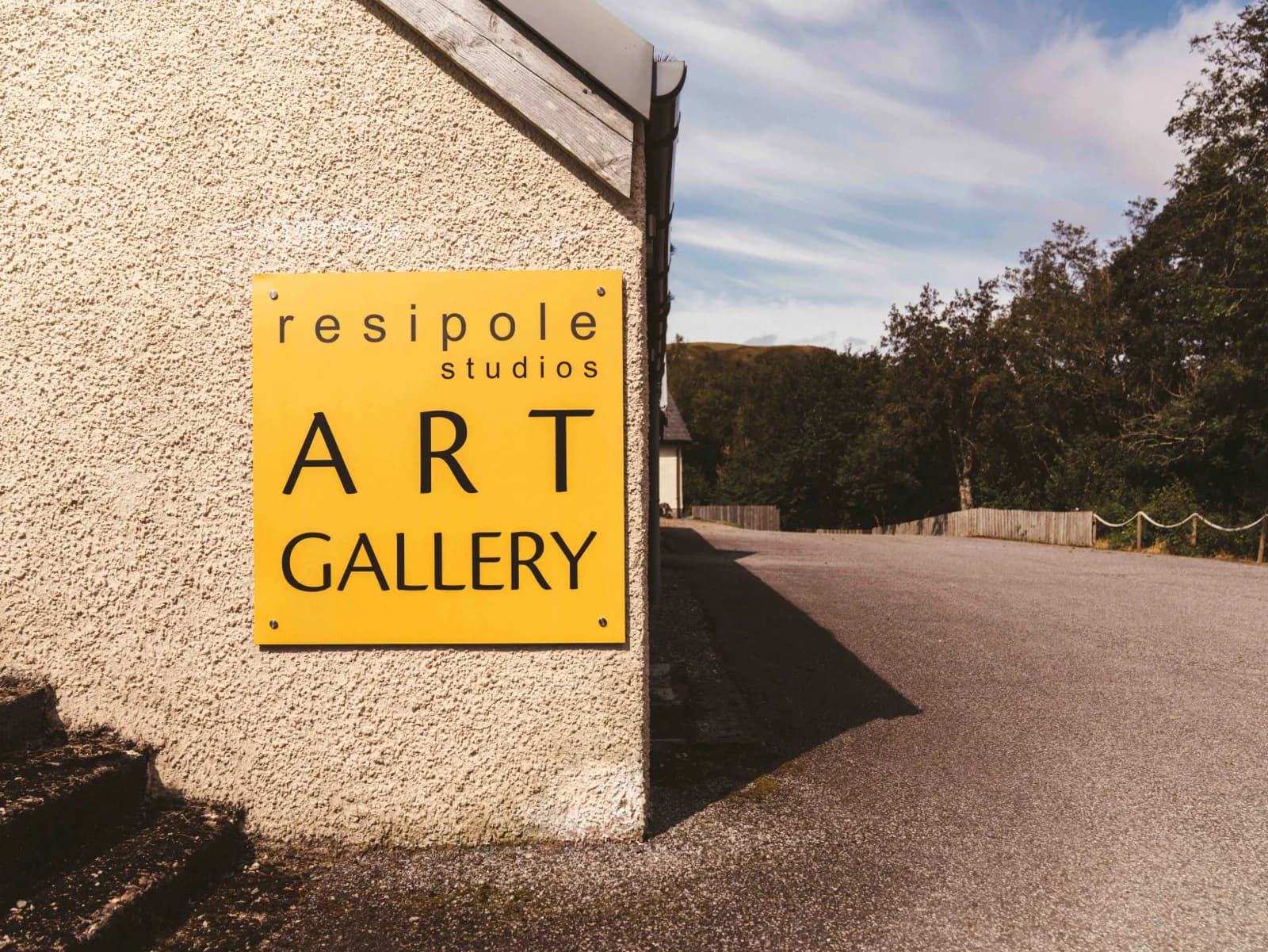
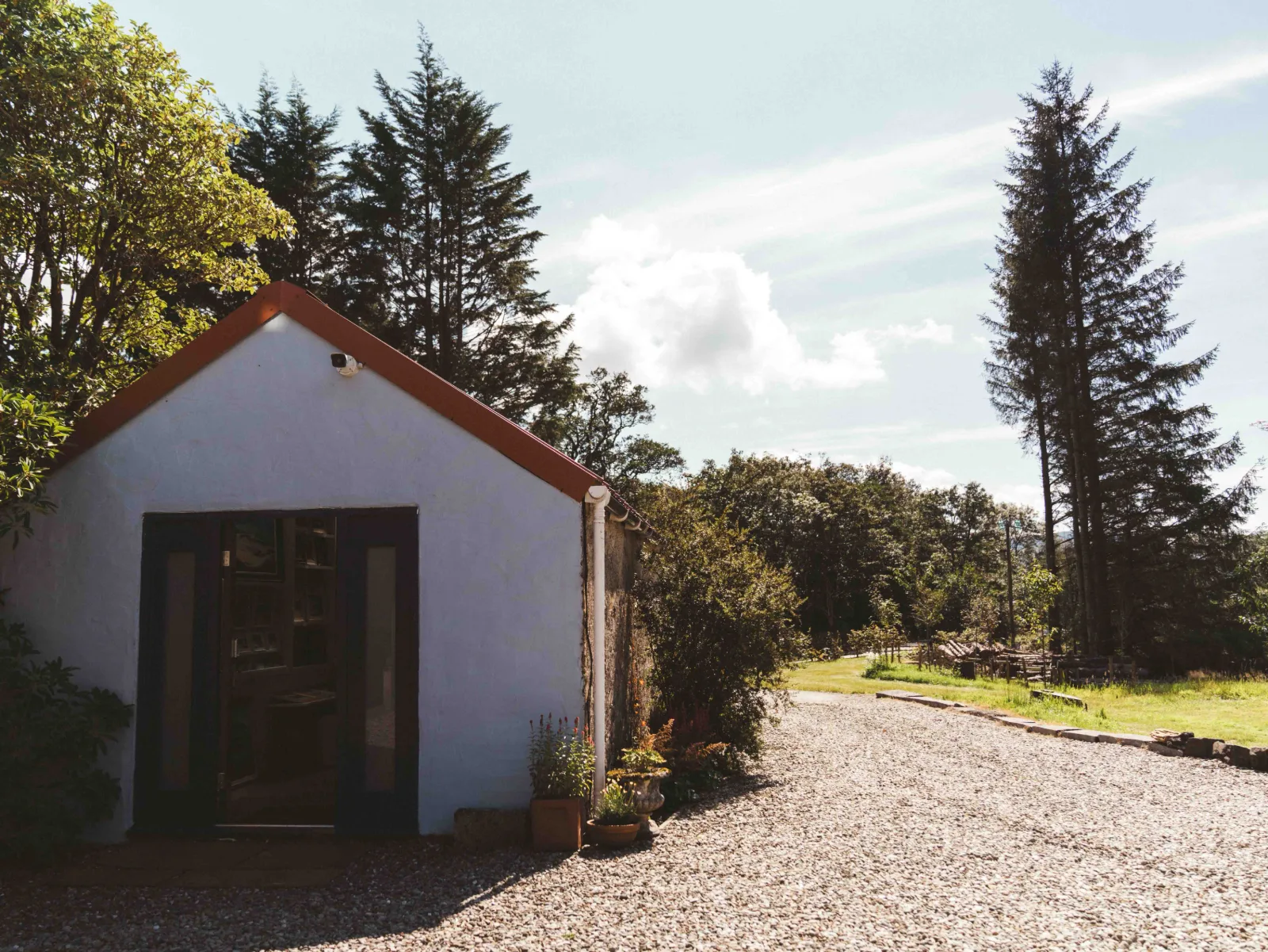
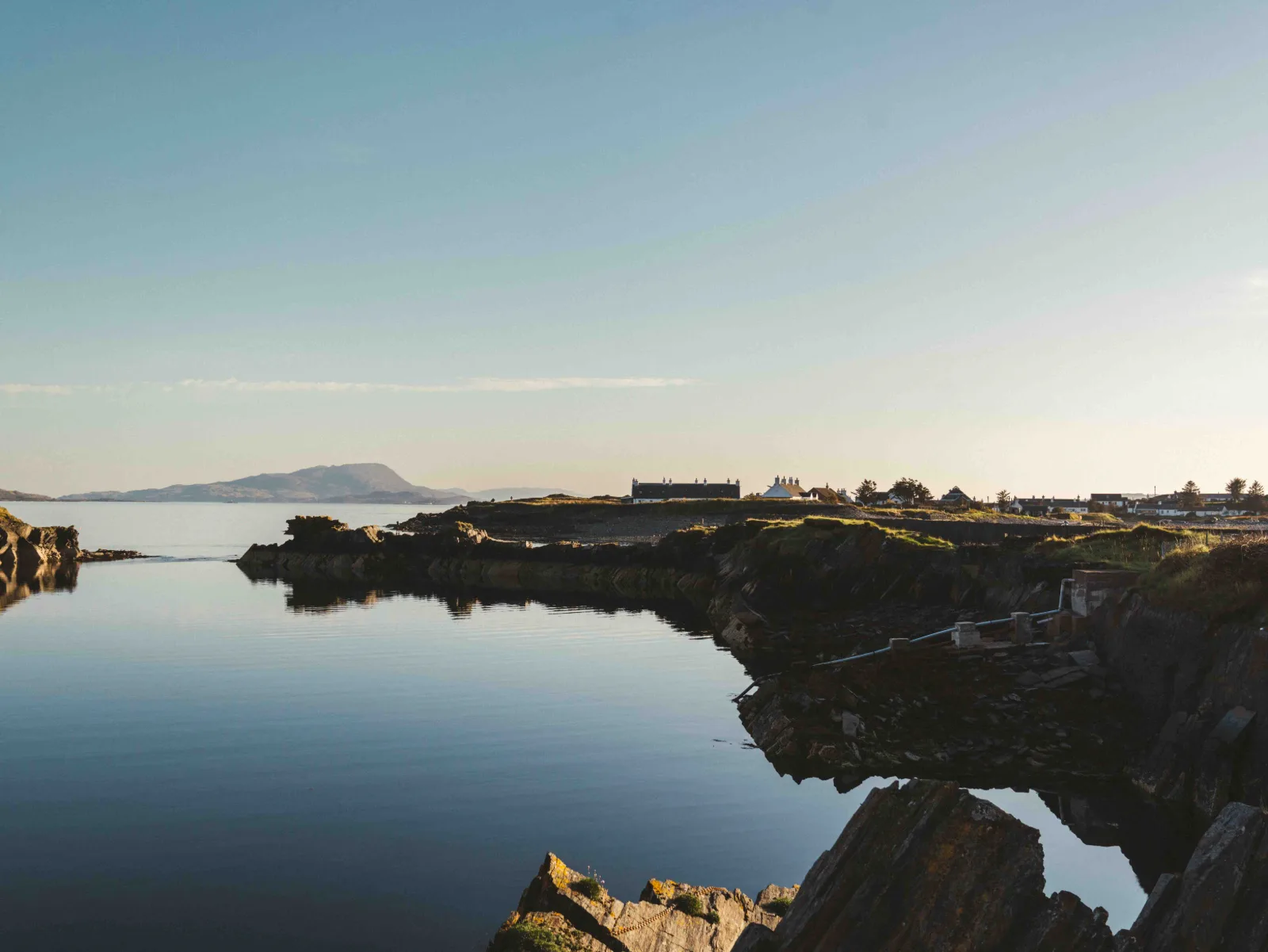
The studio is not immediately visible.
In Argyll, reaching an artist's workspace is a process of approach: a slow movement through space where perception begins to shift before anything is seen. The road narrows. The horizon opens. The landscape dictates the rhythm of looking.
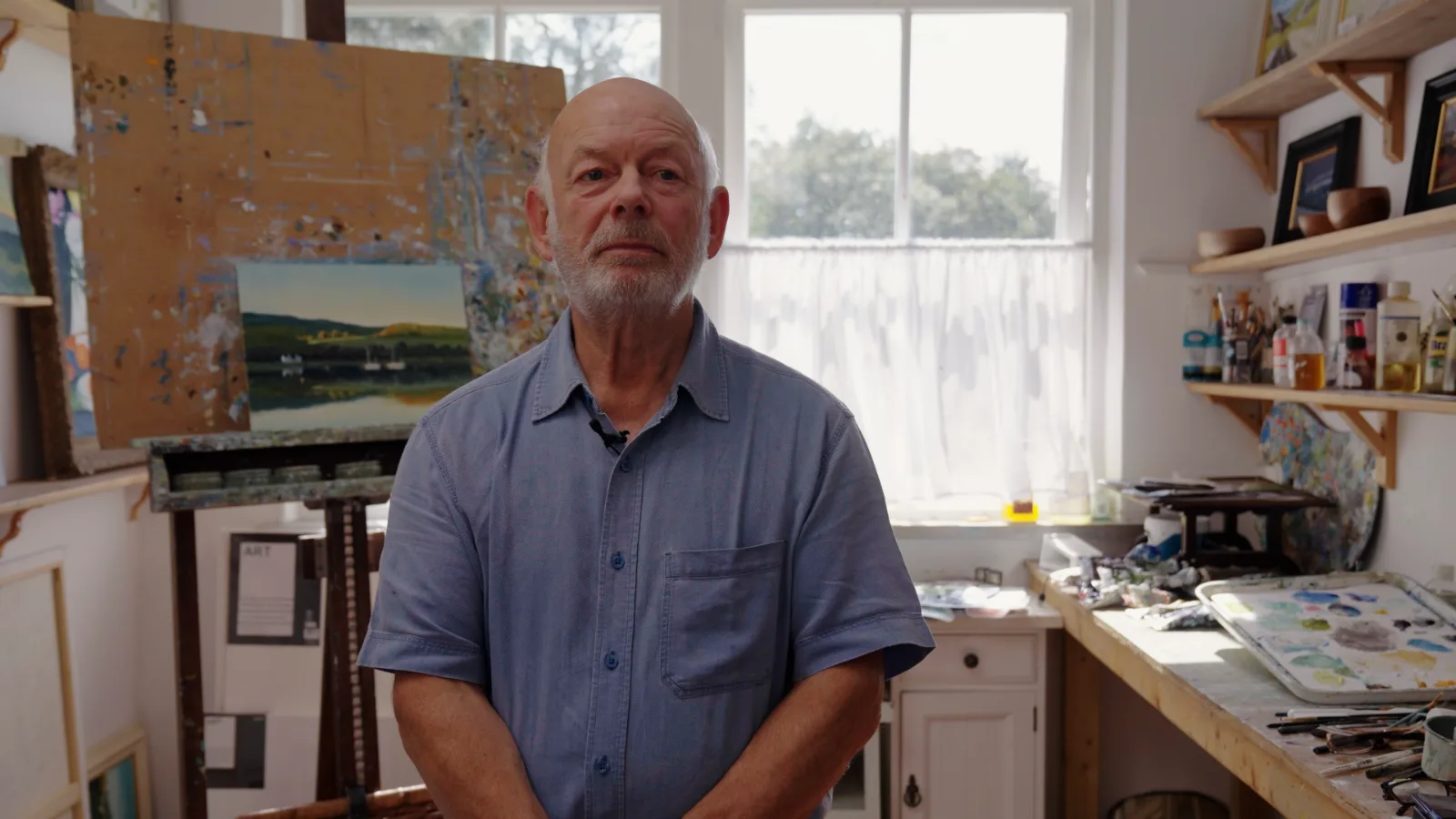
This is where Rory Gibson works. And arriving here, surrounded by the same coastal light that fills his paintings, it becomes clear that his work does not represent the landscape. It emerges from it. Each painting carries the imprint of a place whose identity is both subtle and deeply rooted, giving his work a sense of breath, memory and continuity.
A Practice Shaped by Time
Gibson's journey into painting began later in life. He started at sixty, after decades spent running businesses in Oban: a gallery, a framing workshop, a delicatessen with Italian products, a restaurant. A life built through making, constructing, managing. Painting arrived when time became available.
"I started when I was just over 60," he says. "I gave up my day job and started to paint full time."
Before painting, there were other lives. After painting, there was only this. And Gibson is clear about what made the difference.
"Painting, you really do need time. That's the one element you need. You need to have the time to devote to it every day."
This relationship with time remains embedded in his work. There is no urgency, no imposed structure. Only a daily return to the act of seeing. The practice did not arrive through training or formal study. Gibson is self-taught, and says so with the quiet confidence of someone who has spent twelve years proving that the eye and the hand can learn together, given patience.
Painting from Within the Landscape
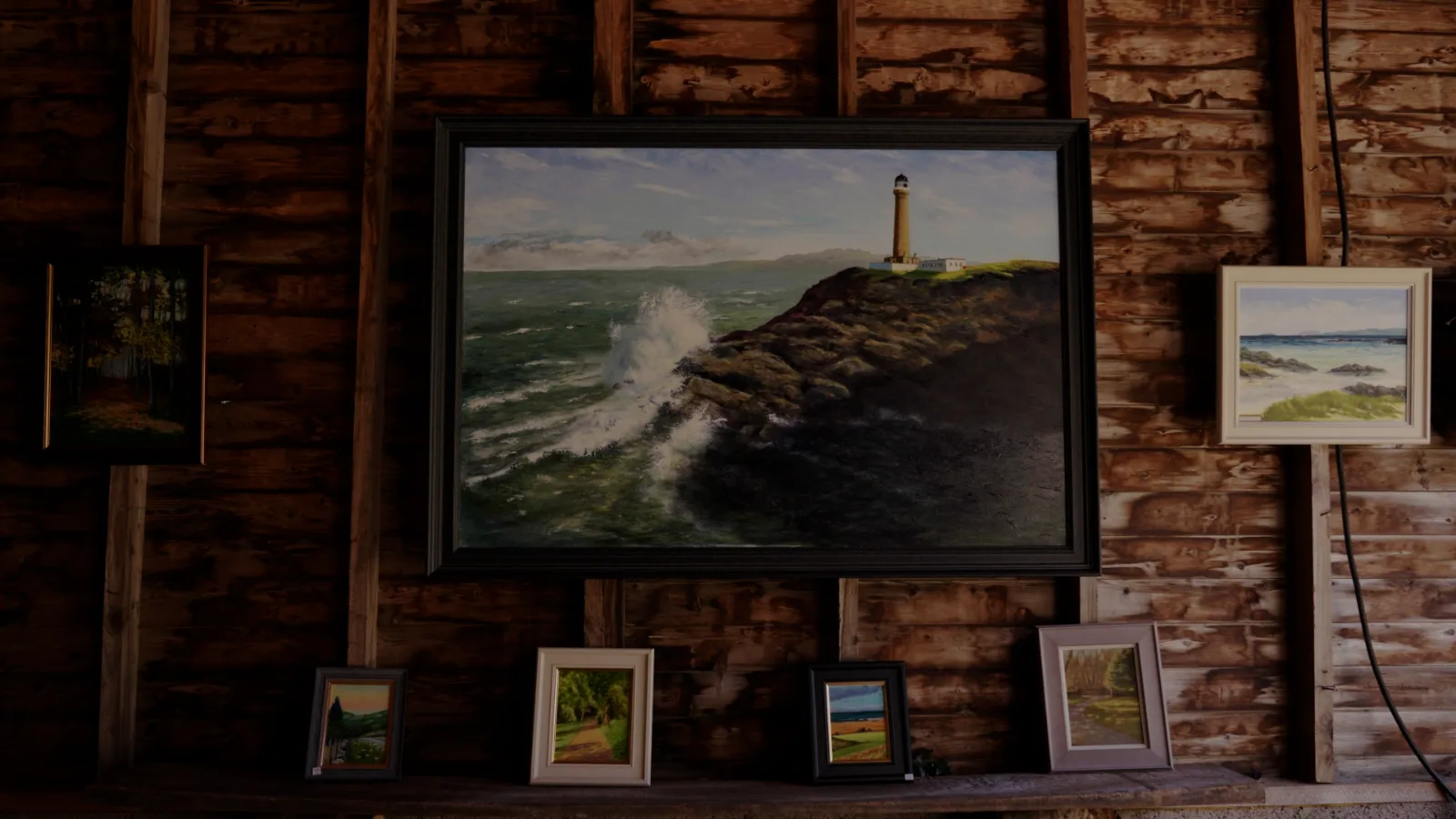
Gibson paints what he encounters. More precisely, he paints what he chooses to encounter.
"Everything I paint is what I see. I travel to all the islands of the west coast, with my bicycle, my wife and her bicycle, and I paint the scenes from all the islands."
Movement is central to his practice. Travelling across the west coast of Scotland, often by bicycle, is already part of the painting. Reaching a place, arriving at a specific condition of light: these are decisions, not accidents.
"I always choose a day like today. The sun shining. So all my paintings have got sun in them."
Light, in Gibson's work, is intentional. His paintings of Argyll's coastline, its beaches and islands, are luminous because he selects the conditions in which he works. He waits for the right morning. He travels to the right shore. The painting begins before the brush touches the canvas, in the act of choosing where and when to look.
This is a practice that requires an intimate knowledge of place. Gibson knows which beaches catch the early light, which islands reveal their colour at low tide, which paths lead to the views that hold still long enough to be painted. The landscape is his studio, and the studio has no walls.
Spontaneity and Gesture
And yet, once the decision to paint has been made, control gives way.
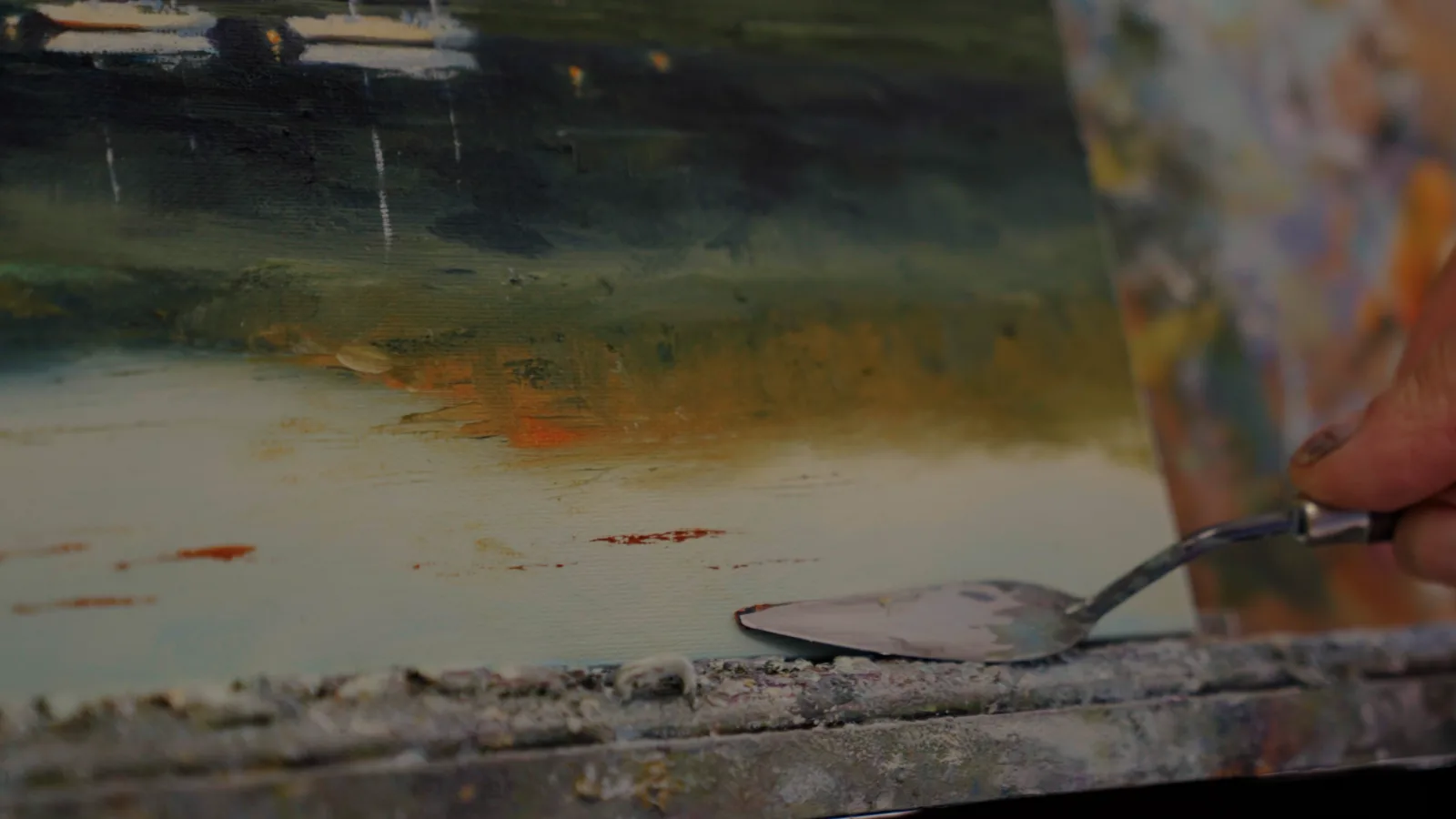
"I won't know until I go into the gallery in the morning what I'm going to be doing. I start painting, and from that moment on it's very spontaneous."
Here a second dimension of Gibson's practice reveals itself. On one side, the landscape: observed, travelled, selected with care. On the other, the painting itself: unfolding in real time, following the hand more than the plan.
"If I'm successful, the painting will be finished in under a day."
The work exists in this tension: between the long time of the journey and the immediacy of the gesture. Days of cycling, hours of watching, weeks of returning to the same coastline. Then a single morning of painting, fast and instinctive, where everything that has been absorbed finds its way onto the surface.
Gibson paints in oils, on canvas or prepared board. He prefers large formats, where the brush can move freely. "The big ones, I'm much freer. I can experiment a lot more on something huge rather than something very small, which you're a bit restricted with." Scale, for him, is liberation. The larger the surface, the closer the painting comes to the openness of the landscape itself.
Open Studios: Making Process Visible
Within the Open Studios programme, coordinated annually by Artmap Argyll, this relationship between painter and place becomes accessible. The next edition runs from 21 to 31 August 2026.
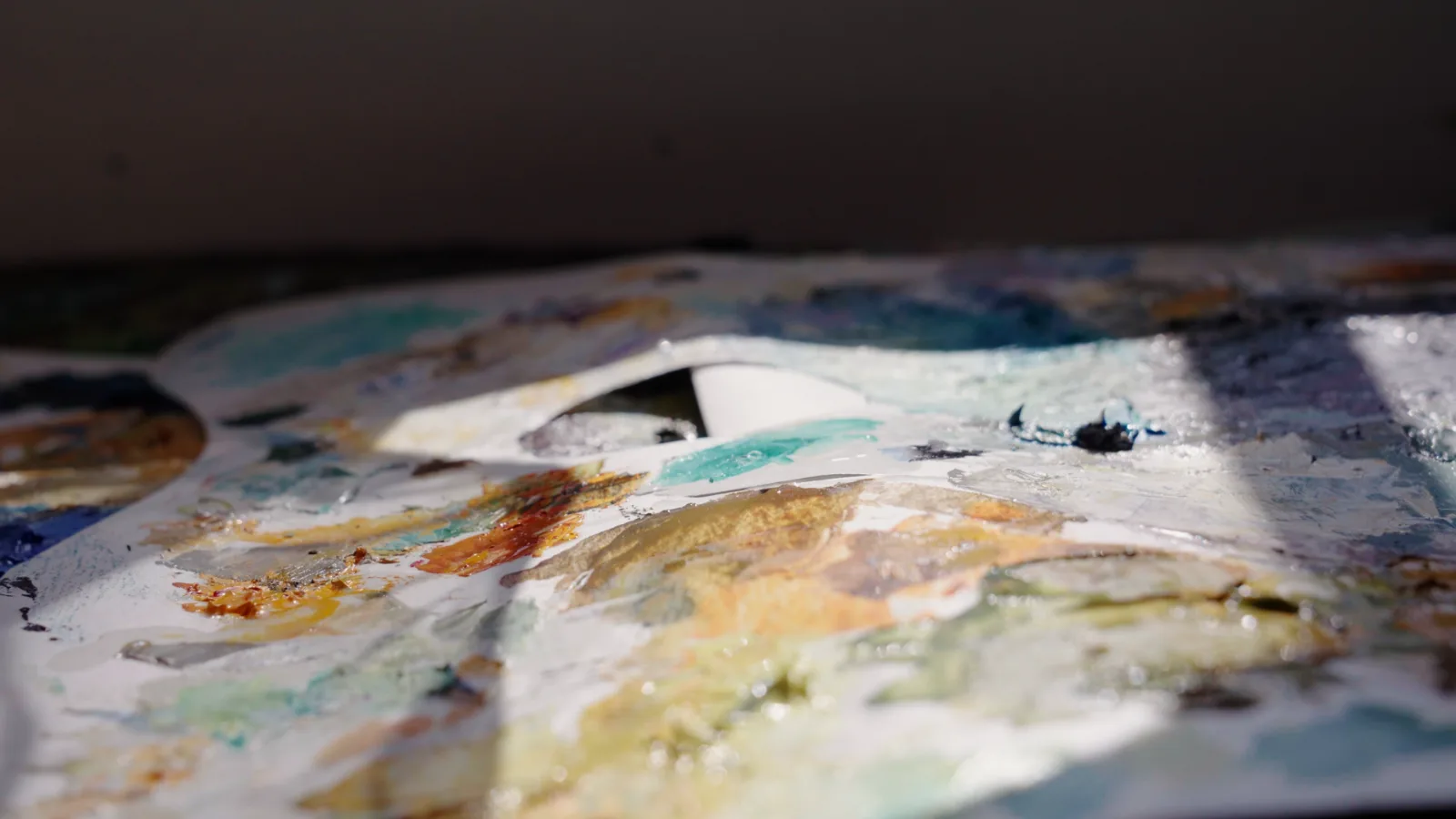
The studio becomes a space of encounter. Visitors enter to see finished works, but also to step into the conditions in which they take shape: rhythms, materials, references, traces of process.
"I would hope, when a visitor enters my studio, they will be able to recognize a lot of the scenes here."
Recognition becomes central. Gibson's paintings are deeply rooted in place: Argyll, the west coast, the islands. For those who know these landscapes, the works become a form of return. For those who do not, they remain familiar through something more elemental: light, openness, horizon.
The compact between writing and walking is almost as old as literature: a walk is only a step away from a story, and every path tells.
Landscape as Memory
Gibson's work does not attempt to transform the landscape into something else. It allows it to remain, filtered through a painterly language that is direct, warm, full of light.
Canvas and colour become spaces where experience settles. Each painting carries something of the place from which it originates: a quality of light, a moment in the day, a way of looking shaped through repetition and return.
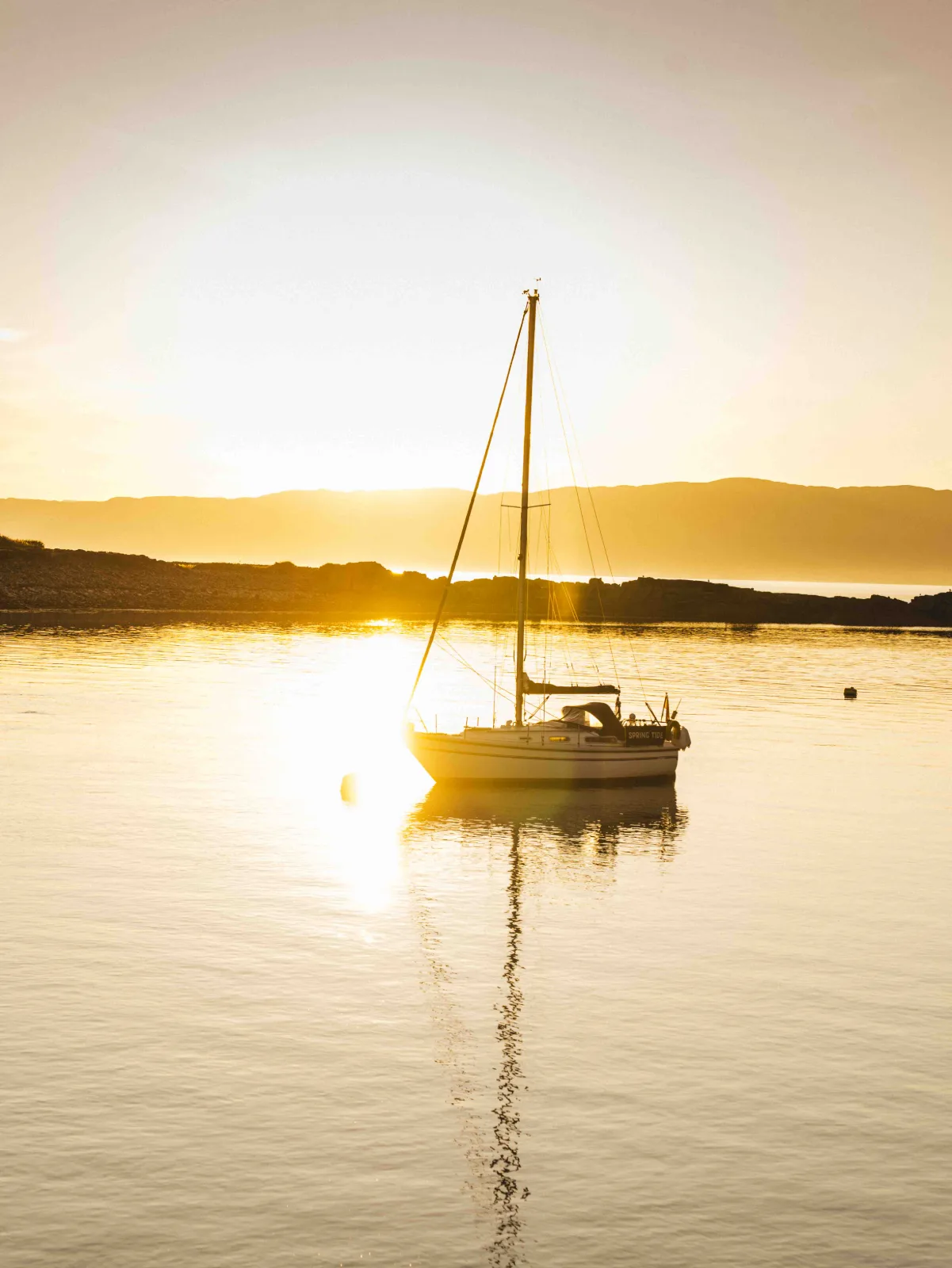
His work carries the landscape's memory. The morning sun on a beach in Mull. The turquoise water off a Hebridean shore. The long shadow of an August evening across golden sand. These are precise moments, recalled with the clarity of someone who has been there many times and knows exactly what he is looking for.
And perhaps this is what distinguishes Gibson from a painter who merely records scenery. He does not illustrate. He inhabits. The landscape lives within the painting because it lived first within the painter.
What Remains
Leaving the studio, the landscape appears different. The beaches, the light, the distances: everything carries a new density, as if the paintings have taught the eye to see what was always there.
The experience does not end in the studio. It continues outside, in the same space from which the paintings emerged. And perhaps this is where Open Studios reveal their deeper meaning: in what is carried away. A way of seeing, shaped by time, light, and the quiet dialogue between an artist and the place he has chosen to call home.