We listen to be elsewhere.
Before the Music Begins
It always starts with tuning.
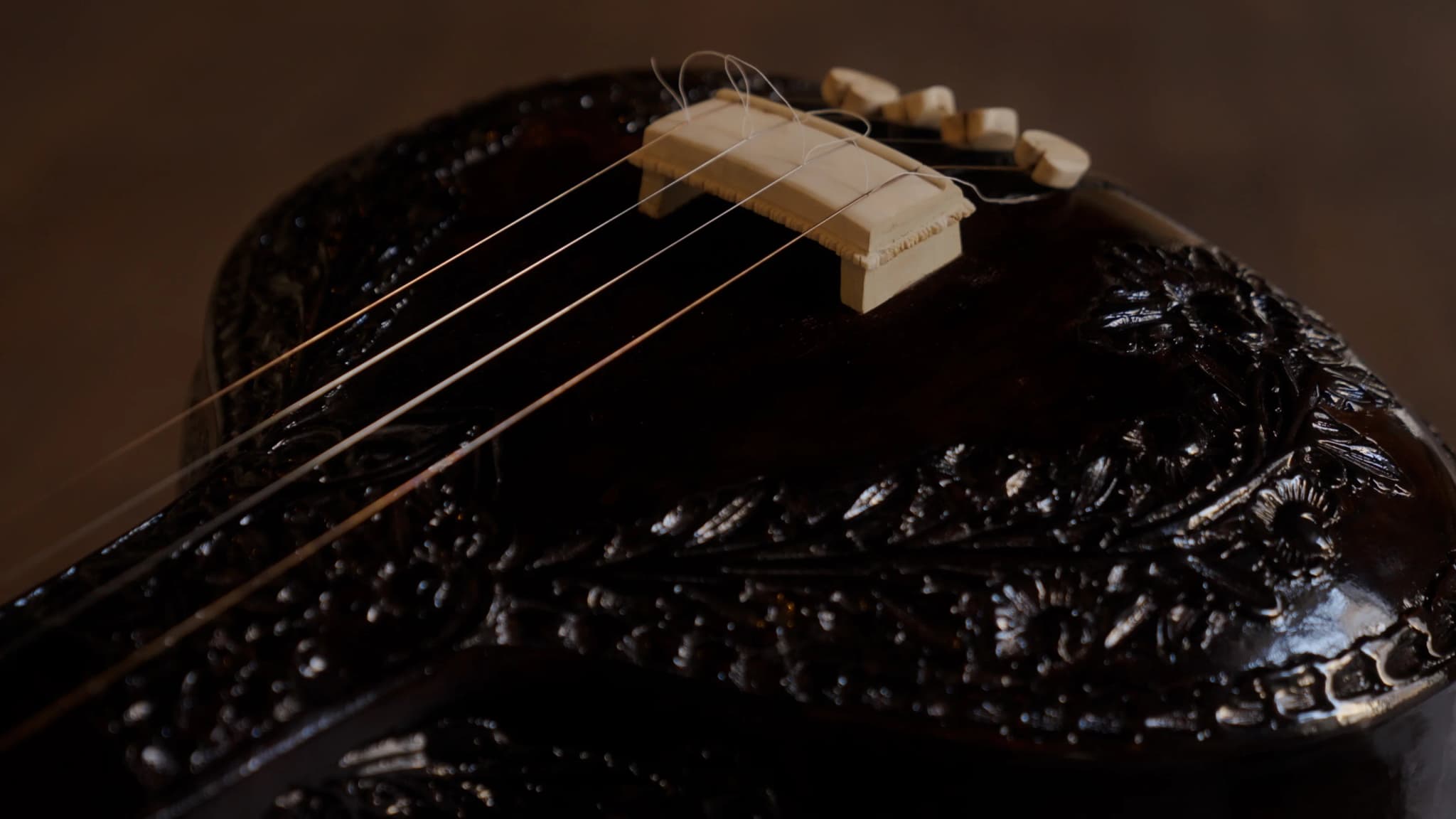
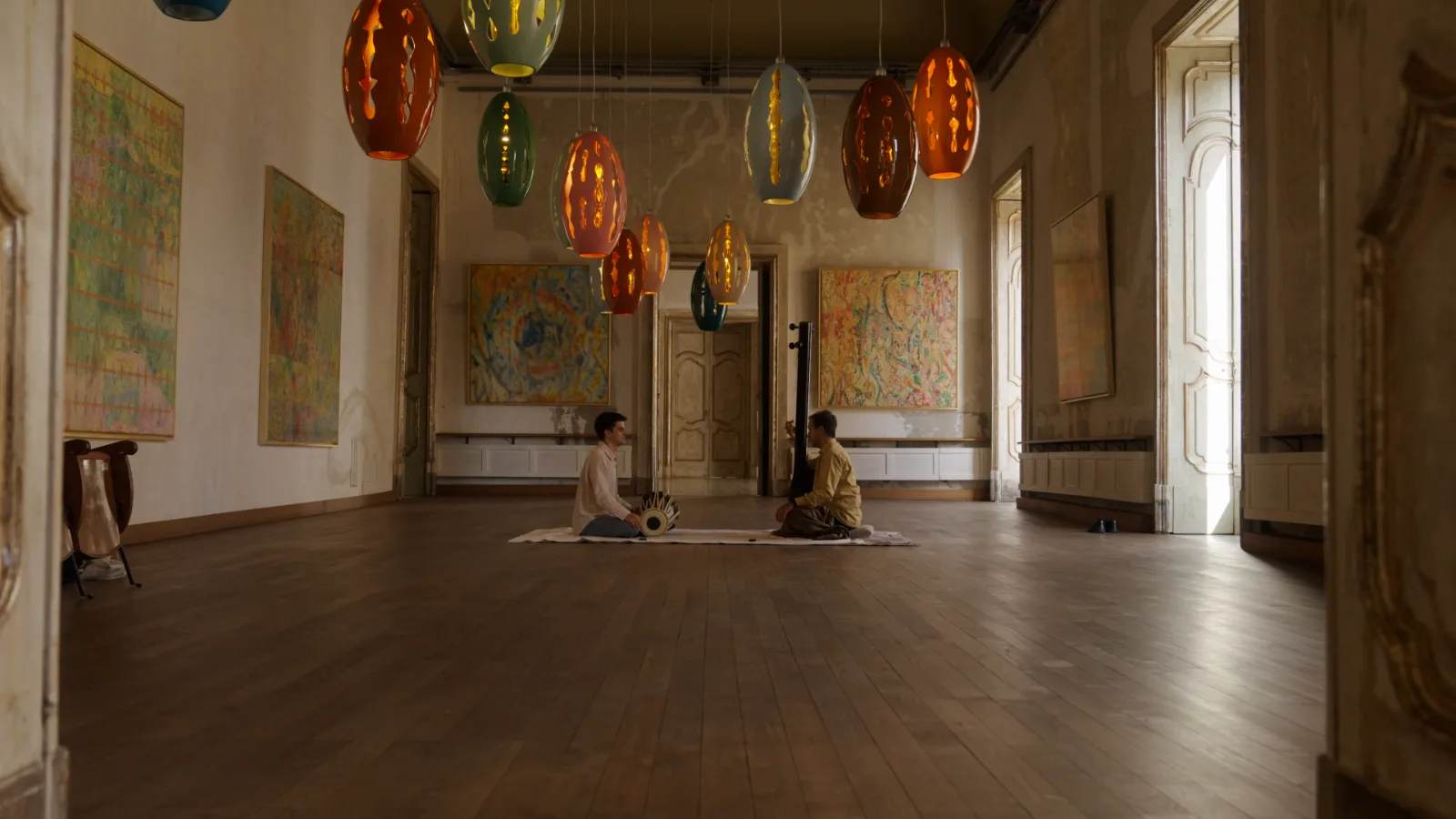
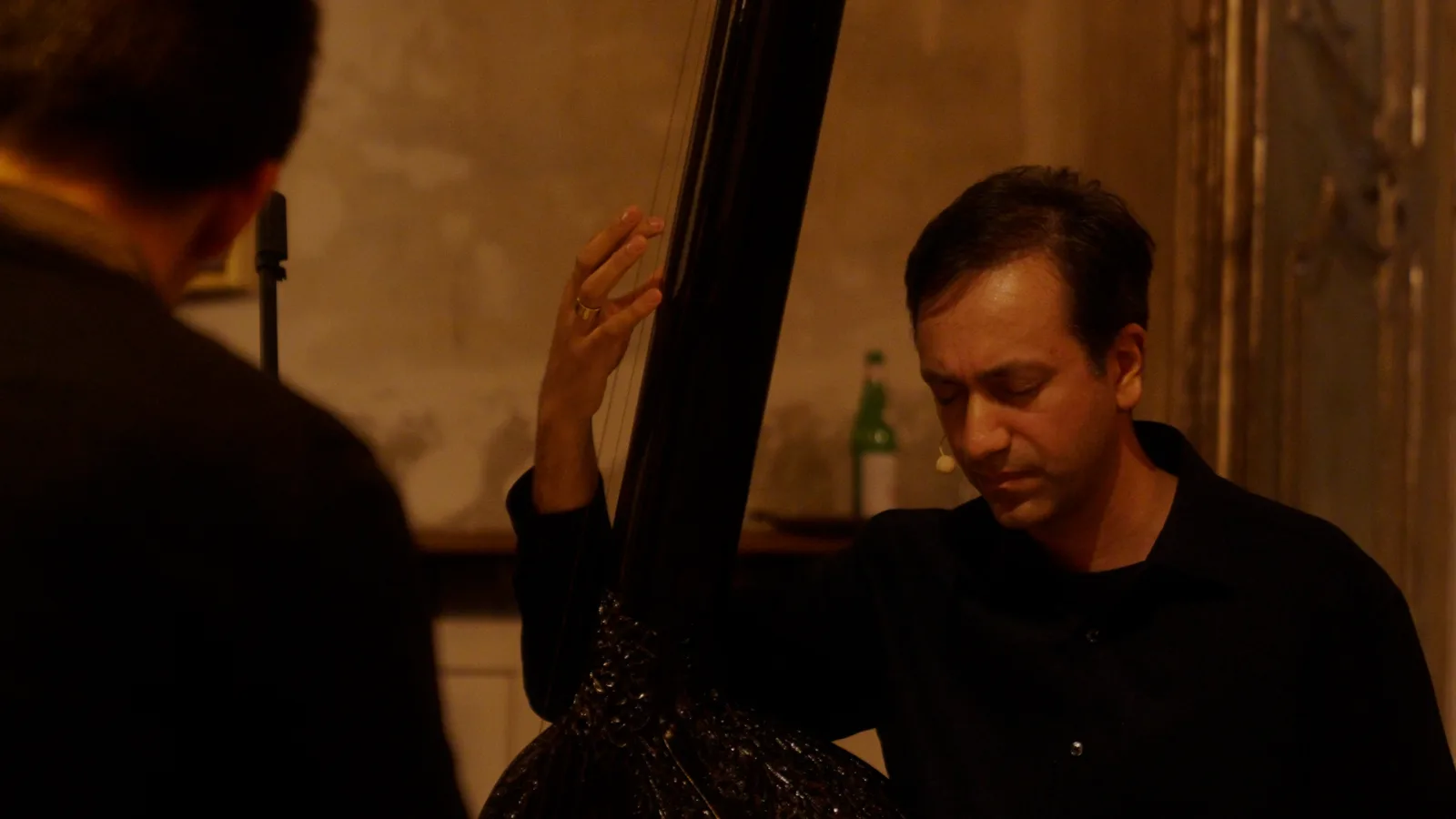
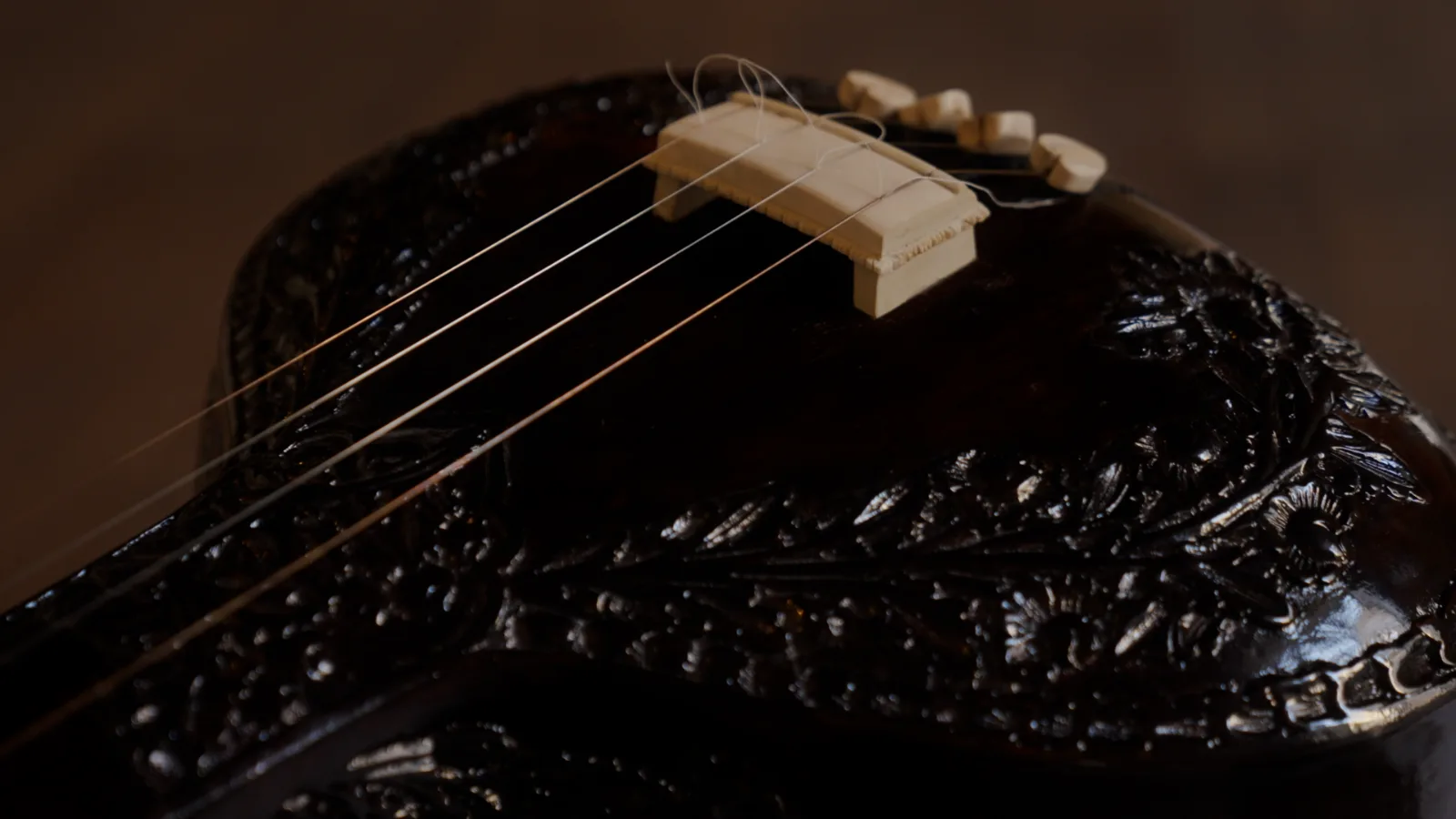
Harkeerat begins by aligning the two middle strings of the tanpura, called the jora, trying to get them to sound exactly the same. Not the same pitch only, but the same tonal quality: two strings becoming, for a moment, one voice. Then the lower octave string. Then the fifth, depending on what will be performed. The tanpura, he says, "is really the surface that we are performing on. It's like the stage. And if the stage is rocky or wobbly, then it's very difficult to perform."
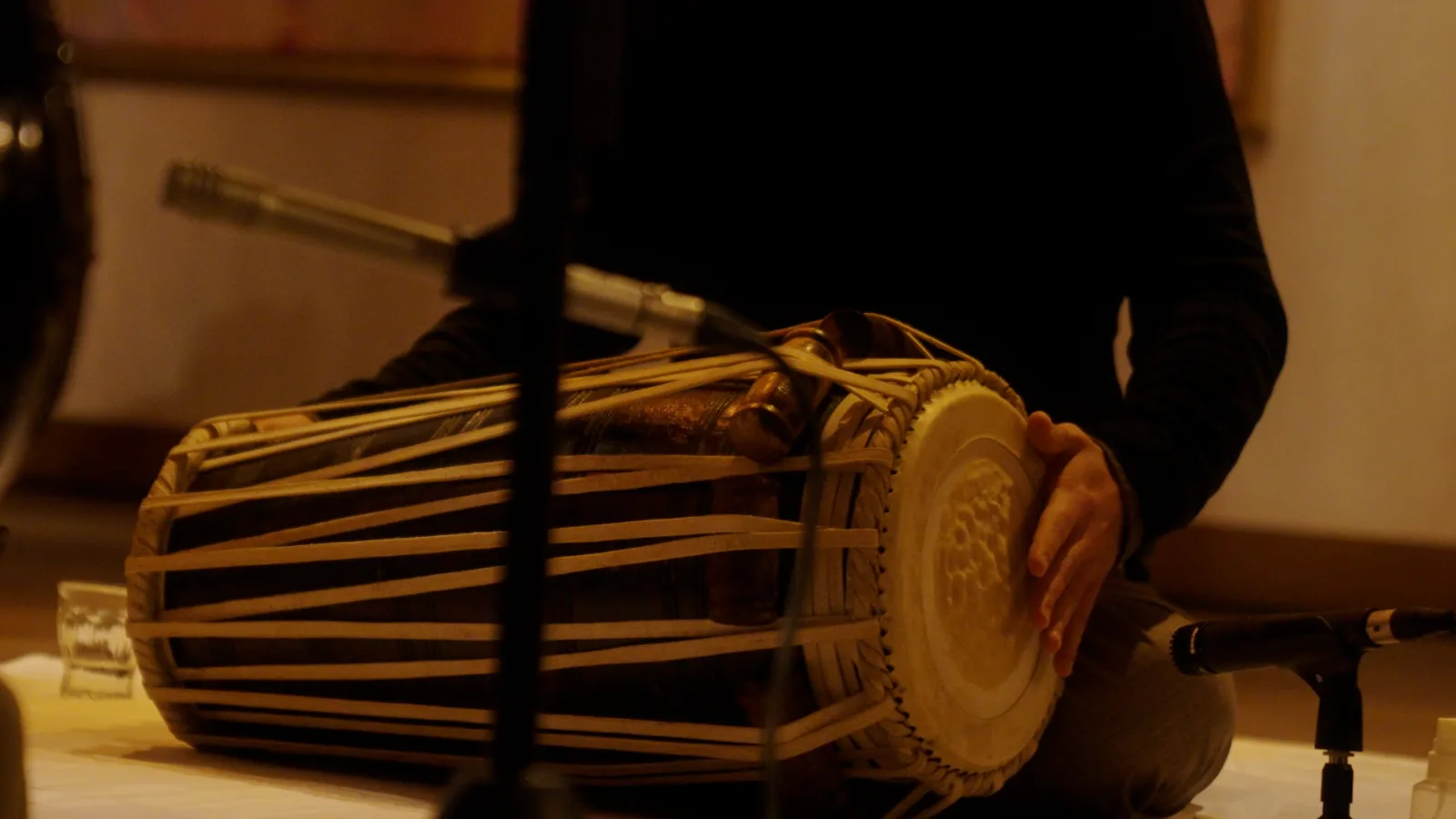
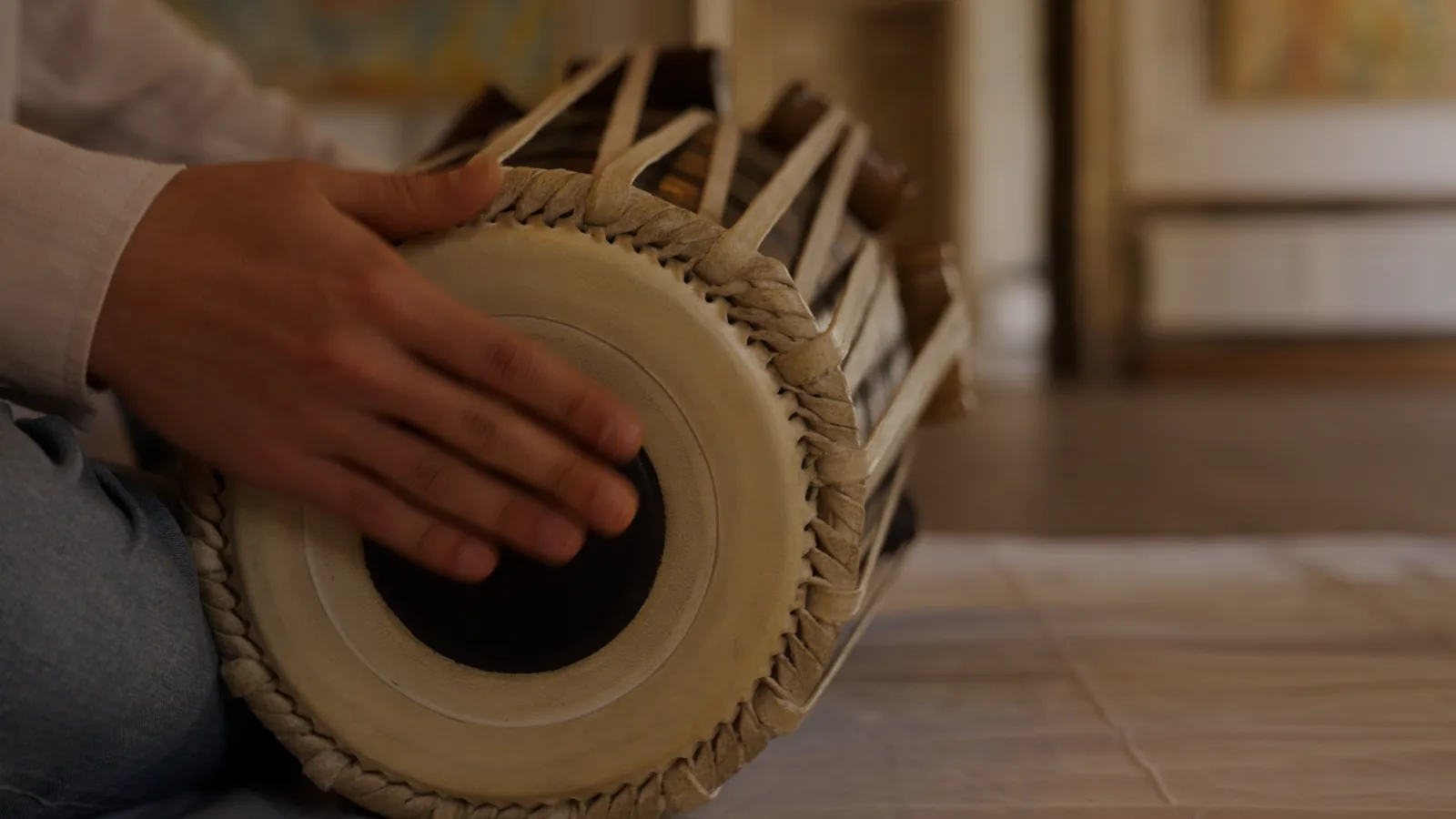
When the tanpura is tuned, Balázs begins his own alignment. The pakhawaj — a barrel-shaped drum made of sheesham wood with goatskin membranes, whose form dates to the late Mughal period — is not just a drum: it sings in a musical tone, tuned precisely to the pitch of the tanpura. He adjusts the tension of the skin with small wooden pegs, matching his instrument to the sound already established. Only when both instruments are aligned — with themselves, with each other — can the musicians align with one another.
This is not preparation. This is the first act of the performance. And it contains, in miniature, everything that will follow: the patience, the listening, the search for a shared frequency that is physical before it is musical.
"It's very distracting," Harkeerat says quietly. "It can take our inspiration away if the instruments are not aligned with each other."
Three Roads in the Same City
One of the two musicians trained in visual art and filmmaking before turning to Indian classical music. He now studies cognitive science. He describes these three fields — fine art, music, cognition — as separate disciplines that "all exist in me."
"The connections between them I don't fully understand yet," he says, "but I know that one thing that connects all these three disciplines is how we experience time and how we experience different events over time."
Time as a shared medium. In filmmaking, it is the sequence of images. In music, it is the sequence of musical ideas. In cognitive science, it is the question of how we perceive the world as a sequence of events, both in the present moment and in memory.
"So this is the only way that I can make sense of my three different disciplines," he says. "I see them as different roads in the same city."
It is one of those phrases that stays with you long after the interview. Three roads in the same city. Not three branches of the same tree, not three aspects of the same practice. Three separate paths that share a geography without merging. The city is the mind. The roads are the ways it moves through time.
Aliens from the Same Planet
When asked about their backgrounds, Harkeerat offers an unexpected answer. He does not speak about nationality or cultural identity. He speaks about what happens when they are not playing.
"We have a lot of fun," he says. "There's something that we both share, which is that we love this music deeply, but we also think it's totally hilarious and absurd how much we love it and how crazy we are about it."
Two musicians who were not born in India, pursuing Indian classical music with the devotion of a lifetime. They belong, he says, to a "relatively short tradition of people outside of India pursuing Indian music." And in that shared condition — foreign to the tradition they have made their own — they recognise each other.
"It feels like we found each other. Like I found another alien from the same planet."
The phrase is both funny and precise. It describes a kinship that is not cultural or national but musical: two people who share an obsession so specific, so consuming, so difficult to explain to anyone outside it, that when they meet, the recognition is immediate. What enters the music from this bond is a combination of seriousness and playfulness, of deep commitment and affectionate irony.
The Instrument That Was Made with Love
Balázs's path led him from Hungary to India, where he lived with his teacher and his teacher's family.
"They really took me in like their own child," he says. "And it was a culturally very interesting experience because it shaped me in a way that I think it could never be reversed. Part of me became Indian."
He speaks about the need to understand how Indian people think in order to play this music authentically. Not to become Indian, but to grasp the emotional landscape within which the compositions live. Compositions about Hindu gods, about seasons, about states of mind that carry centuries of devotional and philosophical meaning.
"If you don't know what a Hindu person thinks when they think about these gods," he says, "then you cannot really evoke the true emotion of the compositions."
The pakhawaj he plays today was given to him by his teacher. It took more than a year to make, passing through the hands of many makers to perfect the tuning and the balance of the skin. He describes it as "a gesture of love." When he plays, he plays on an instrument that carries the care and intention of someone who shaped it for him, specifically, knowing what his hands would need.
Not Improvisation: Contemporary Interpretation
There is a moment in the interview that redefines everything.
Harkeerat is asked about improvisation — that word so often applied to Indian classical music by Western listeners. He pauses, then offers a distinction so precise it could be a thesis.
"Improvisation is not really the best word to describe what we do," he says. He cites Amit Chaudhuri, the Indian writer and musician, who observed that there is no word for improvisation in any Indian language. What exists instead, in every performing art tradition of India, is a convergence between a historical artifact — a composition — and a contemporary consciousness. The space built into the tradition is not the space to invent, but the space to interpret.
"So for us, it really begins with the artifact, which is the composition that we've been taught. We have a composition and it's not very long. We look at it: what are all the melodic units? What is its rhythmic character? What are the words? And we both kind of look at it with a microscopic view. What is this artifact?"
And then: "What happens if we stretch this thing? What happens if we move this thing? What if we shift everything this way? What if we compress the time into a double time, or a triple time?"
It is not invention. It is transformation. The composition is a fixed object viewed from an infinite number of angles. Each performance is a new perspective on a known structure, shaped by who they are now, here, today.
"I have nothing to add," says Balázs, smiling.
Tension and Harmony
In the closing moments of the interview, Balázs speaks about the relationship between the two instruments during a performance.
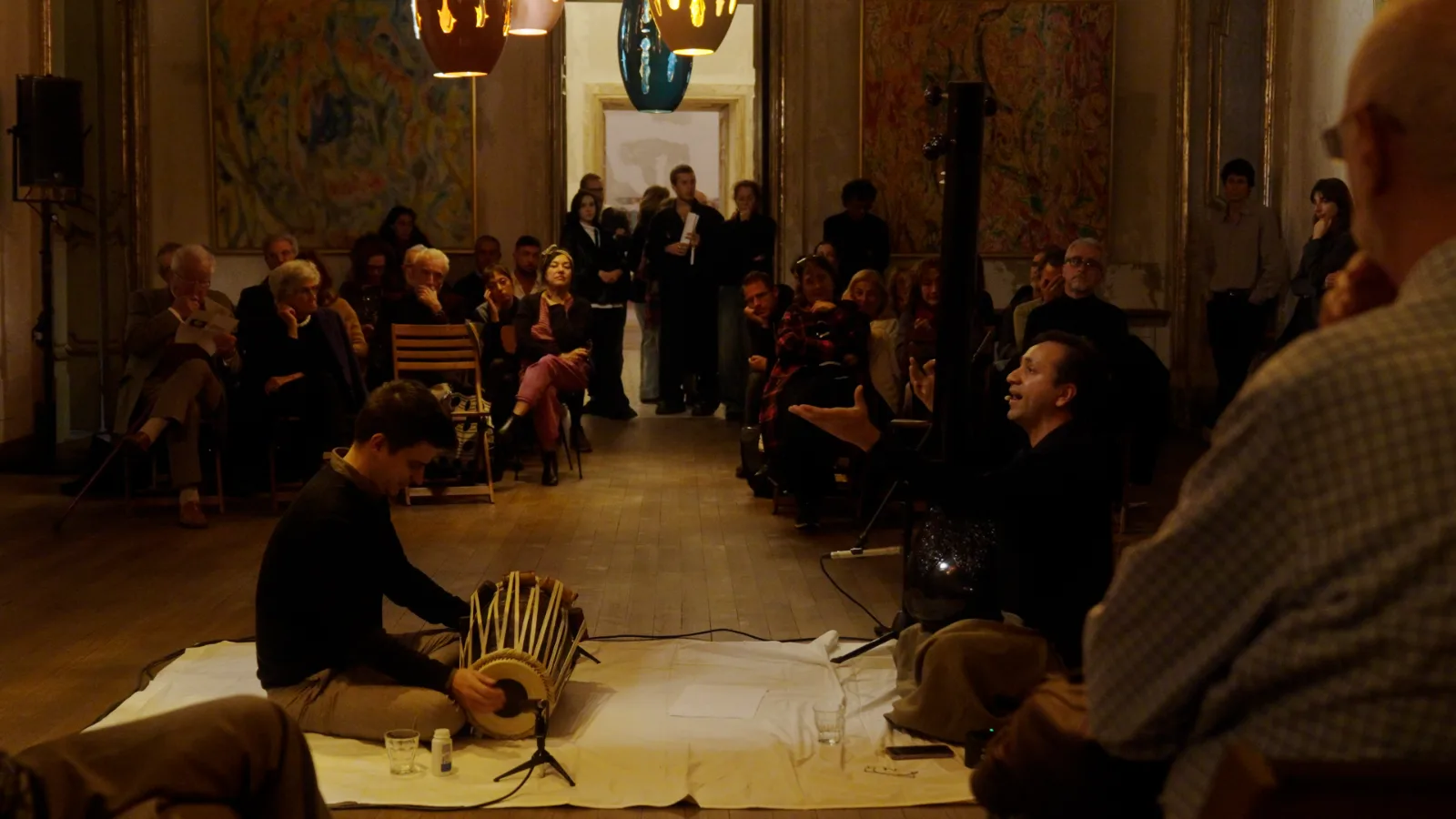
"It's not all beautiful and harmonious," he says. "Sometimes we fight too. Sometimes we have arguments. There are two forces — the percussion and the melodic side — both improvising on the same grid. And of course, sometimes they fight. And sometimes they get in conflict, as we do sometimes too."
He pauses. "And then we are also harmonious sometimes."
The point is not that harmony is the goal. The point is that tension and harmony are both part of the same emotional range. Conflict is not failure; it is a valid state within the performance, as real and as necessary as the moments of resolution. What holds it all together is trust: the knowledge that even when the instruments pull in different directions, the musicians will find their way back to each other.
"There's a kind of trust that we have," he says, "that even if there is tension, even if there's harmony, there's a kind of emotional quality to this relationship and dynamic that is a part of the whole holistic emotional range that we can explore."
It is, in the end, a portrait of two people who have found in music a language for everything they cannot say in words: alignment, conflict, devotion, absurdity, the passage of time, the search for something that existed before they were born and will continue long after they have finished playing. Two aliens from the same planet, tuning their instruments in a room, waiting for the moment when the stage is steady enough to begin.