One line placed on the canvas committed her to innumerable risks, to frequent and irrevocable decisions.
The Studio on the Farm
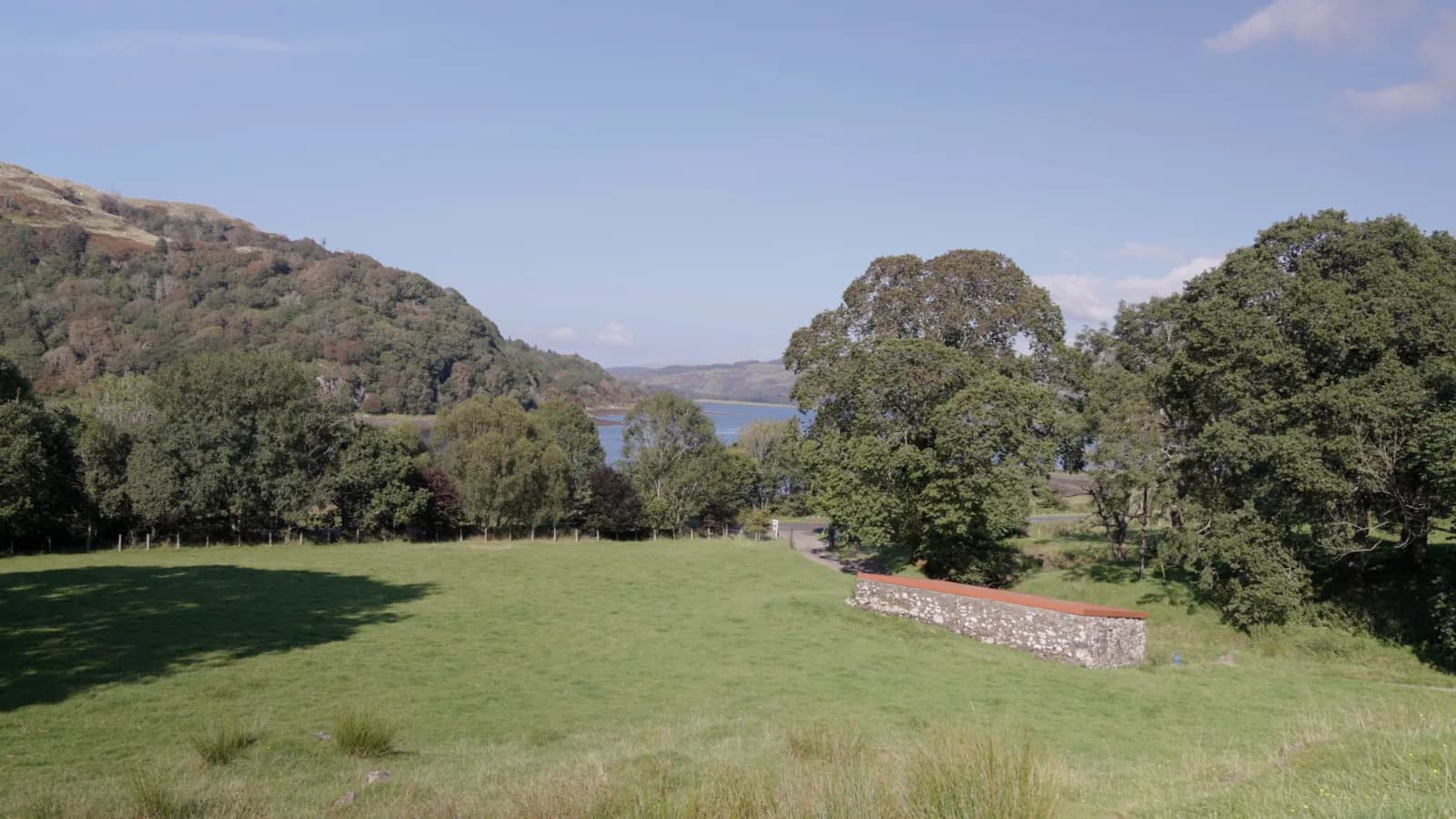
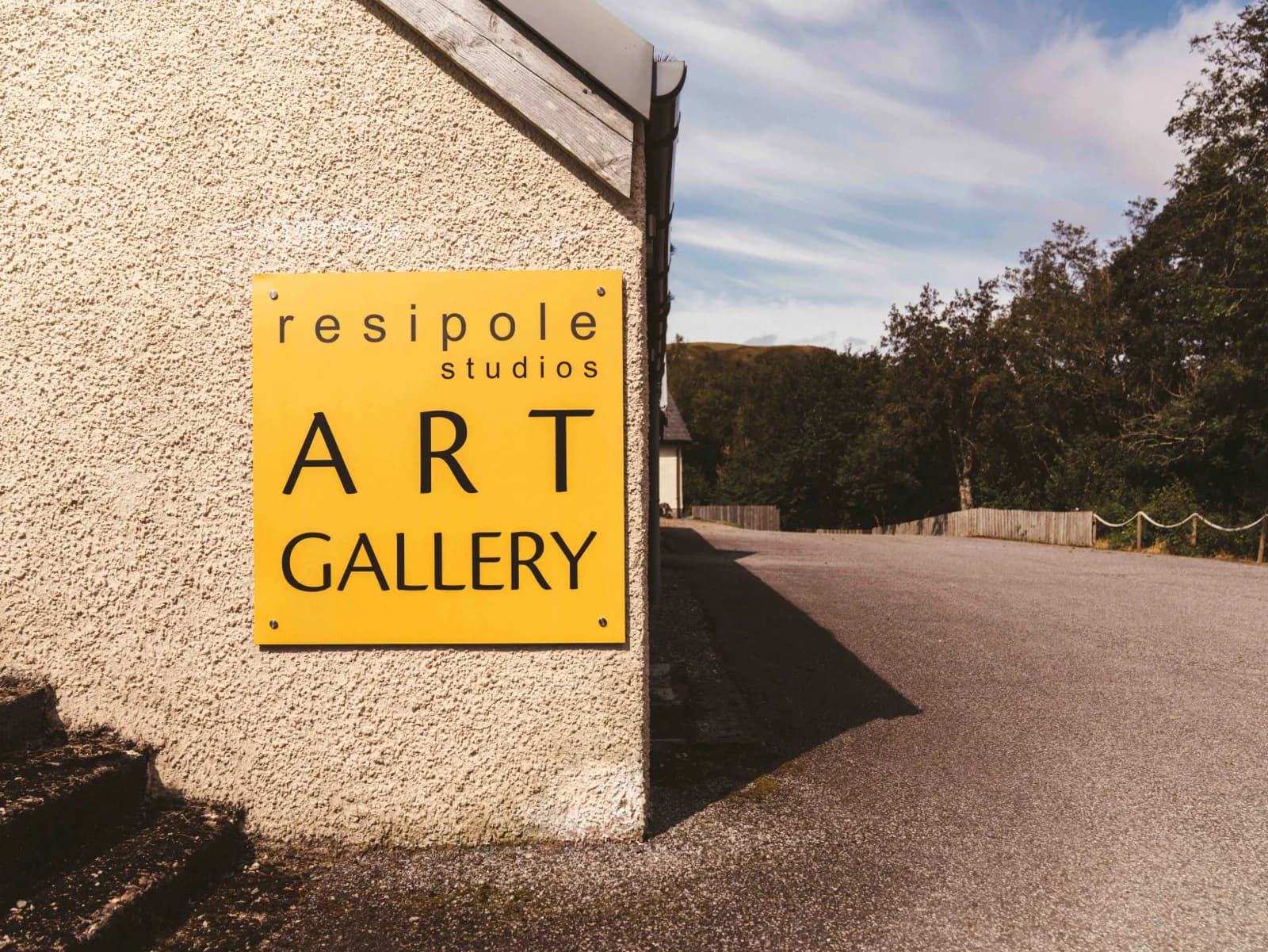
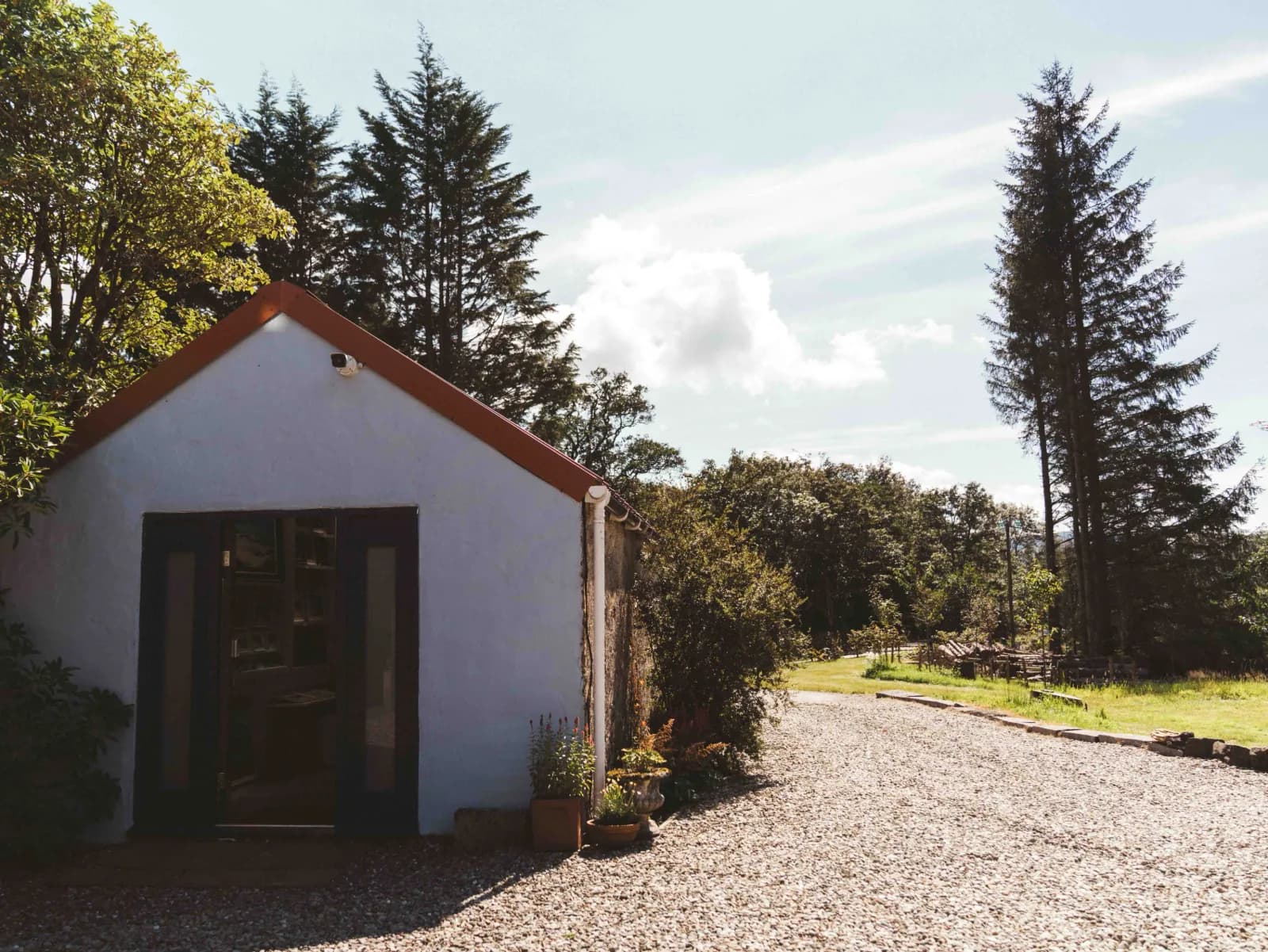
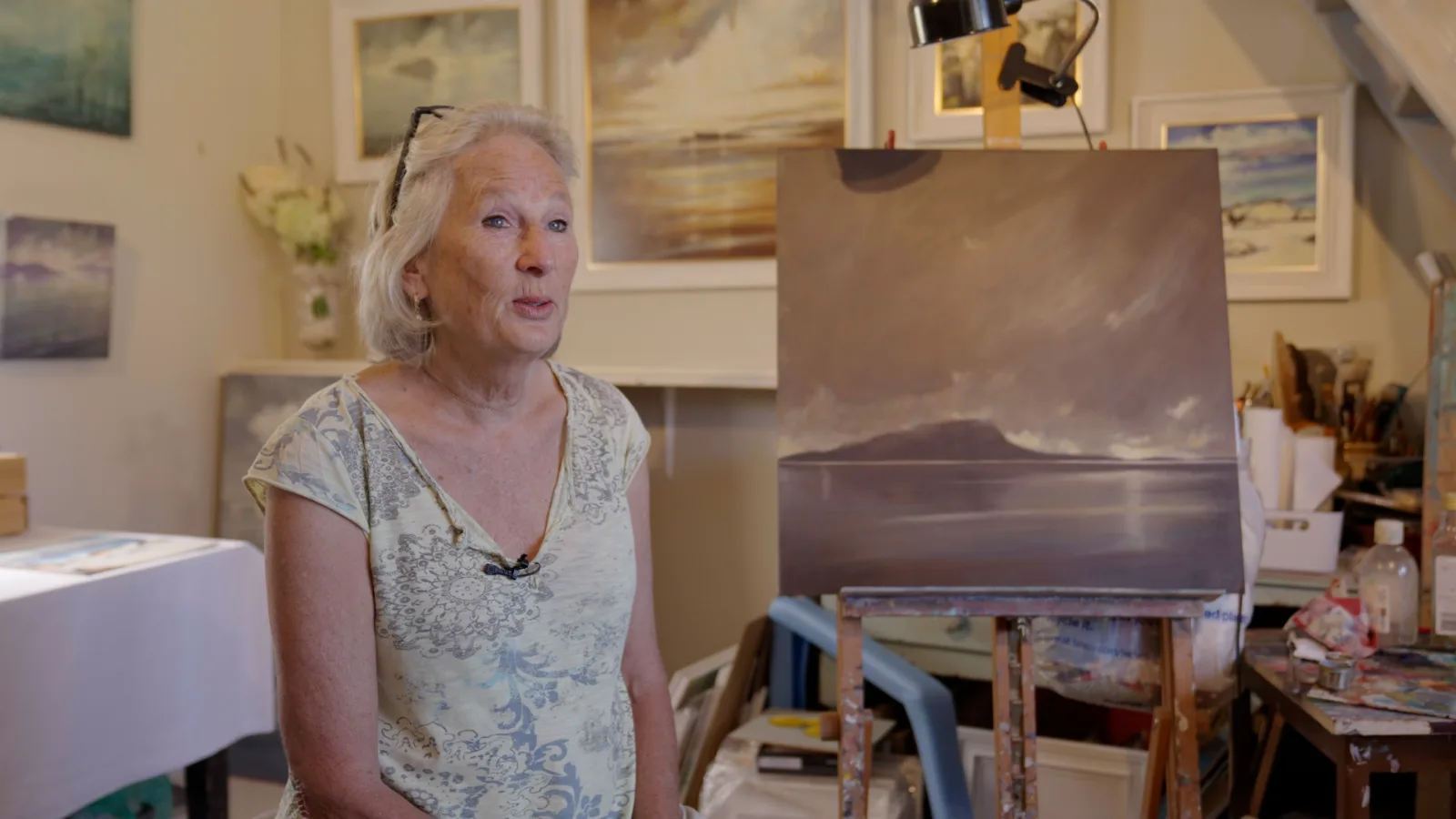
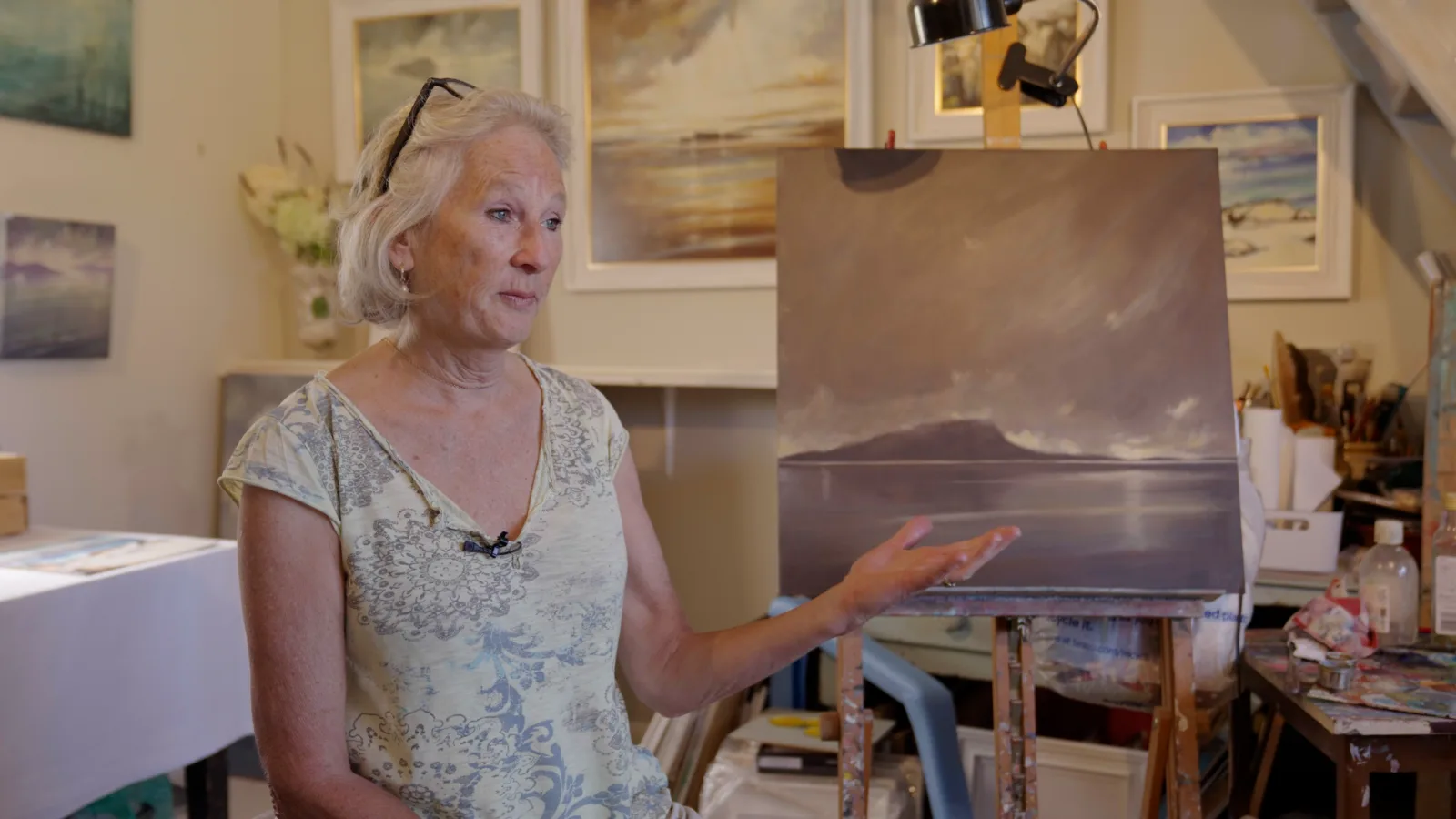
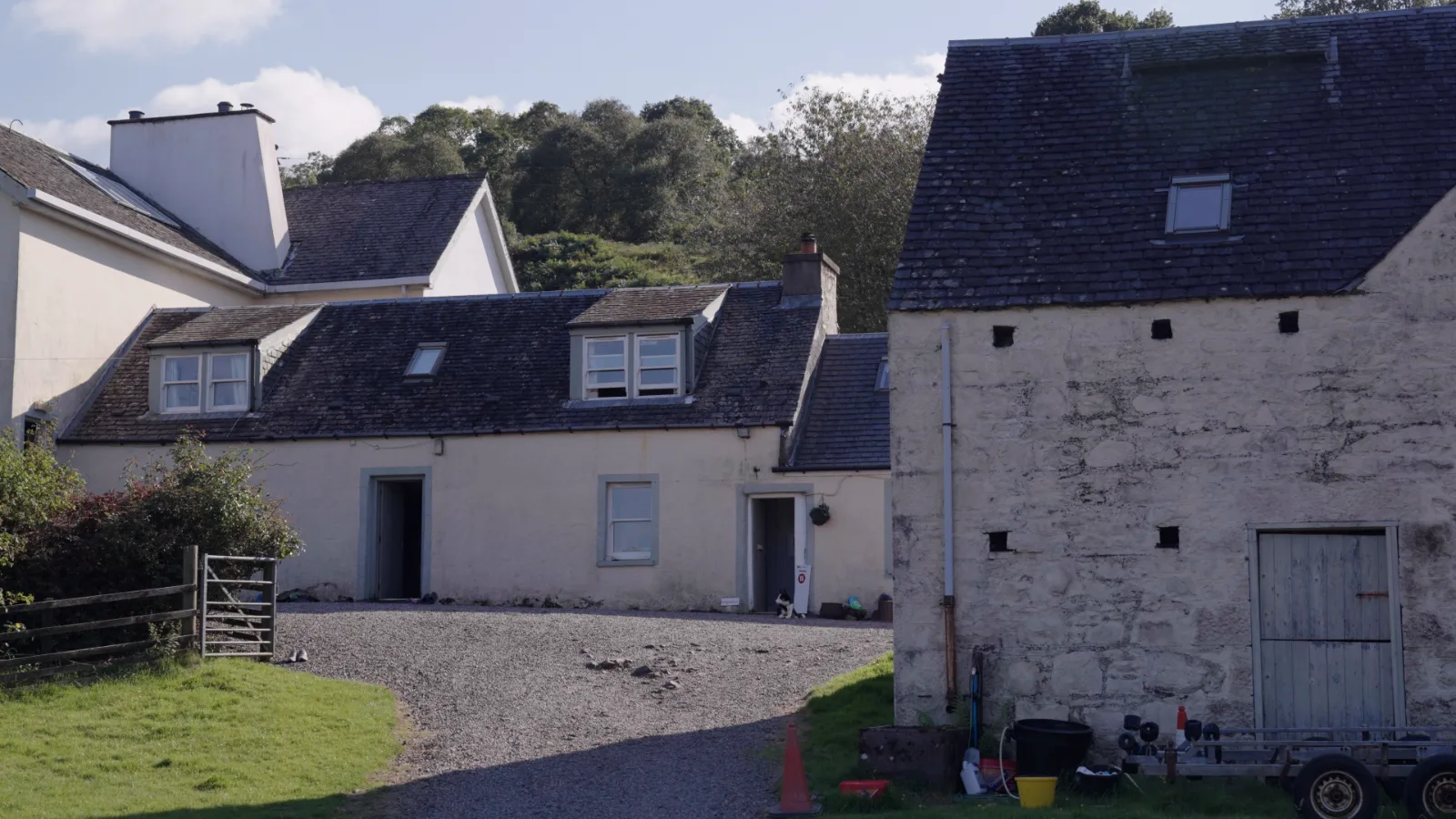
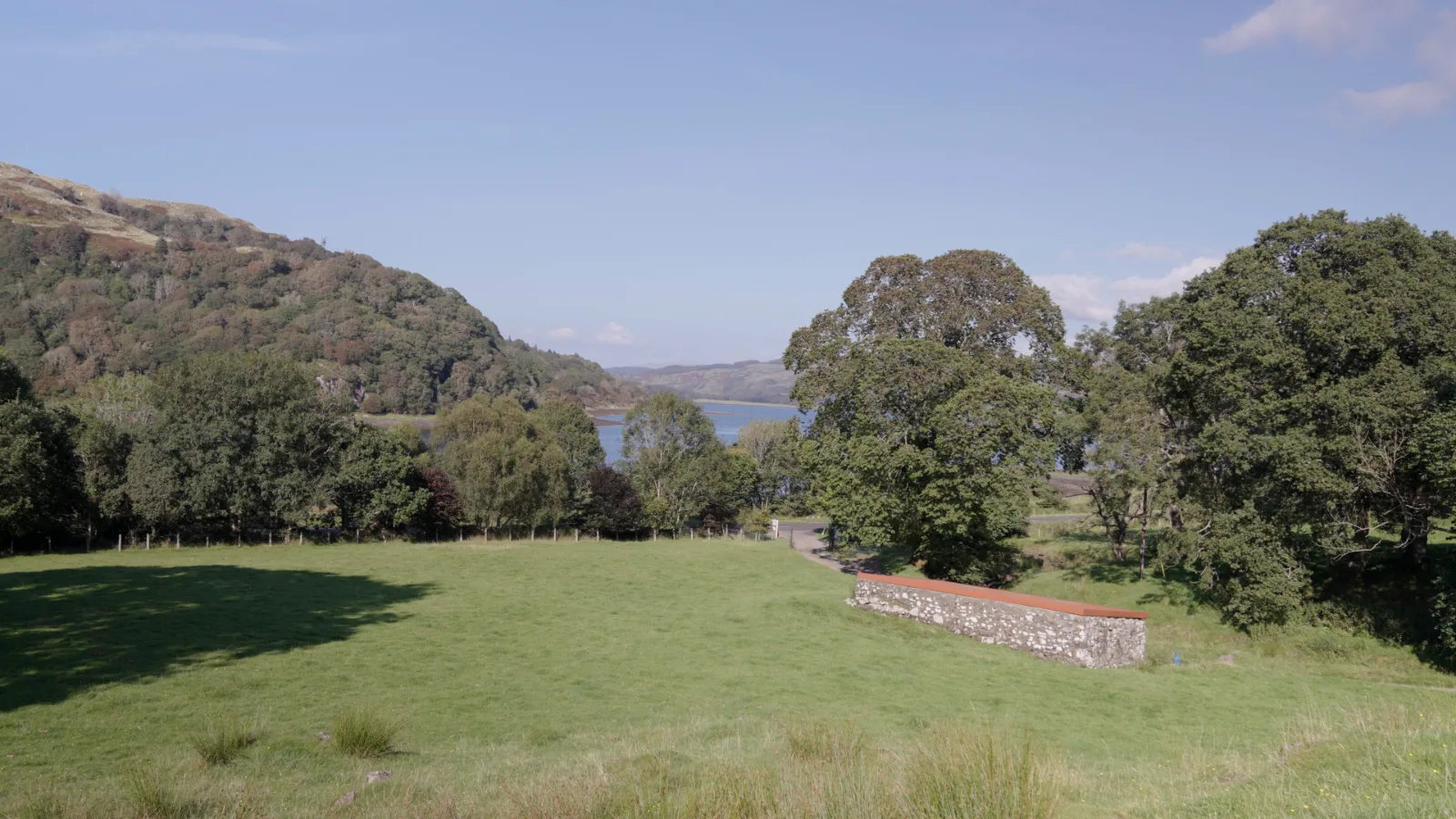
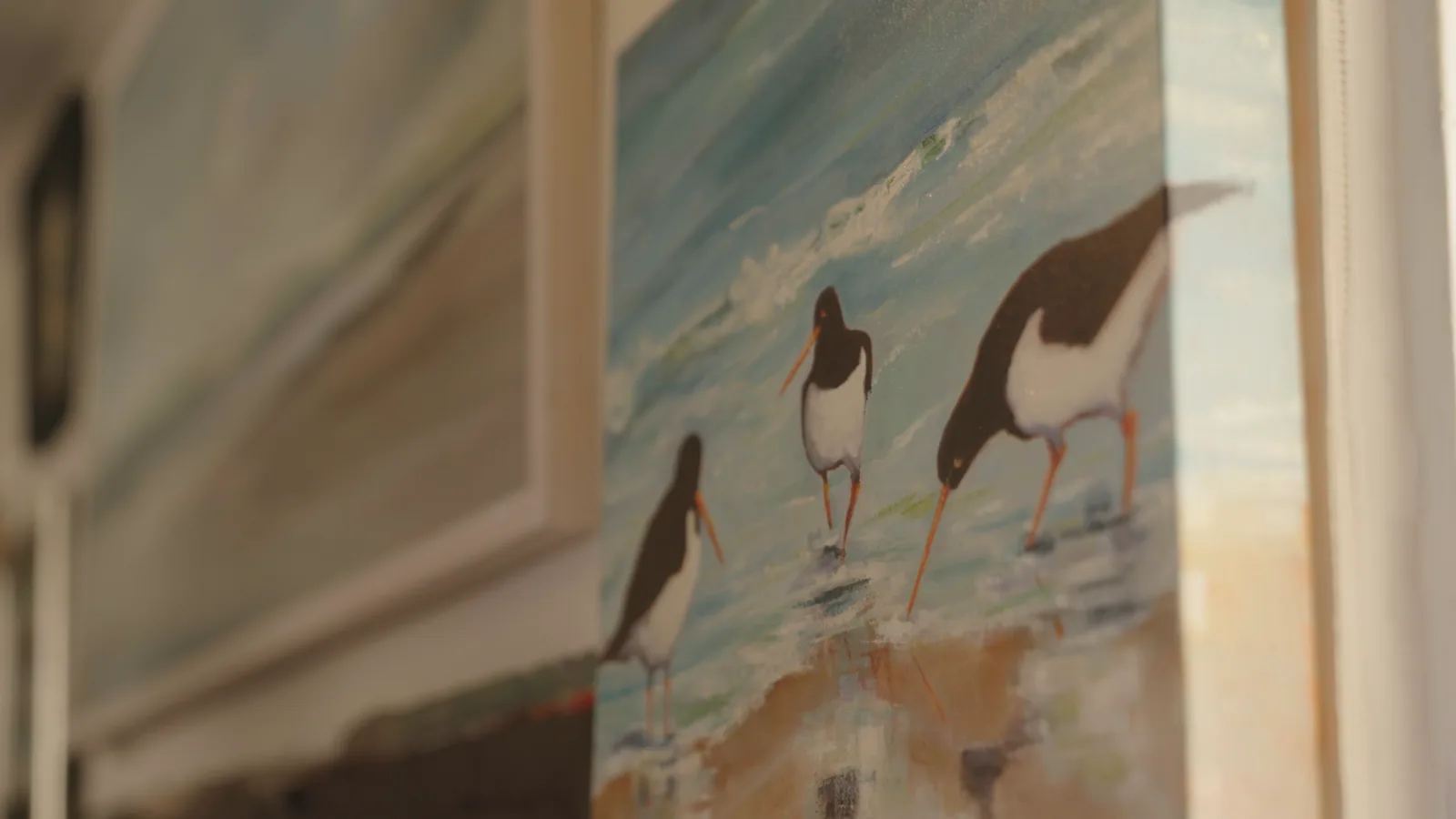
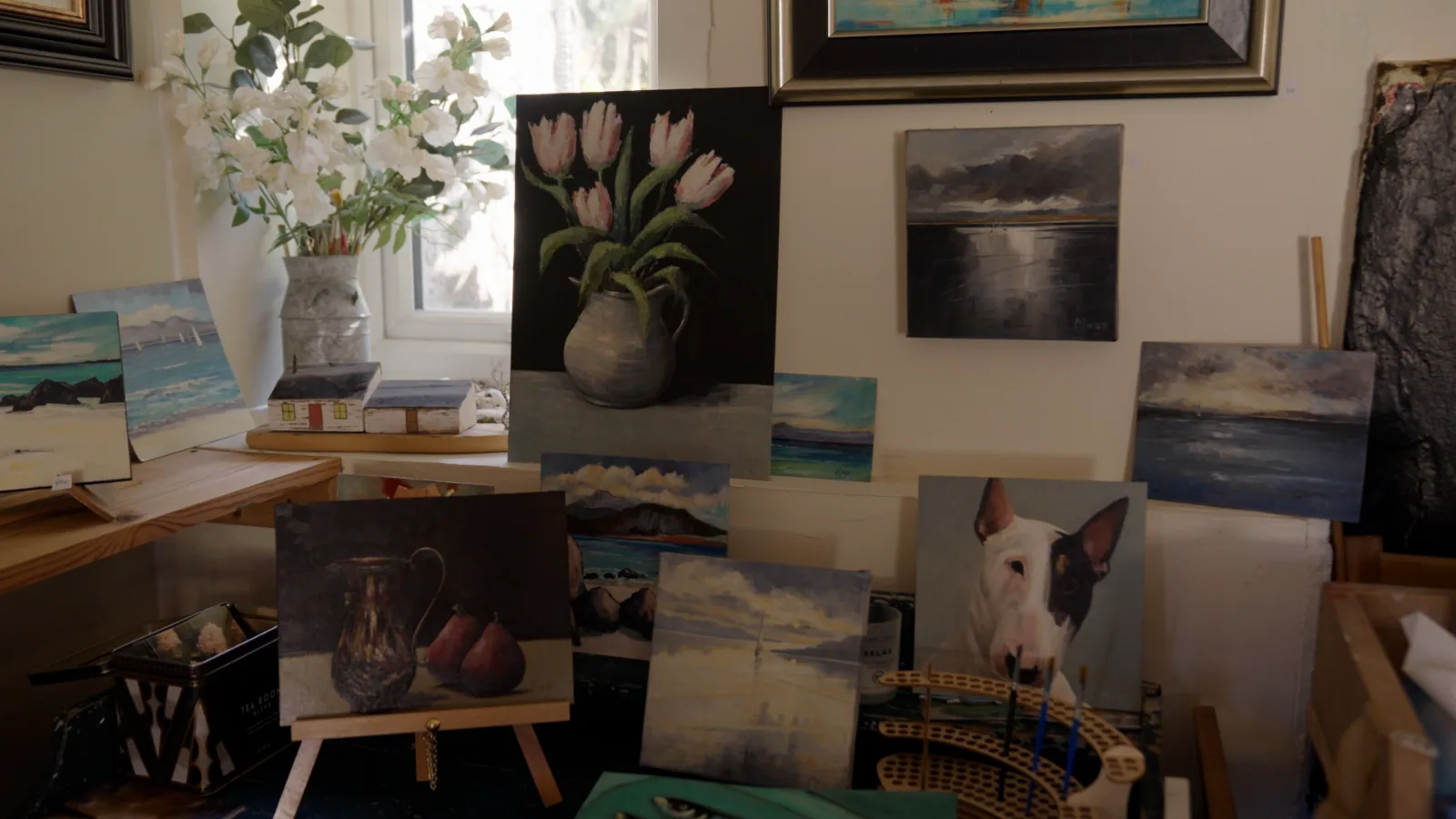
The studio sits on the edge of a sheep farm on the west coast of Scotland. There is no reception, no sign announcing an artist's presence. The door opens onto a room full of paintings: seascapes, boats at sail, oystercatchers in flight, small canvases bright with colour. Outside, the Atlantic. Inside, the evidence of someone who paints because she must.
Morag Mellor, known as Mogs, introduces herself with her nickname. It is the name she paints under, the name people know. There is a directness to her that carries into everything: the way she describes her work, the way she talks about colour, the way she laughs when something defies explanation.
"I've always loved art," she says. And then, with the same breath: "I didn't paint for many years."
A Life Between Pauses
Mogs studied History of Art at university in Edinburgh. She learned to look at paintings before she learned to make them. Then came marriage, children, the long parenthesis that many women know: years in which the creative impulse does not disappear but waits, held in suspension, until time allows it to resurface.
When it did, she began with watercolours. "They're very unforgiving," she says, with the precision of someone who has tested the limits of a medium and moved on. She shifted to oils, then acrylics, finding in them a freedom that watercolour could not offer: the freedom to correct, to layer, to let the painting lead.
Her studio is in a building on the family farm, and she comes when she can. "My husband is a sheep farmer, and we're self-employed. So I have the ability to come when I want to and when I feel like it." The studio is both a workspace and a refuge. On rainy days, she says, she retreats into her own world inside it and paints.
The Sprat on the Blue Plastic
Every painter has an origin story for a particular body of work. For Mogs, one of the most characteristic came from the sea.
"One time when we were mackerel fishing, there was a little sprat came off the fishing line and it was on a blue plastic. And I just thought, oh, I like this. This is a good colour combination."
From that moment, the fish became a recurring subject: small, bright, painted against vivid blue or pink backgrounds. They are among her most distinctive works, playful and immediate, and they speak to something essential about her practice. Mogs paints what catches her eye. The origin of a painting is often a moment of visual surprise, an encounter with a colour or a form that insists on being remembered. She follows the impulse.
"I have a bit of a butterfly brain," she admits. "I do lots of different things. I get bored doing things that are similar."
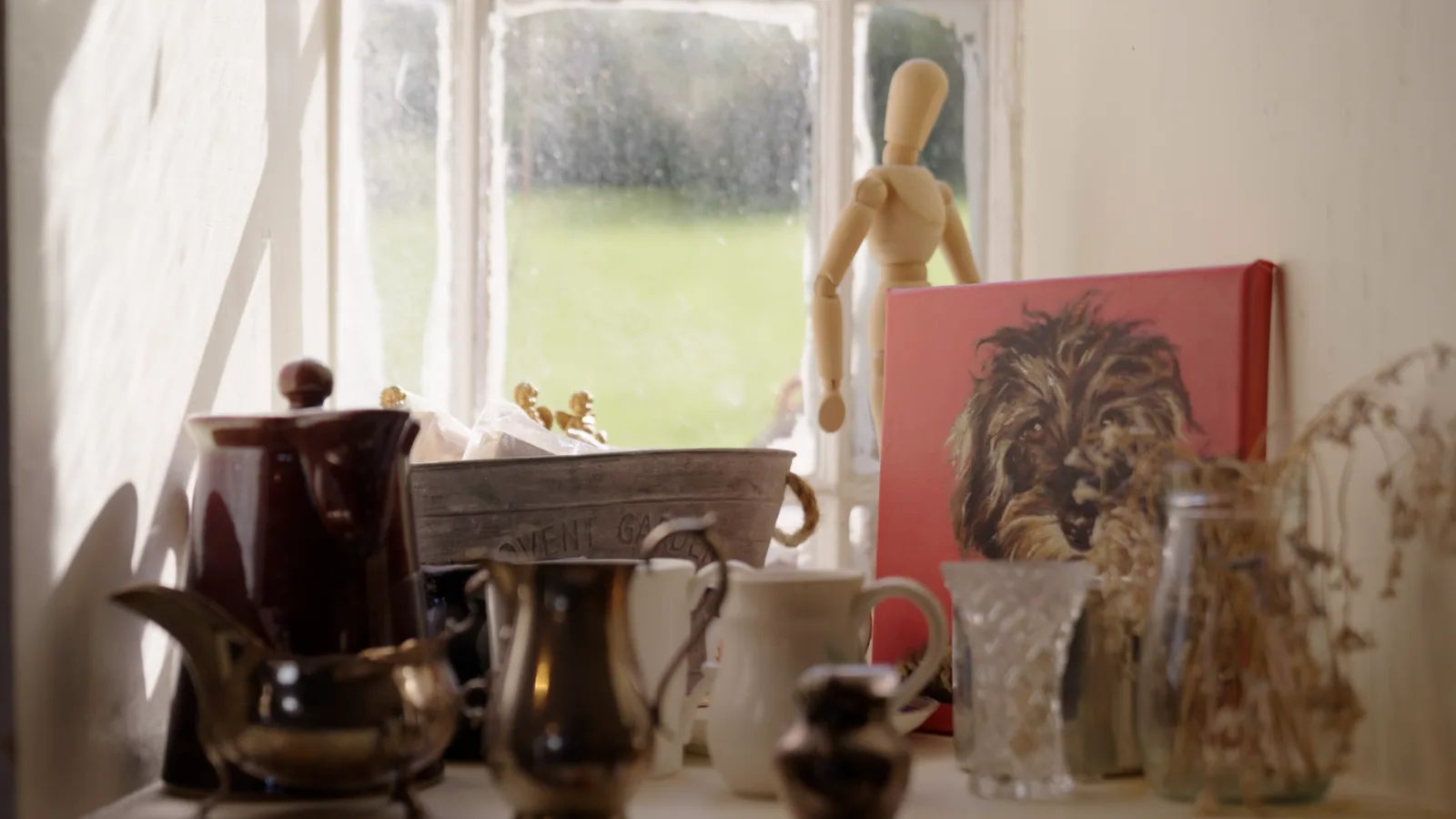
This restlessness is a strength. Her studio holds sailing boats alongside still lifes, oystercatchers alongside silver objects whose surfaces she studies for reflections. The variety is held together by a consistent attention to light and colour, and by a relationship to the west coast that runs through everything, even when the subject is a teapot or a piece of cutlery catching the afternoon sun.
The Scottish Colourists and the Light That Stays
When Mogs speaks about her influences, she mentions the Scottish Colourists: the group of painters who worked on these same islands and shores in the early twentieth century and whose use of colour transformed the Scottish art landscape.
"They came out to some of the islands around here and painted a lot. Very sought after works of art. They used to capture the light and the colours, which were brilliant. So I do those sometimes."
The connection is clear in Mogs's work. Her palette is saturated, warm even in overcast conditions, and her handling of light on water carries the same intensity that made the Colourists famous. She paints the same coastline they painted, a century later, with her own eye and her own hand. The tradition is alive in her studio, absorbed rather than studied.
Happy Accidents
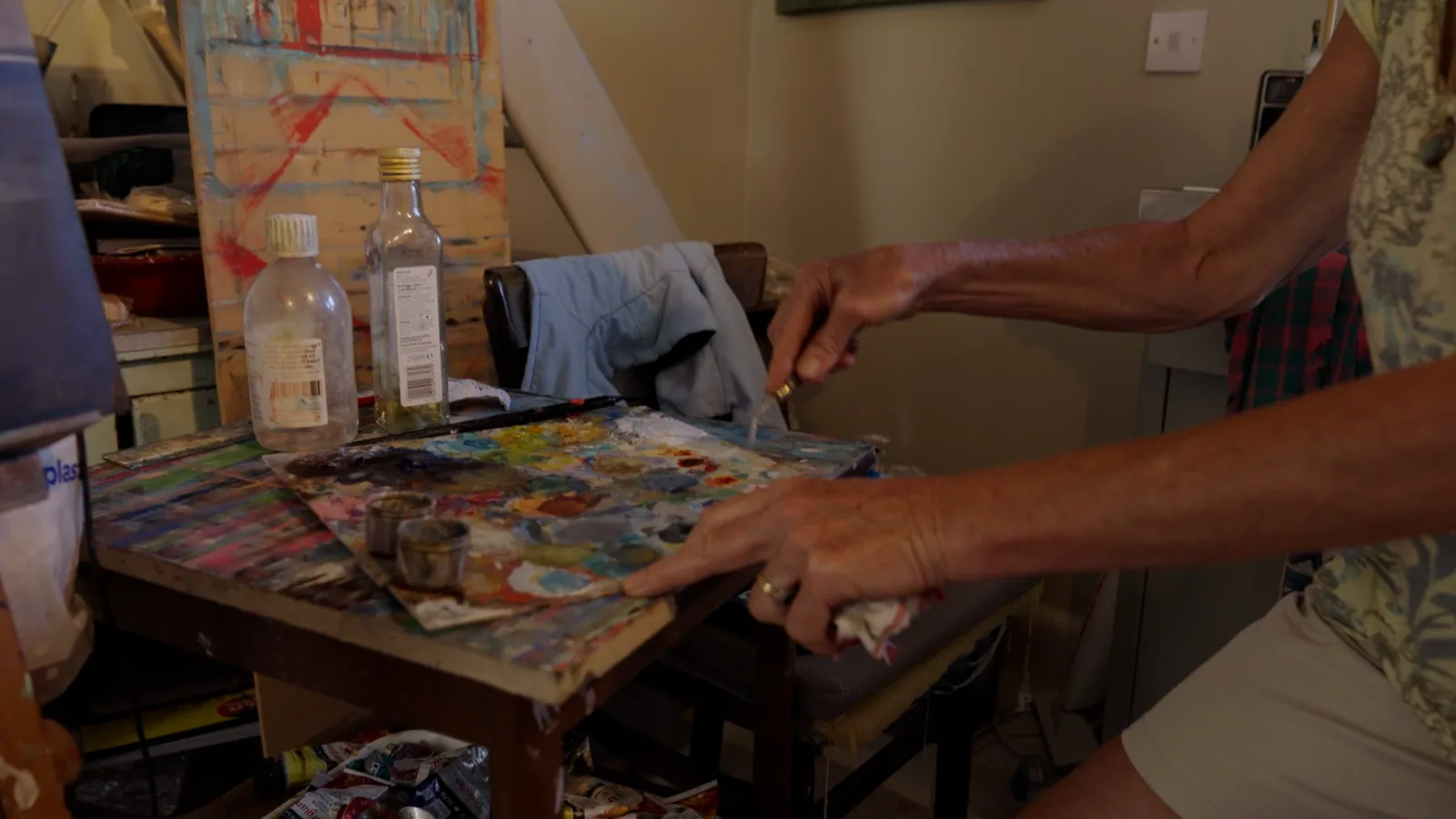
Mogs is honest about her process in a way that is disarming.
"I'm not a good enough artist to make something work every time. What I always say is it's a happy accident. Sometimes I'm working away and I don't know what I do because I'm not properly, I'm not formally trained, but something works. And then it's like, oh, okay, so this is great."
The phrase "happy accident" recurs in the interview like a refrain. It describes both a method and a philosophy. Mogs does not work from a concept or a plan. She works from the material, from the brush, from the moment when colour meets surface and something unexpected happens. The painting surprises its own maker. And when it does, the feeling is unmistakable.
"Sometimes I can't sleep at night," she says, "because I'm thinking about it so much. And then I want to come in the next day and paint and really have a go and try and make it work."
There is urgency in this, a quiet obsession that sits alongside the lightness of her tone. Painting, for Mogs, is not a profession or a career. It is a practice driven by something deeper: the need to see, and the need to be seen doing it.
Yes, she thought, laying down her brush in extreme fatigue, I have had my vision.
The Joy of Being Seen
Perhaps the most revealing moment in the interview comes when Mogs talks about what happens when someone enters the studio and connects with a painting.
"If somebody else comes in and goes, I love this, then it makes me feel particularly happy because it validates what I do. It's not just me liking my work. It's someone who is totally objective and unrelated to me, and they can come in and see it and go, yes, this is what I like."
Validation. The word is hers, and she uses it with precision. Mogs paints for herself, but the work is completed by the viewer. The happy accident finds its meaning in the eyes of a stranger.
This is what Open Studios makes possible. The studio door opens. Someone walks in from the rain, from the road, from the landscape that the paintings describe. They see something they recognise, something they feel. And in that exchange, brief and unrehearsed, the painting comes fully alive.
For AnotherStory, this is one of the most compelling dimensions of artistic practice: the moment when a private act of making becomes a shared experience of seeing. Mogs's studio, modest and warm and full of colour, is a place where that exchange happens with rare honesty.