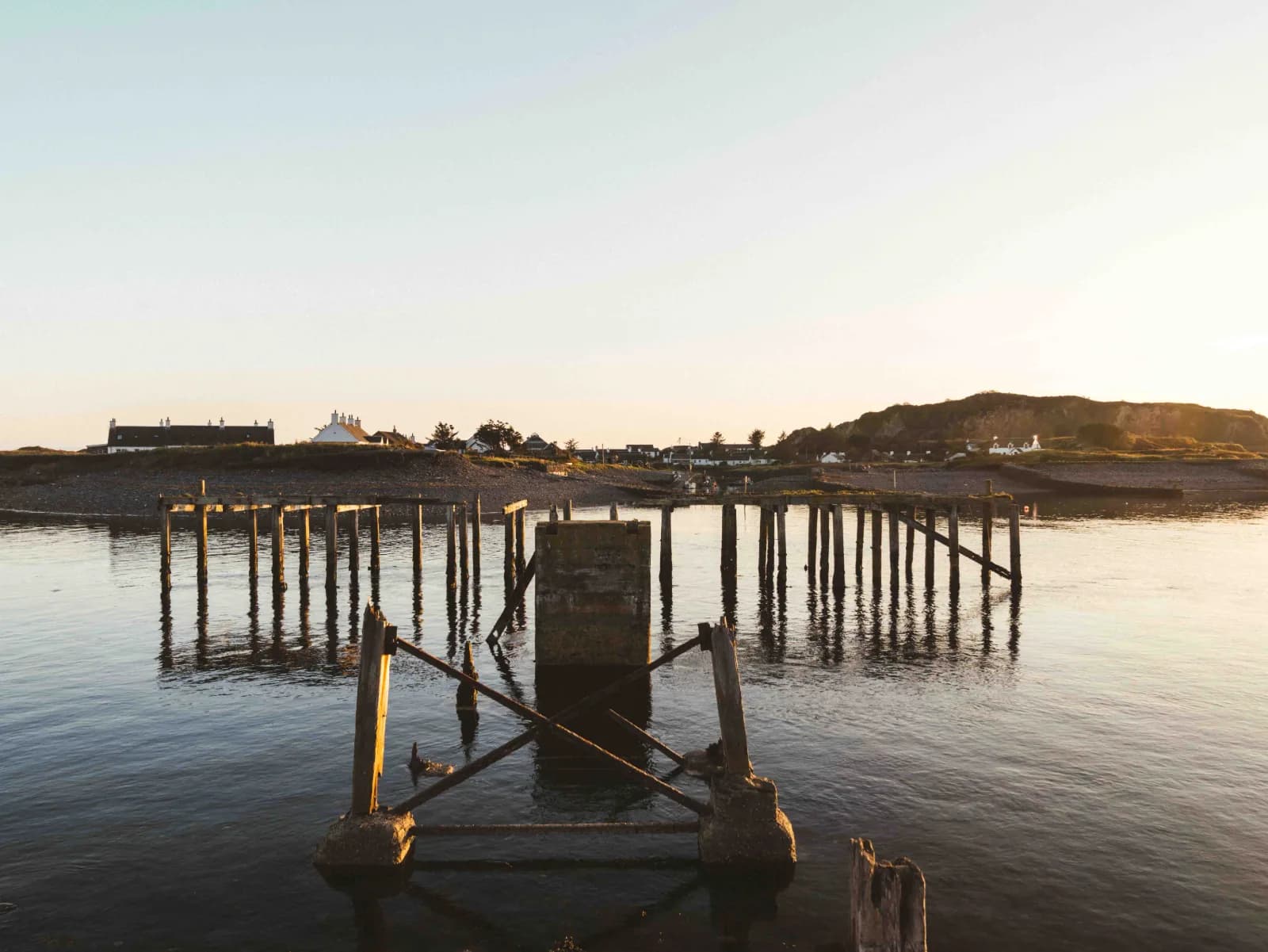
And drive back home, still with nothing to say / Except that now you will uncode all landscapes / By this: things founded clean on their own shapes, / Water and ground in their extremity.
Arriving at the House
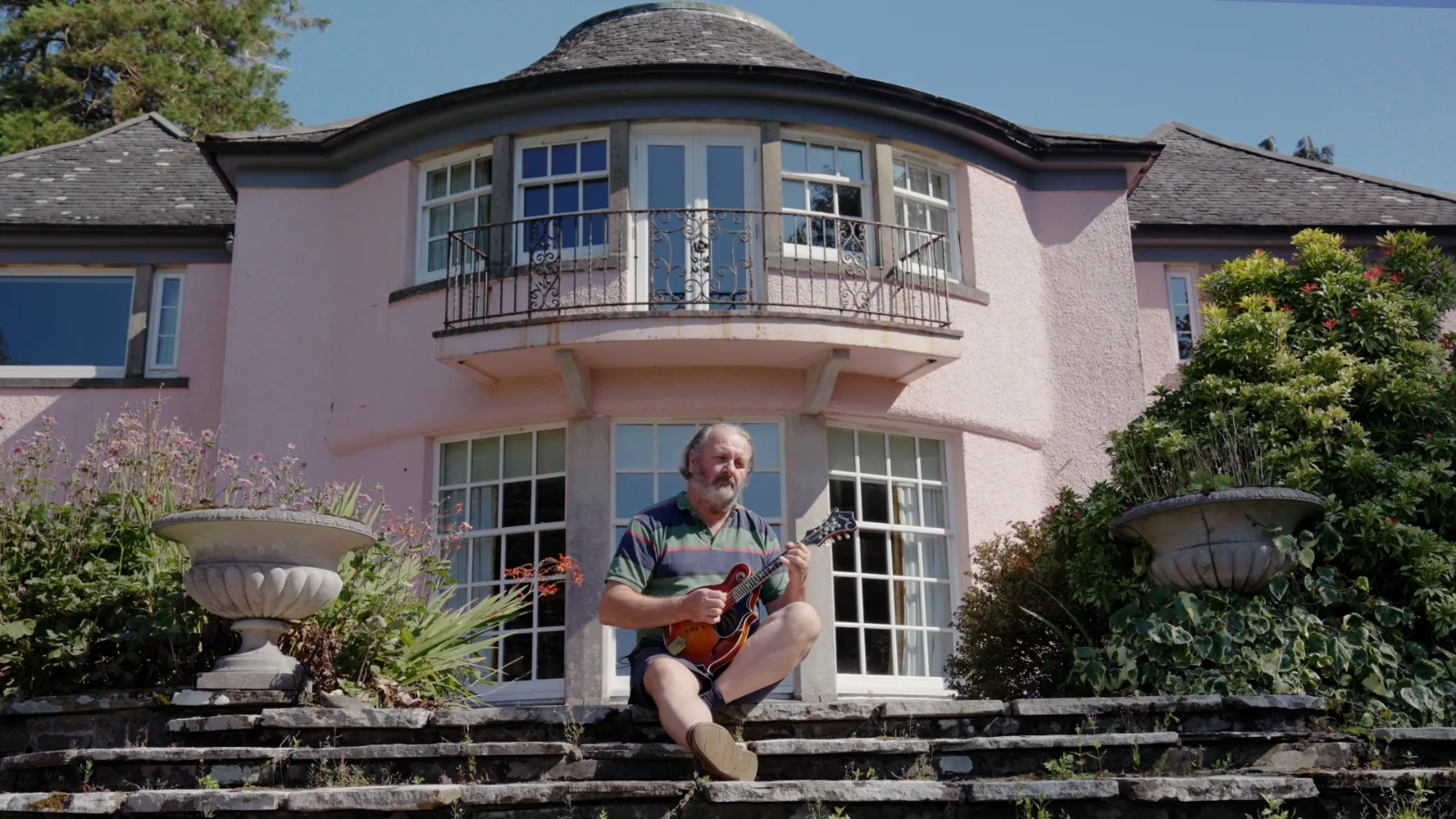
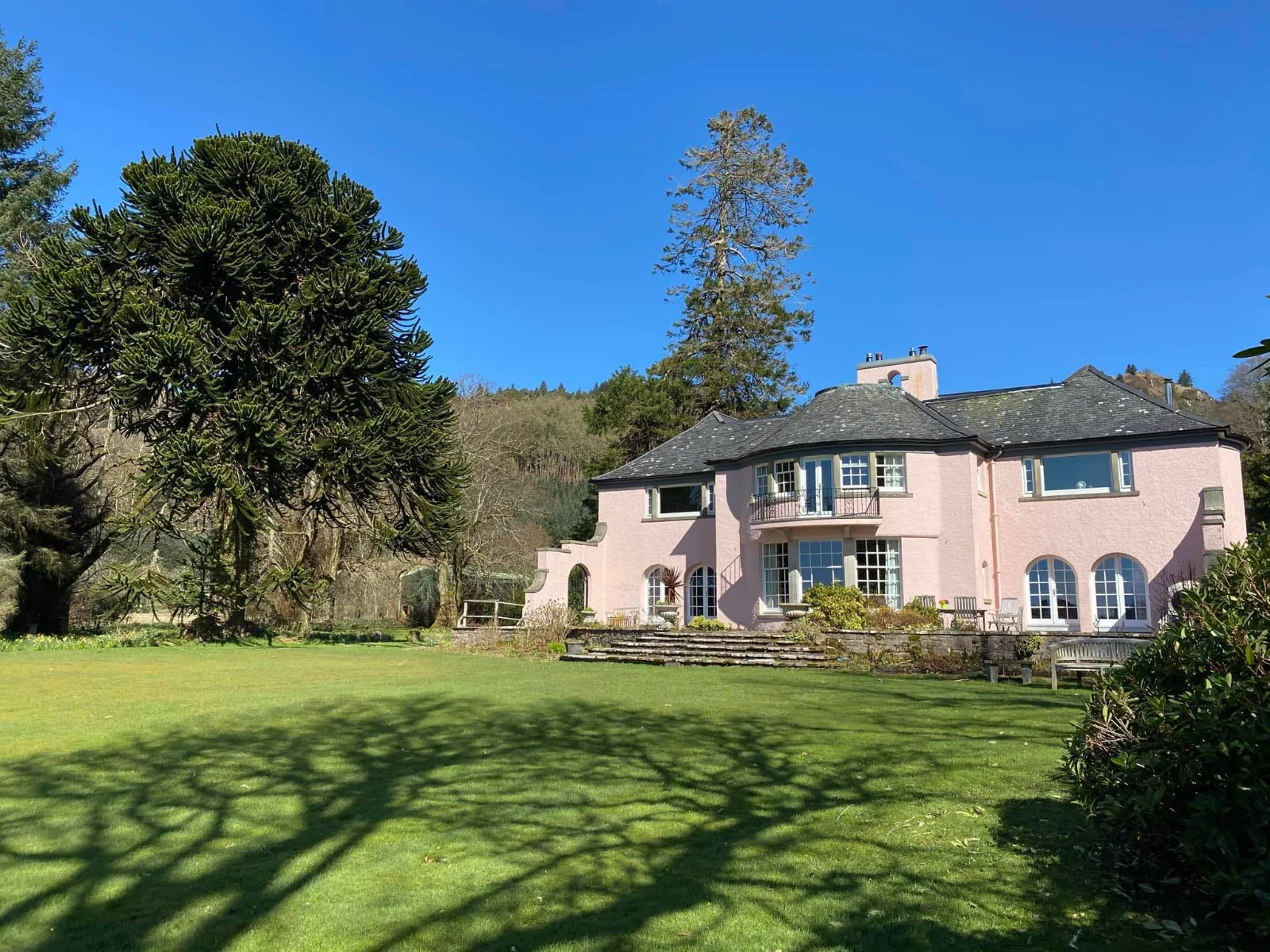
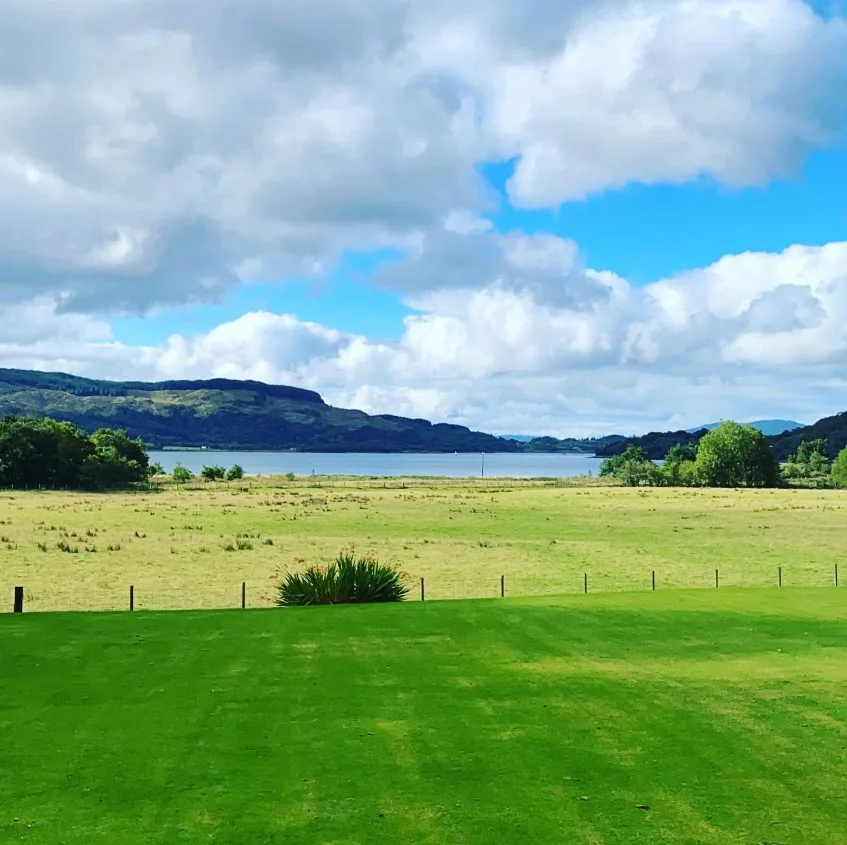
You reach Melfort House at the end of a long day’s travelling through the west coast of Scotland. The road narrows, the loch widens, and the house appears on its shore as if it had always been there, settled into the landscape with the quiet authority of a place that knows what it is.
There is afternoon tea in the drawing room. Deep sofas by a log fire. Family photographs on the walls, quirky antiques gathered over decades. Through the window, boats pass on Loch Melfort in the late afternoon light. The pace of everything slows, and the eye, tired from driving, begins to rest.
We stayed at Melfort House during our journey through Argyll. It was not planned as a portrait, not intended as a story. But some places insist on being told, and this was one of them. Because what emerged over the days we spent there was something we had not expected: a house where music, food and landscape form a single, unhurried practice of hospitality, and where the boundaries between host and artist, between performance and daily life, dissolve entirely.
A Musical Family, a House That Listens
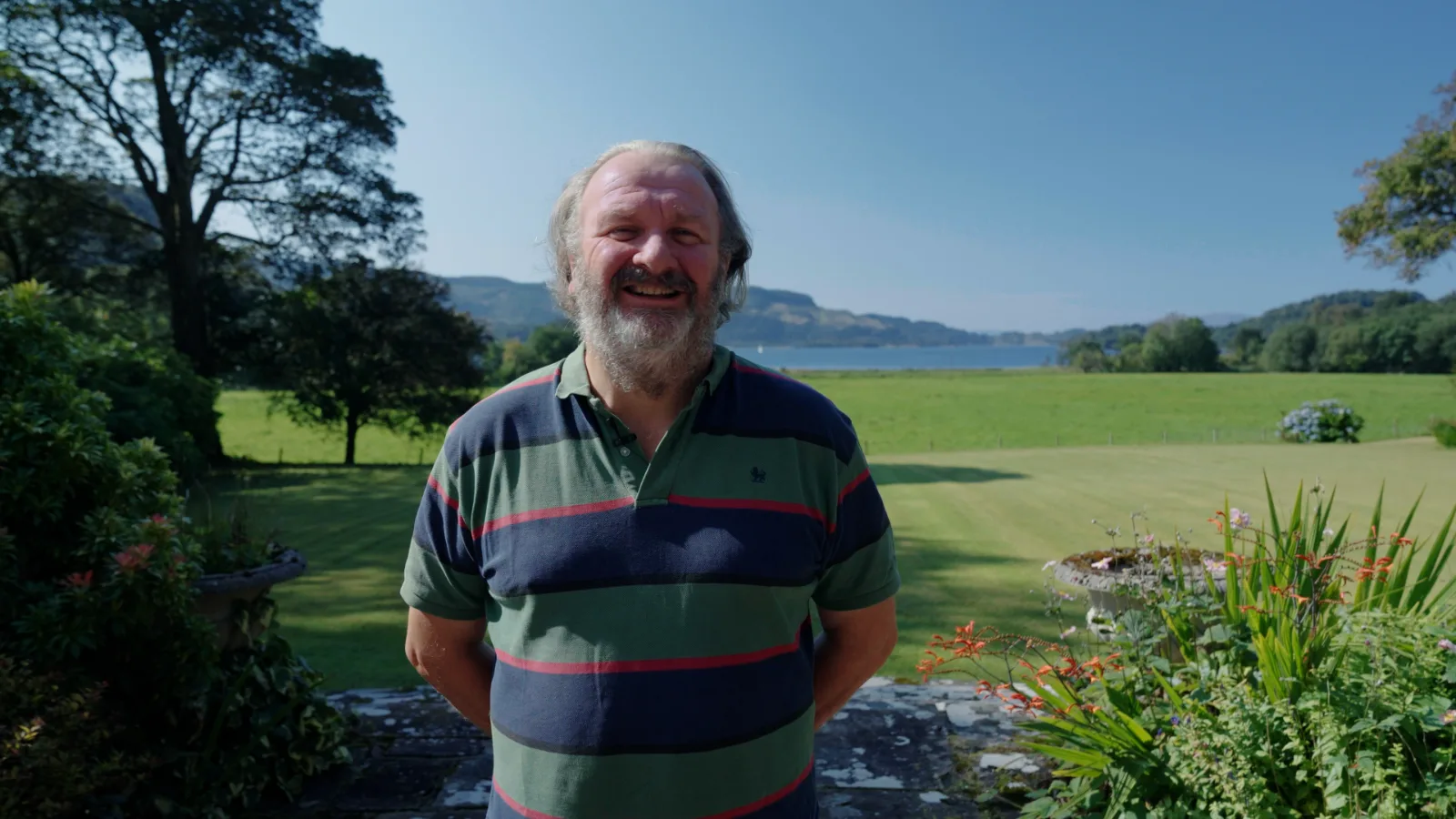
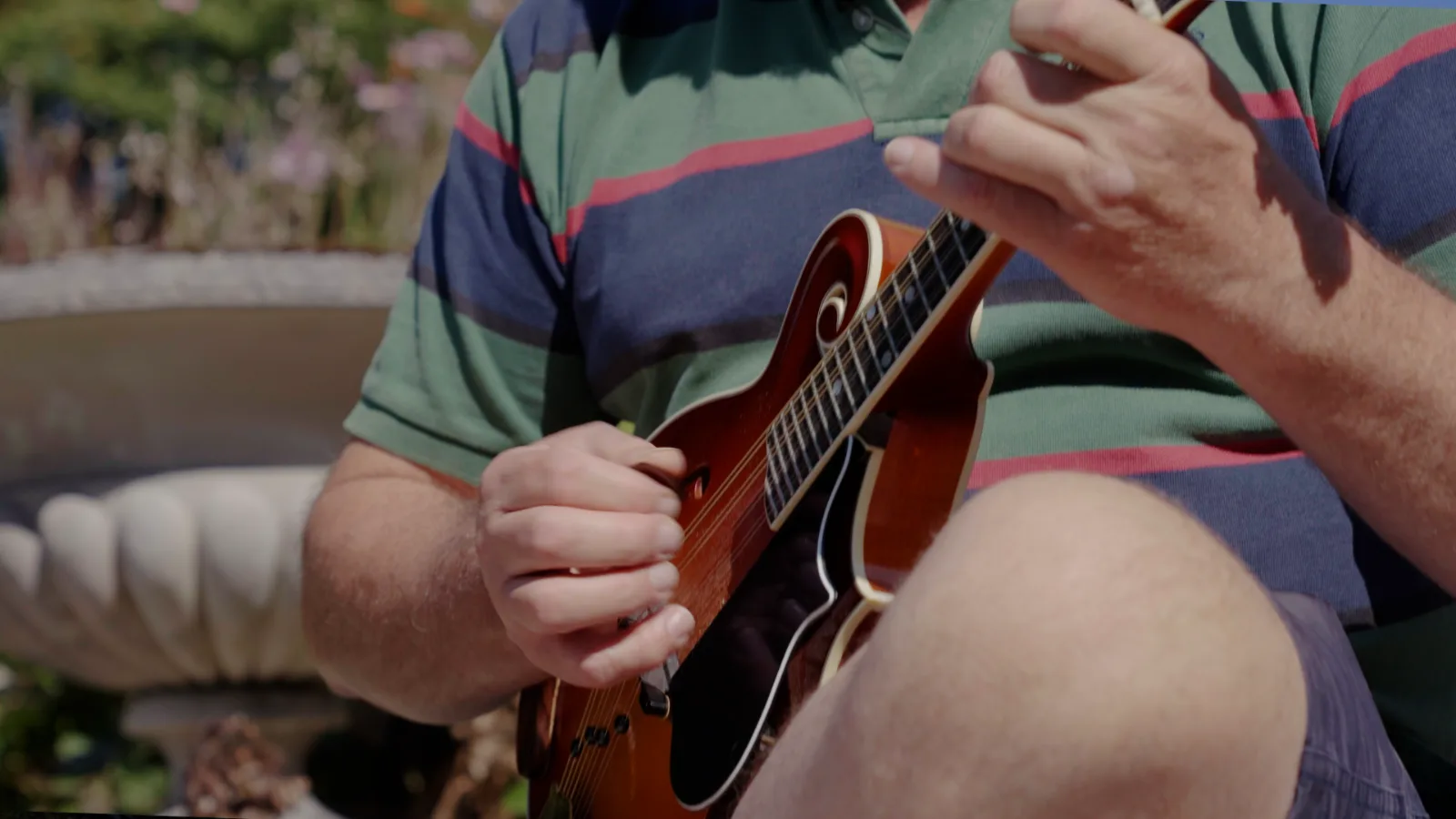
Matthew Anderson comes from a musical family. Both his parents were singers, his sister is a musician, his brother a pianist. He moved to Argyll twenty years ago to run a bed and breakfast, and during those years, he says, he “rekindled his love of traditional music and started playing guitar and mandolin again.”
What began as a personal return to an old passion became something larger. Anderson started organising concerts in the house: one or two musicians, sixty people gathered in the drawing room. When the audience outgrew the space, he moved the concerts to the village hall, where he now hosts performers from what he calls “the A-list traditional music world,” drawing 140 or 150 people at a time.
But it is the smaller, more intimate music that defines Melfort House. On Wednesday evenings, after dinner service, Anderson walks across to the pub and plays for an hour or so: Scottish traditional songs, American traditional songs, popular songs rearranged in a more acoustic, rooted idiom. He plays for the guests and for the locals. He plays for himself.
Music and Food as Performance
There is a phrase in the interview that stops you. Anderson is talking about the relationship between cooking and playing, between the kitchen and the drawing room, and he says:
“Working in music and working in food is not that different because it’s still performance. And I have to change my face between the kitchen and the dining room.”
It is a remark of extraordinary precision. Both are acts of making that happen in real time, for an audience that is present and attentive. Both require preparation that remains invisible. Both are consumed in the moment. And both depend on a quality of attention that Anderson clearly possesses: the ability to be fully present in what he is doing, whether it is plating a dish or tuning a string.
This is what makes Melfort House more than a bed and breakfast. It is a place where hospitality is a creative practice, where the day unfolds as a sequence of encounters, each prepared with care, each offered with the same warmth: starting from a generous breakfast made by the host himself, and continuing through the quiet generosity of a recommendation, a suggestion, a door opened onto something you would never have found alone.
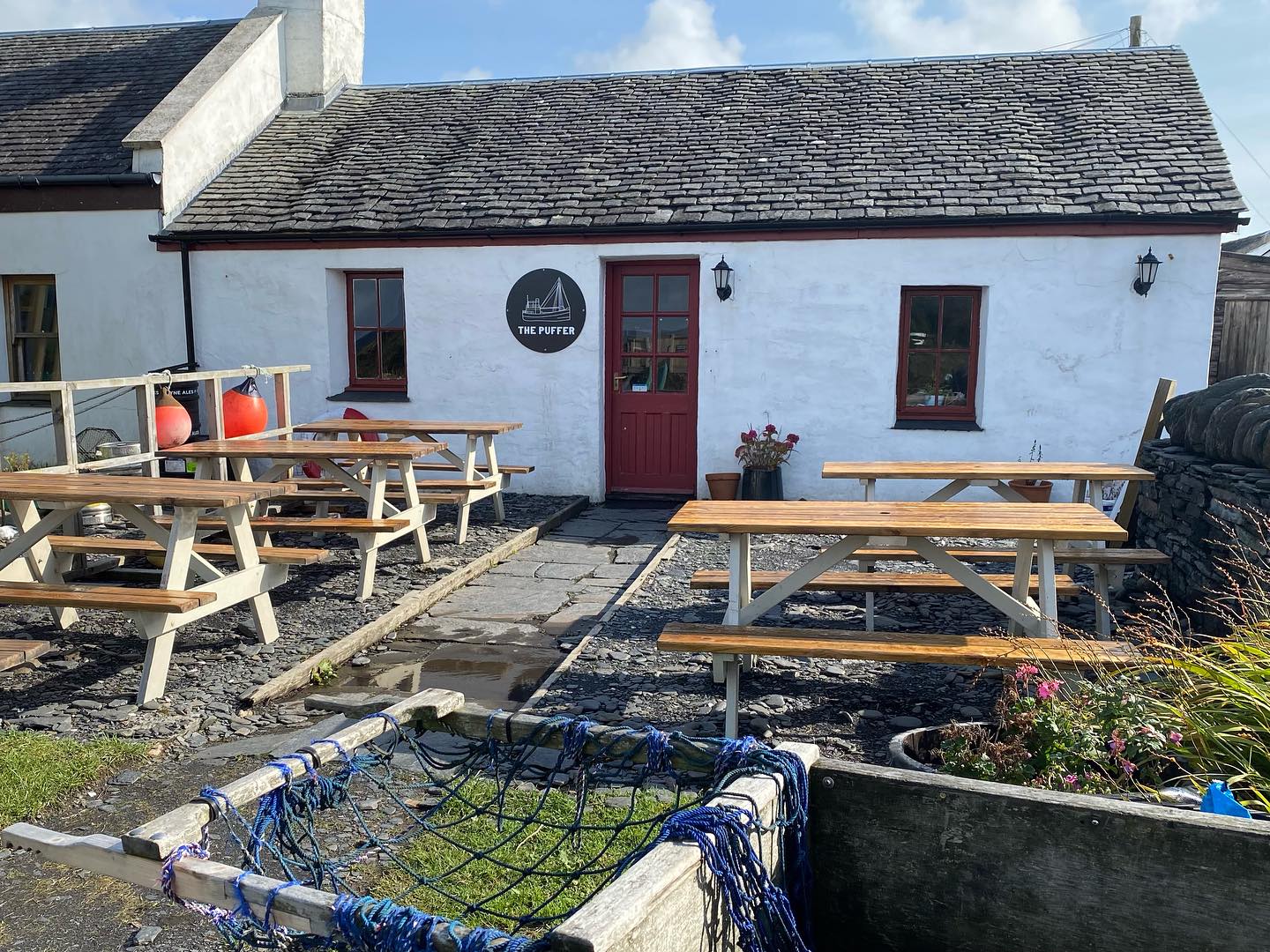
It was Matthew who told us about The Puffer.
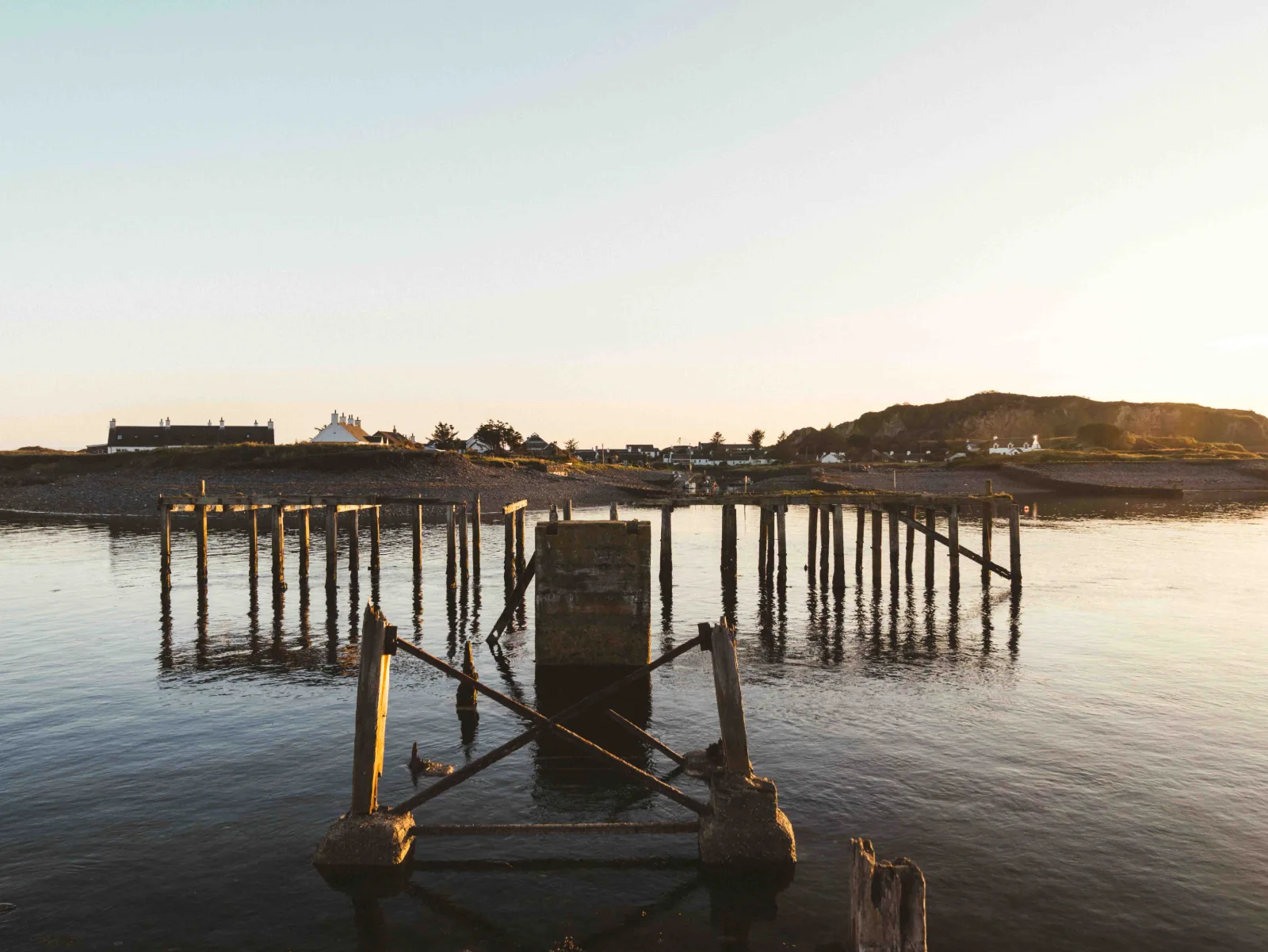
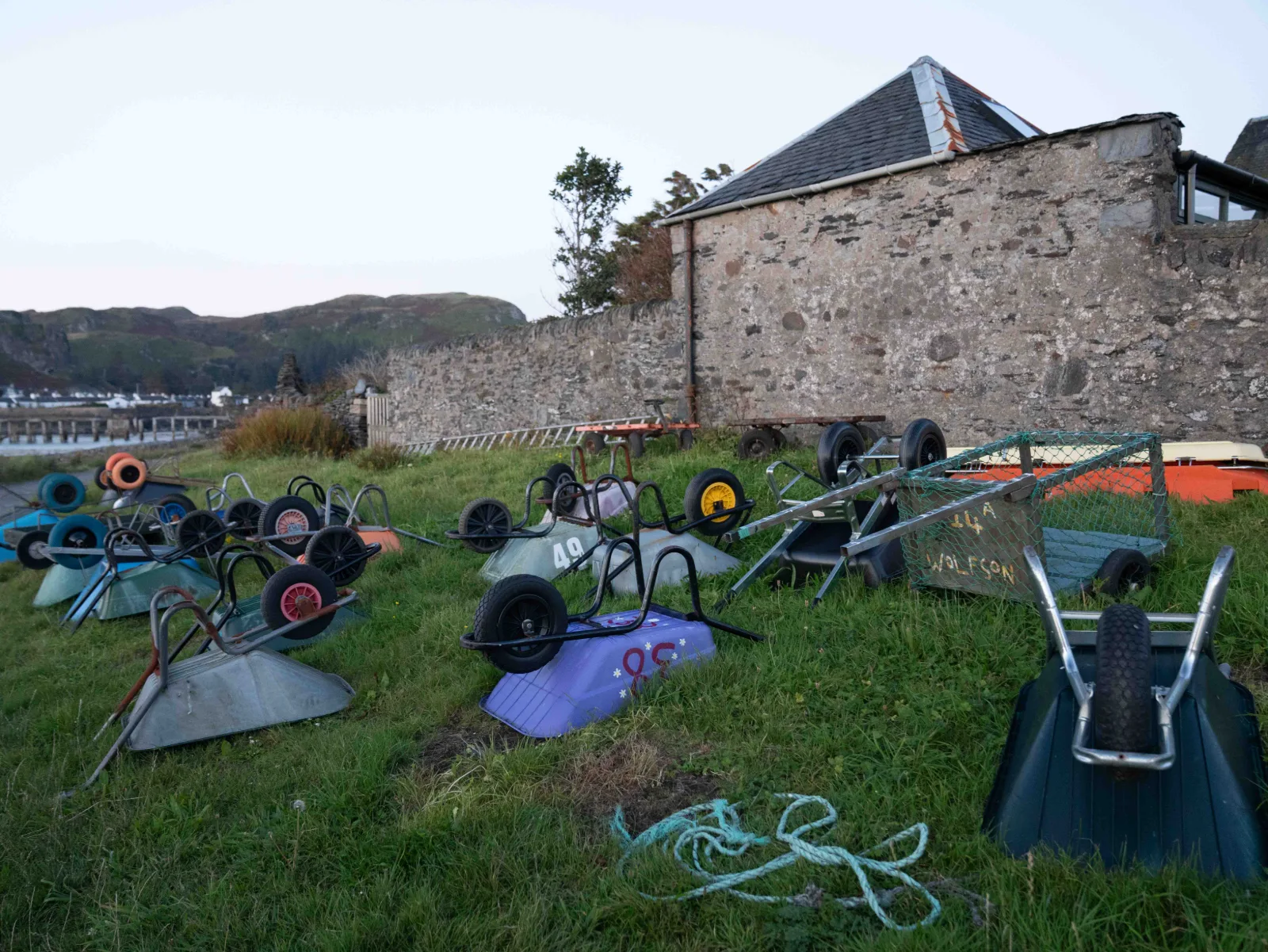
On a small island called Easdale, sixteen miles south of Oban, reachable only by a tiny passenger boat that crosses in three minutes from the village of Ellenabeich, there is a pub. It occupies two old slate quarriers’ cottages on a car-free island with a population of fewer than sixty people. The bar is shaped like the stern of the old puffer boats that once carried goods between the islands when everything moved by sea. There is music here, sometimes. There is always conversation.
Matthew was supposed to come with us that evening, to play with other local musicians. A last-minute change of plans kept him at the house. But the evening he gave us was one of the most vivid of the journey. A session of traditional music in a room no bigger than a living room. A crossing back by boat in the dark, the water black and still, the sky so full of stars that their reflection lit the surface of the sea. No artificial light anywhere. Just the sound of the outboard, the cold air, and the feeling of having stumbled into something that no map could have led us to.
This is the kind of hospitality that Melfort House offers. Not only a room and a breakfast, but an entry point into the life of a place. Anderson knows where the music is, who is playing, which pub to walk into and which boat to take. He knows because this is his landscape, his community, his practice. And he shares it with the same care with which he tunes his mandolin or sets the table in the morning.
The Roads Between Scotland and Appalachia
When Anderson speaks about traditional music, a broader geography opens up. He is drawn to the connection between Scottish and Irish traditional music and the folk traditions of the American eastern states, particularly Appalachian music.
“There is definitely a link between Scottish and Irish traditional music and particularly eastern states American,” he says. “The Appalachian music is a mix of Scottish, Irish, Dutch, German, all together. And it has developed into what we now know as country music. I think that is why country music is so popular in Scotland.”
This is a thread that runs deep through the cultural fabric of the west coast. The Scots and the Irish who crossed the Atlantic carried their songs with them, and the music they made in the mountains of Virginia and North Carolina was shaped by the same landscapes of remoteness, community and oral tradition that they had left behind. Anderson feels this connection instinctively. His repertoire moves between the two traditions as if they were two dialects of the same language.
Sessions as Community
In Argyll, the music session is a form of social infrastructure.
Anderson describes a network of regular sessions across the region: the Loch Melfort Hotel, the Gunpowder Room pub nearby, venues in Oban and further south. “These are evenings where musicians can just gather in a public place and play for themselves. And by playing for themselves, they also entertain anybody else that’s in the pub.”
The key phrase is “play for themselves.” The session is not a concert. It has no programme, no tickets, no stage. It is musicians gathering to play, and the audience is whoever happens to be there. The informality is the point. The session binds the community together through a shared act of making that is open, recurring, unpretentious.
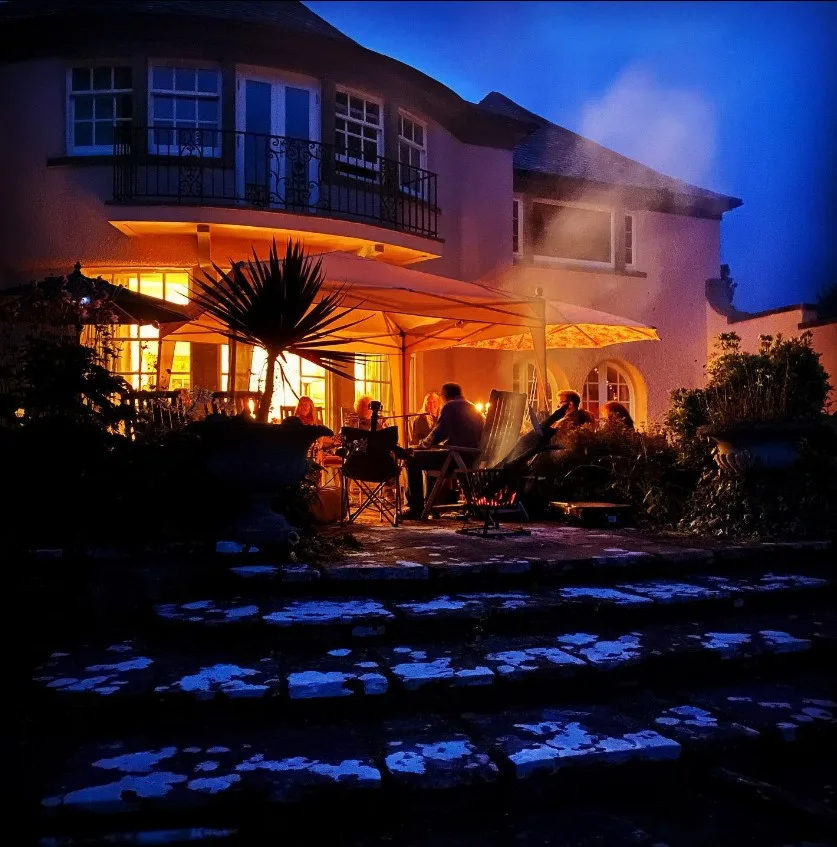
“Everybody that you saw on Friday night lives within five miles of the hotel,” Anderson says. The geography is intimate. The music is local in the truest sense: made by the people who live there, for the people who live there, in the places where they gather.
Anderson wants to expand this. He talks about broadening the musical range beyond traditional music, about encouraging more people to come out after what he describes as a post-Covid hesitation. The ambition is modest and genuine: more music, more evenings, more connection.
The Calm at the Centre
When asked whether the landscape influences his music, Anderson pauses.
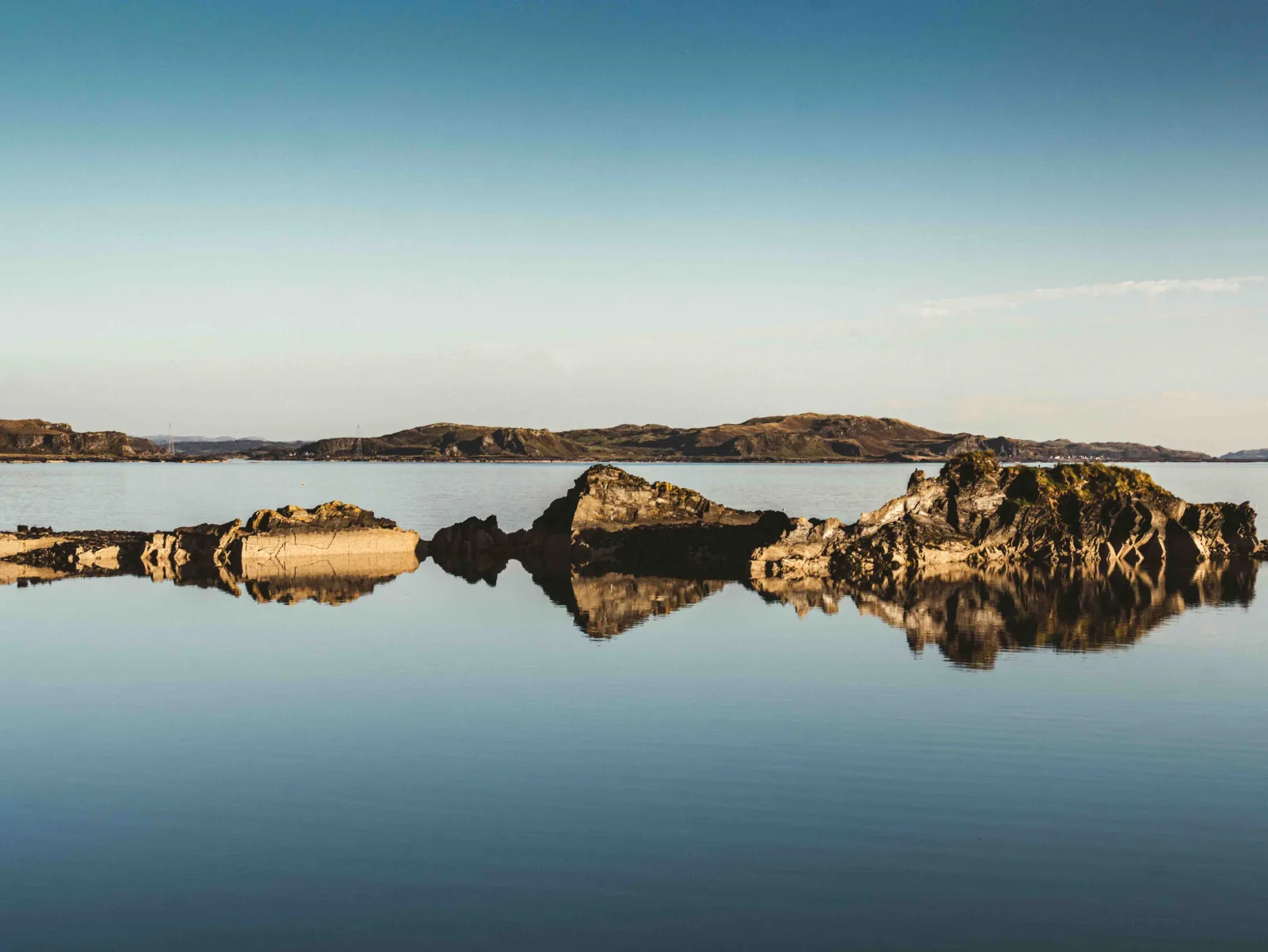
“Yes, it must,” he says. “I feel calm here. I go to a city, I’ve got two days and I’m ready to go.”
He is not a composer. He does not write tunes. But he acknowledges that the landscape creates a condition in which music can exist. The calm is the medium. The stillness of the loch, the slow rhythm of the tides, the long evenings of northern light: these do not produce melodies, but they produce the state of mind in which music is played well, listened to deeply, and shared generously.
He mentions Duncan Chisholm, a fiddler and composer whose album The Black Isle was directly inspired by the landscape of Skye. He mentions Mendelssohn, whose Hebridean Overture was born from a visit to Fingal’s Cave on the Isle of Staffa. The west coast has always produced music, or drawn music from those who come to it. Anderson’s contribution is quieter: he creates the space where music and landscape meet, and invites others in.
I have begun to think of life as a series of ripples widening out from an original centre.
If This House Had a Soundtrack
Asked what soundtrack Melfort House would have, Anderson laughs.
“I think it would be very much bound with me as much as just the house. A lot of traditional music. Fiddle music. Scottish accordion music. All of it’s dance music, you know? It may be peaceful and quiet, but it inspires fun and dance.”
Then he adds: “I was brought up in the world of light opera and classical music. And I’m a punk at heart as well, which doesn’t really help.”
It is a disarming admission, and a revealing one. Anderson is not a purist. His musical identity is layered: opera, punk, traditional, country. These sit together in him without contradiction, just as cooking and playing sit together, just as the kitchen and the drawing room are two sides of the same performance.
Melfort House reflects this. It is a place of layers, not of categories. Heritage and warmth, formality and ease, silence and music, all coexisting in a space that feels both deeply traditional and entirely personal.