Resipole Studios: Where Art Slows Down and the Highlands Begin to Speak
A contemporary art gallery grown from a 200-year-old barn on the shores of Loch Sunart.
8 April 2026·7 min read·English
Written by AnotherStory Editorial
On the west coast of the Scottish Highlands, where the road itself feels like part of the experience, a former farm building has been transformed into a contemporary gallery of rare clarity and character. At Resipole Studios, art is encountered as a quieter act of attention: shaped by landscape, architecture and the long journey that leads you there.
At a Glance
“Why can’t you have high quality art gallery in a rural environment?”
Where:Resipole Studios, Loch Sunart, West Highlands
Founded:2004
Directed by:Andrew Sinclair
Housed in:A converted 19th-century milking barn, four exhibition spaces
Open:Tuesday–Saturday, 10:00–17:00 (winter by appointment)
Yet often the mountain gives itself most completely when I have no destination, when I reach nowhere in particular, but have gone out merely to be with the mountain as one visits a friend with no intention but to be with him.
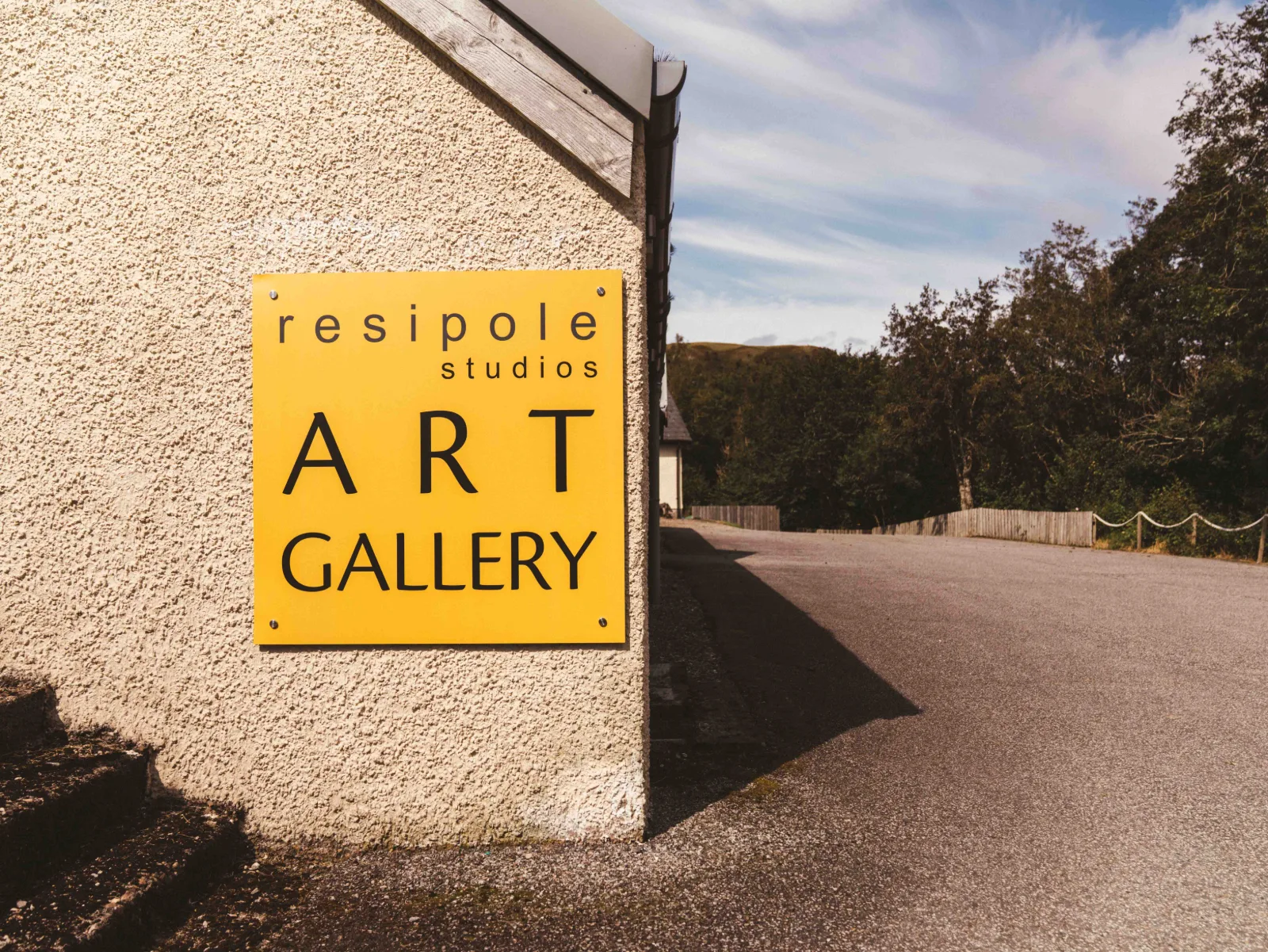
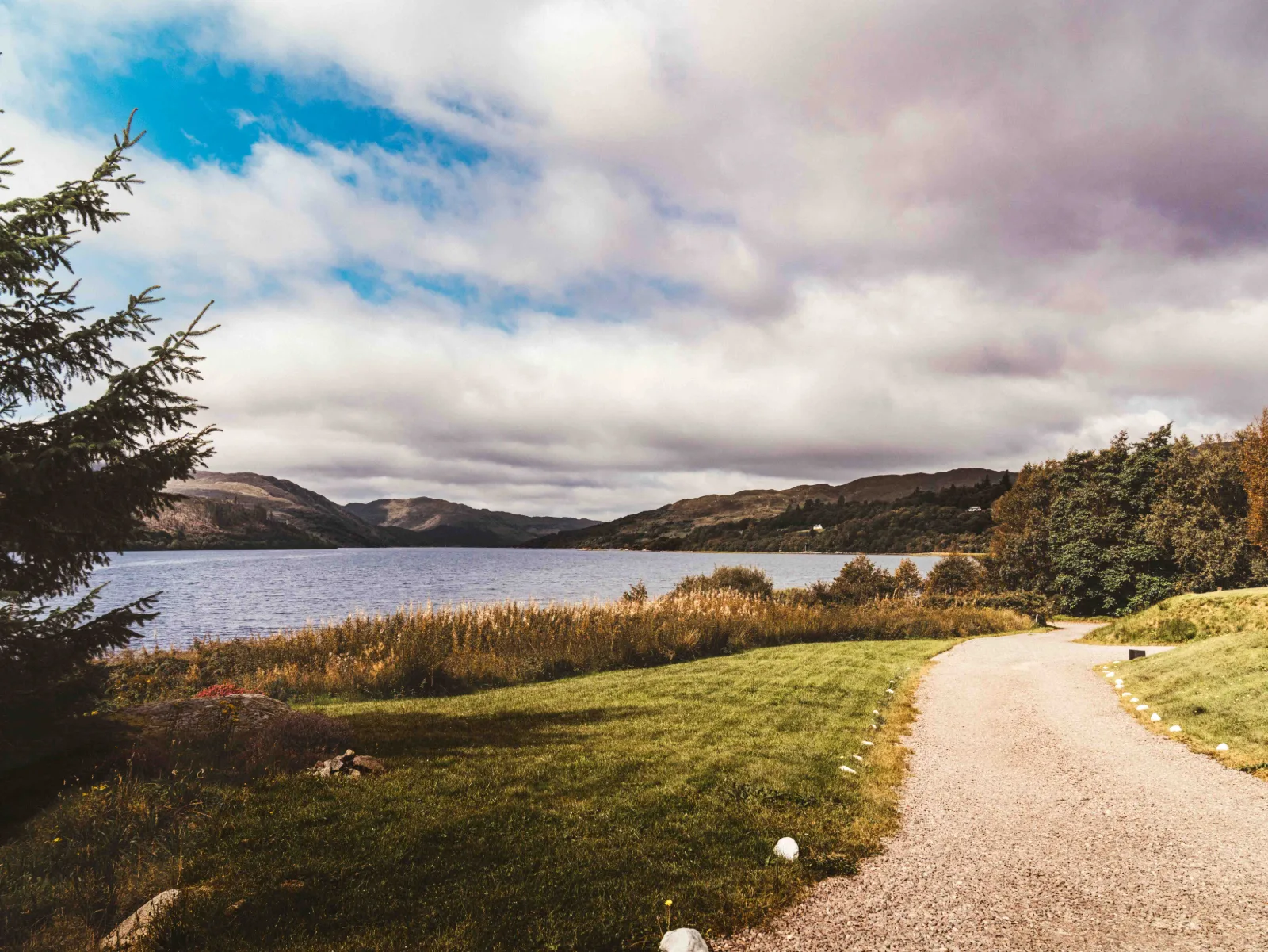
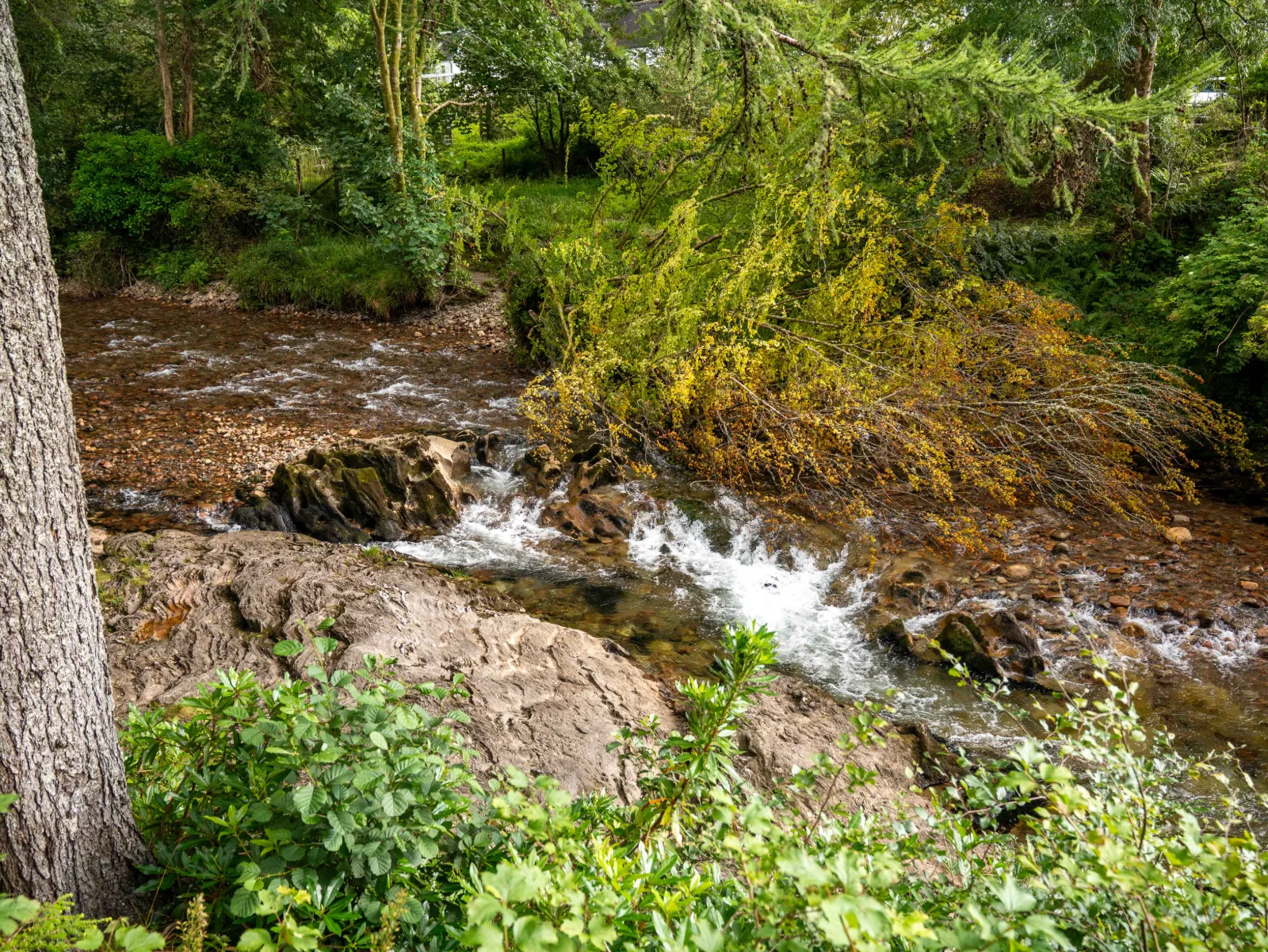
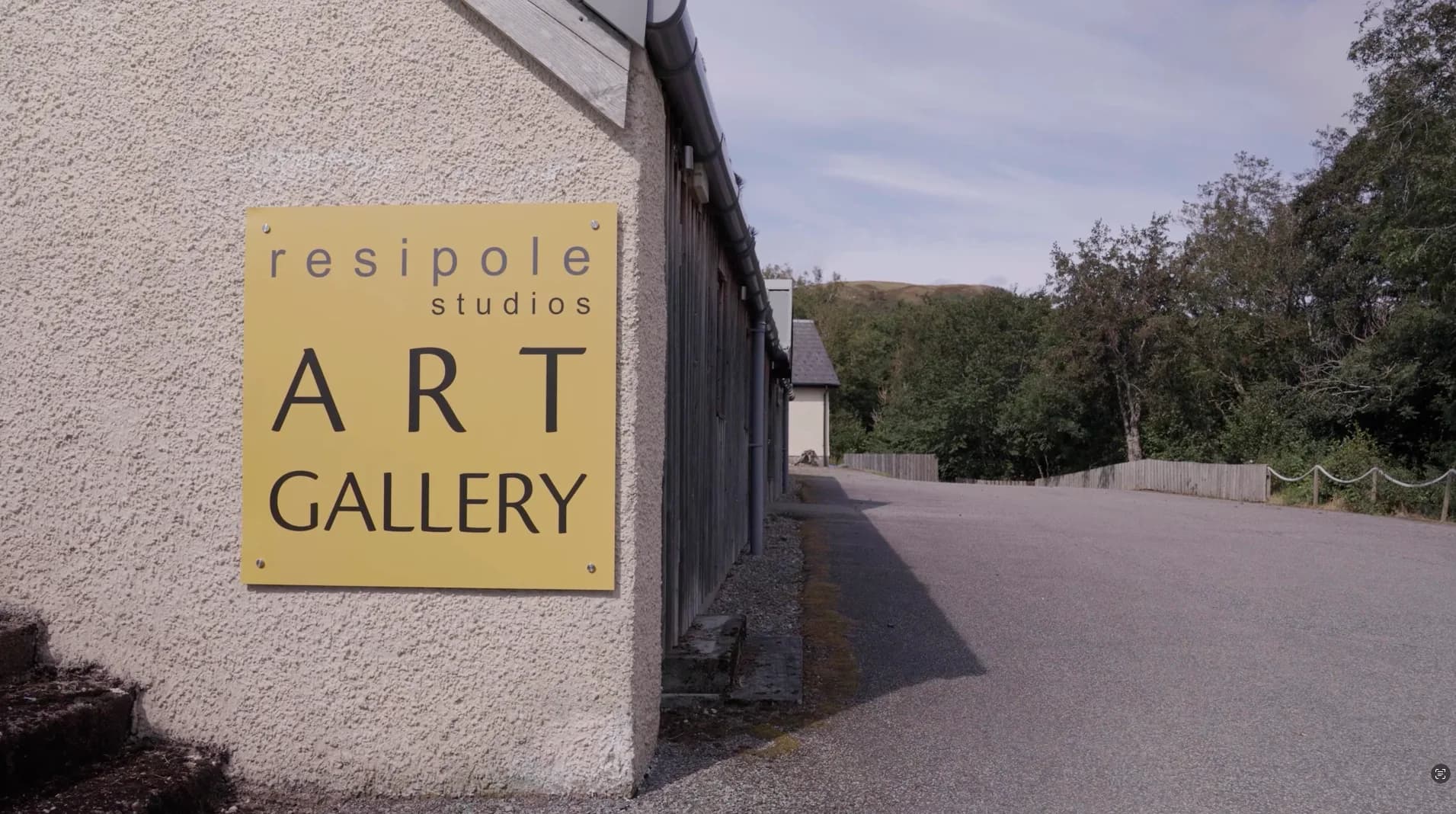
On the west coast of the Scottish Highlands, where ancient woodland meets clear water and the road itself feels like part of the experience, Resipole Studios stands as a quiet surprise. Near Loch Sunart, in one of the most remote and visually striking corners of Scotland, a former farm building has been transformed into a contemporary art gallery of rare clarity and character.
This is not simply a story about a gallery in an unusual place. It is a story about how landscape shapes perception, how architecture can hold memory while becoming something new, and how art can be encountered as a quieter, more intimate act of attention.
For AnotherStory, Resipole Studios immediately felt like more than a destination. It felt like a place where the values we care about most — place-based storytelling, curatorial identity, artistic integrity and a deep dialogue between culture and environment — are already embedded in the structure of the space itself.
And perhaps that is where its singularity begins.
A gallery reached through landscape
Resipole is not encountered abruptly. It is approached.
Andrew Sinclair, artist and director of the gallery, describes this with rare precision: “Part of the unique aspect of this gallery is actually the journey coming out to here.” In a cultural landscape often dominated by speed, ease and visibility, this is already a curatorial statement.
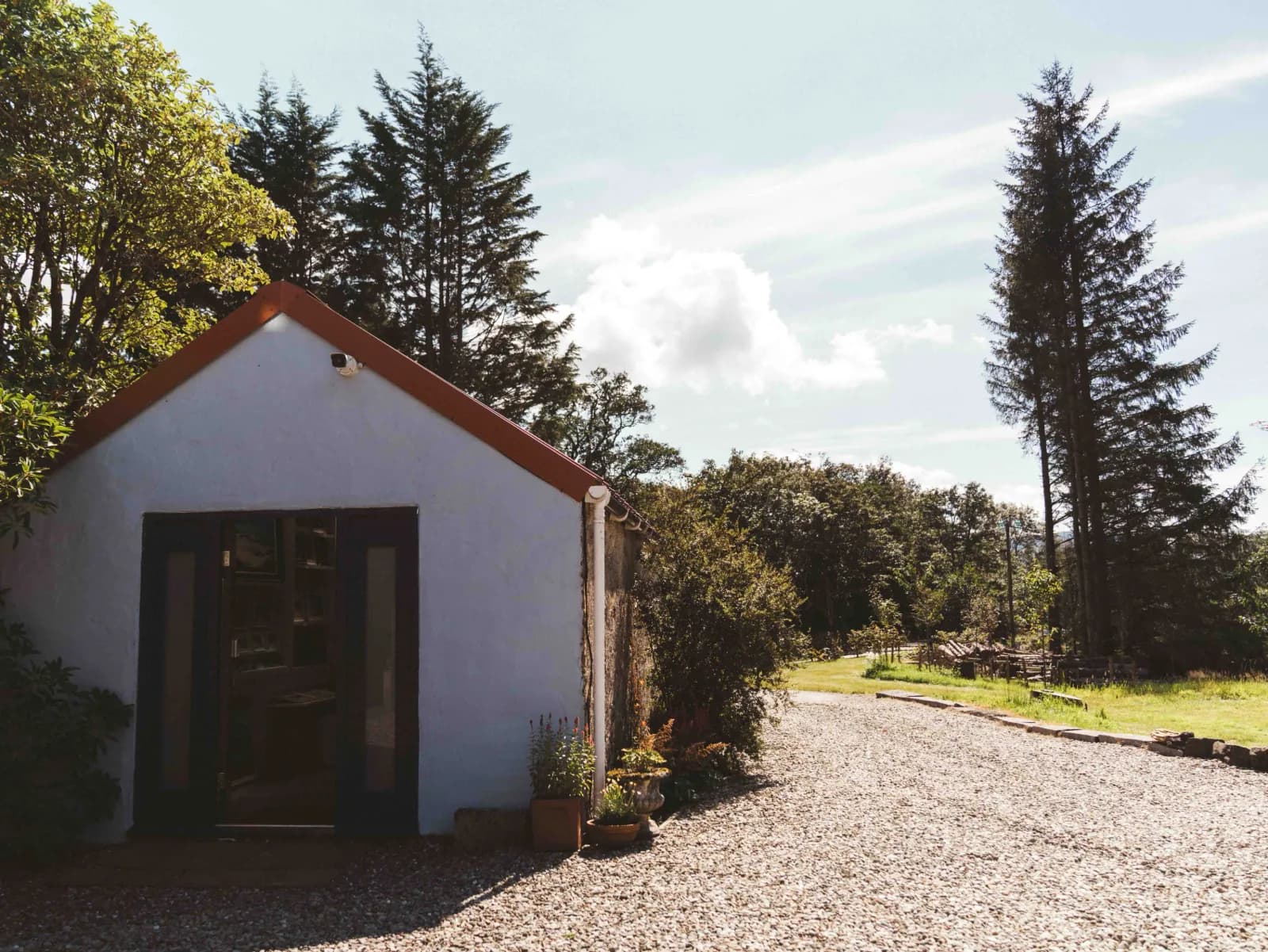
The gallery stands on the family farm at Resipole. Sinclair’s grandparents moved there in 1948, and the place has remained part of the family ever since. What began as a sheep and cattle farm gradually diversified, but the connection between land, labour and continuity was never broken. The building that now houses the gallery is nearly two centuries old, and Sinclair renovated it himself, over twenty years ago, into the space it is today.
That history matters. Resipole Studios feels grown from the landscape, shaped by the same forces that shaped the land around it.
A curatorial position, not a rural compromise
Why can’t you have a high quality art gallery in a rural environment?
One of the most striking things Sinclair says is also one of the simplest: the question quietly overturns a deeply urban assumption about where serious art belongs. At Resipole, remoteness is the condition that makes a different kind of quality possible. Sinclair speaks of the journey to the gallery as a way of preparing the eye and the body: “immersing yourself in the landscape and slowing down.” Only then, he suggests, do you arrive in the right state to see.
This is one of the reasons the place resonates so strongly with AnotherStory’s editorial vision. We are drawn to spaces where cultural experience is produced through geography, where the land itself becomes part of the curatorial frame. Resipole offers precisely that: a curatorial environment in which attention is recalibrated by the territory around it.
Visitors arrive with a heightened awareness of distance, weather, silence and scale. And this transforms the encounter with the works inside.
One has to look creatively to see this mass of rock as more than jag and pinnacle — as beauty.
Art that belongs to the west coast
At Resipole, the programme and the environment are inseparable. The gallery does not exist despite its location: it exists because of it.
Sinclair puts it clearly: “The common underlying theme running through most of the artworks that we have on show here is that either the west coast of Scotland is a source of inspiration, or that is where the artist is based.”
The gallery exceeds both the local and the regional. It uses geography as a curatorial language. The west coast is a shared field of sensibility, atmosphere and artistic response.
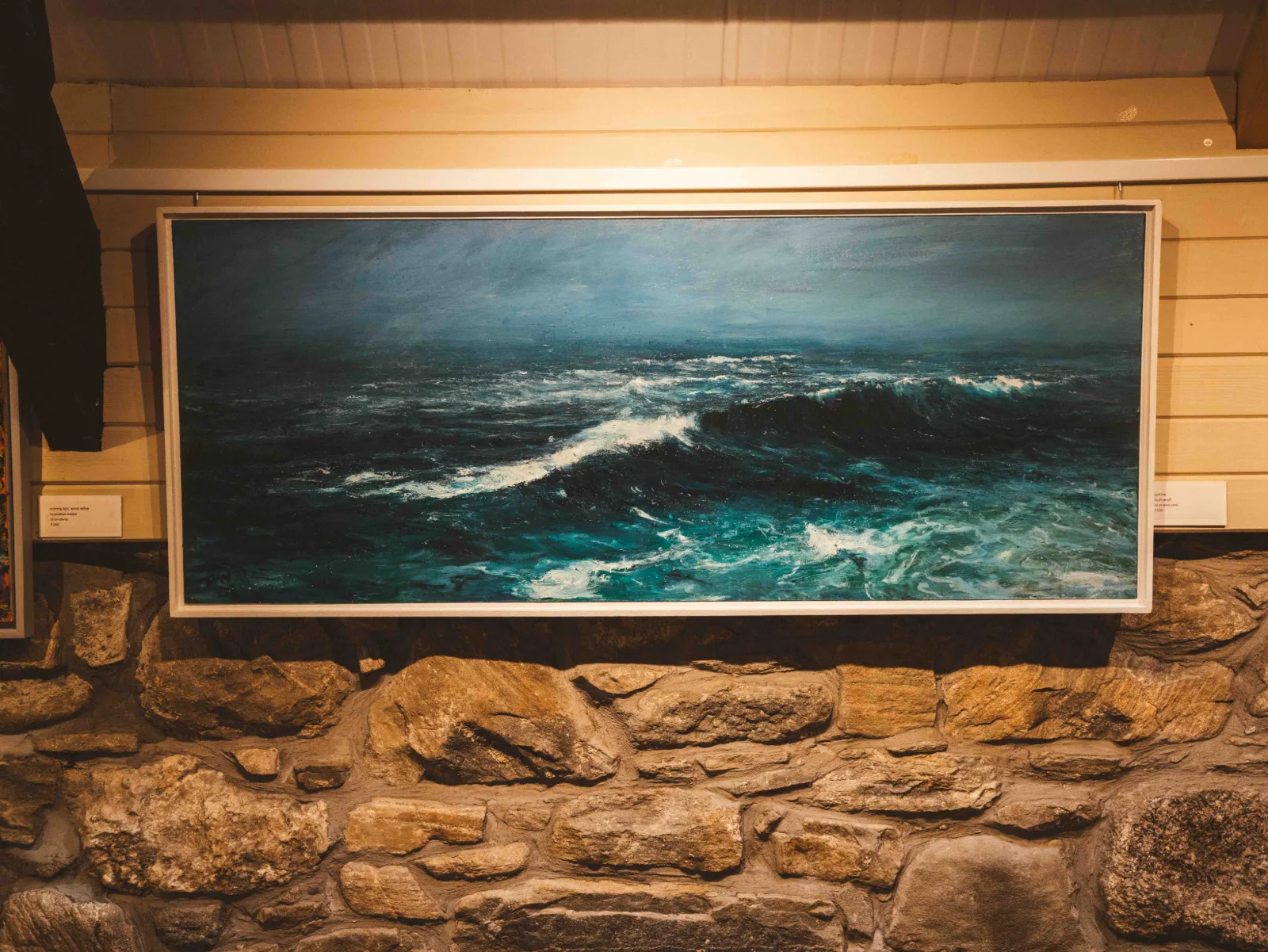
That is visible in the diversity of practices Resipole hosts: painting, sculpture, ceramics, photography, handcrafted works. Yet even across different media and different voices, a coherence emerges. The landscape is translated, not repeated. Some works are highly realist, others more atmospheric. What links them is a shared relationship to light, weather, water, movement and terrain.
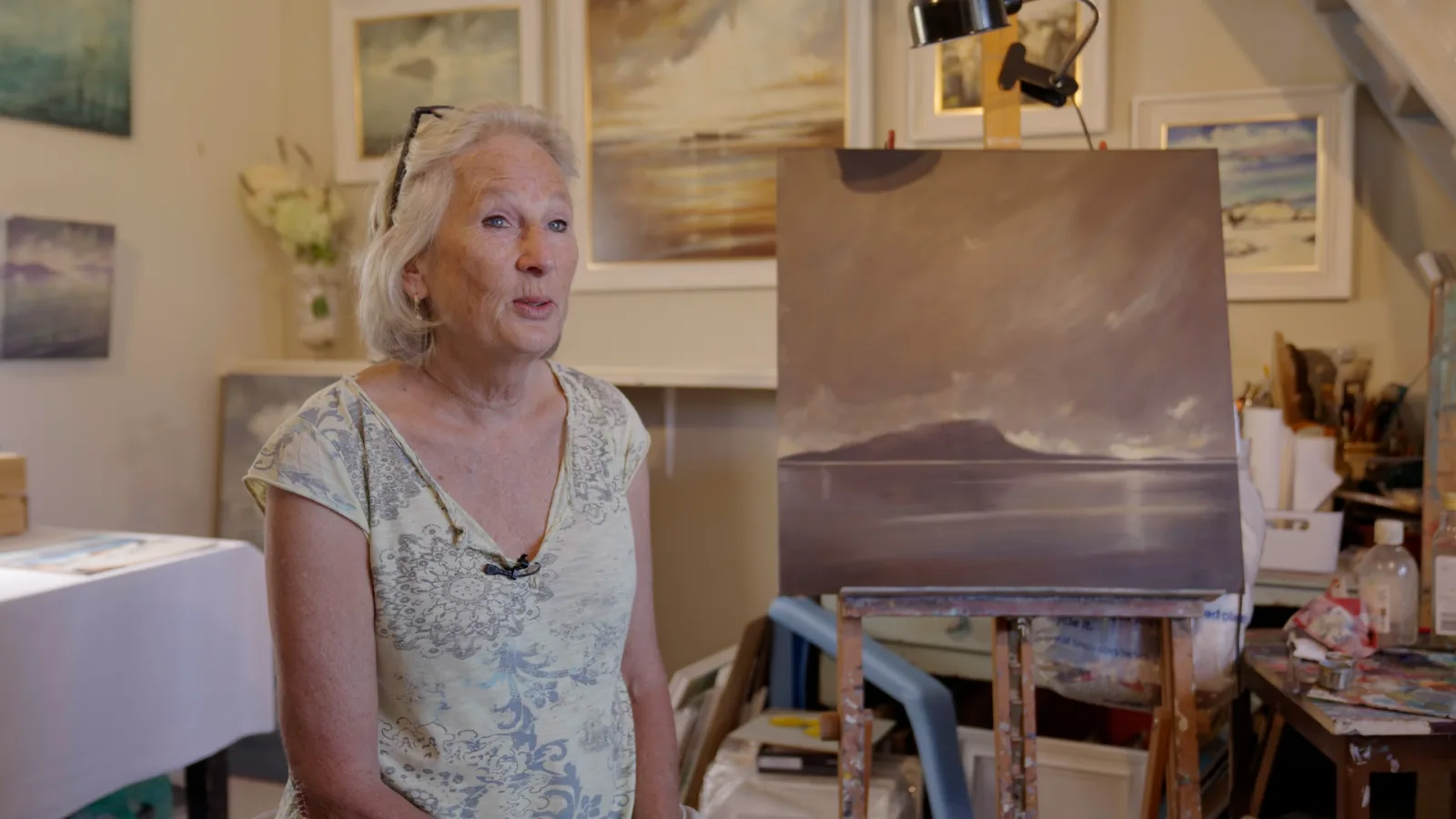
Speaking about the painters in the gallery, Sinclair notes the vitality of artists who work outdoors, whose paintings carry the physical force of place.
“You can almost smell the sea air,” he says.
It is a phrase that reminds us: the strongest landscape-based art does not merely depict the world. It carries traces of having been made in relation to it.
The barn, the windows, the sense of scale
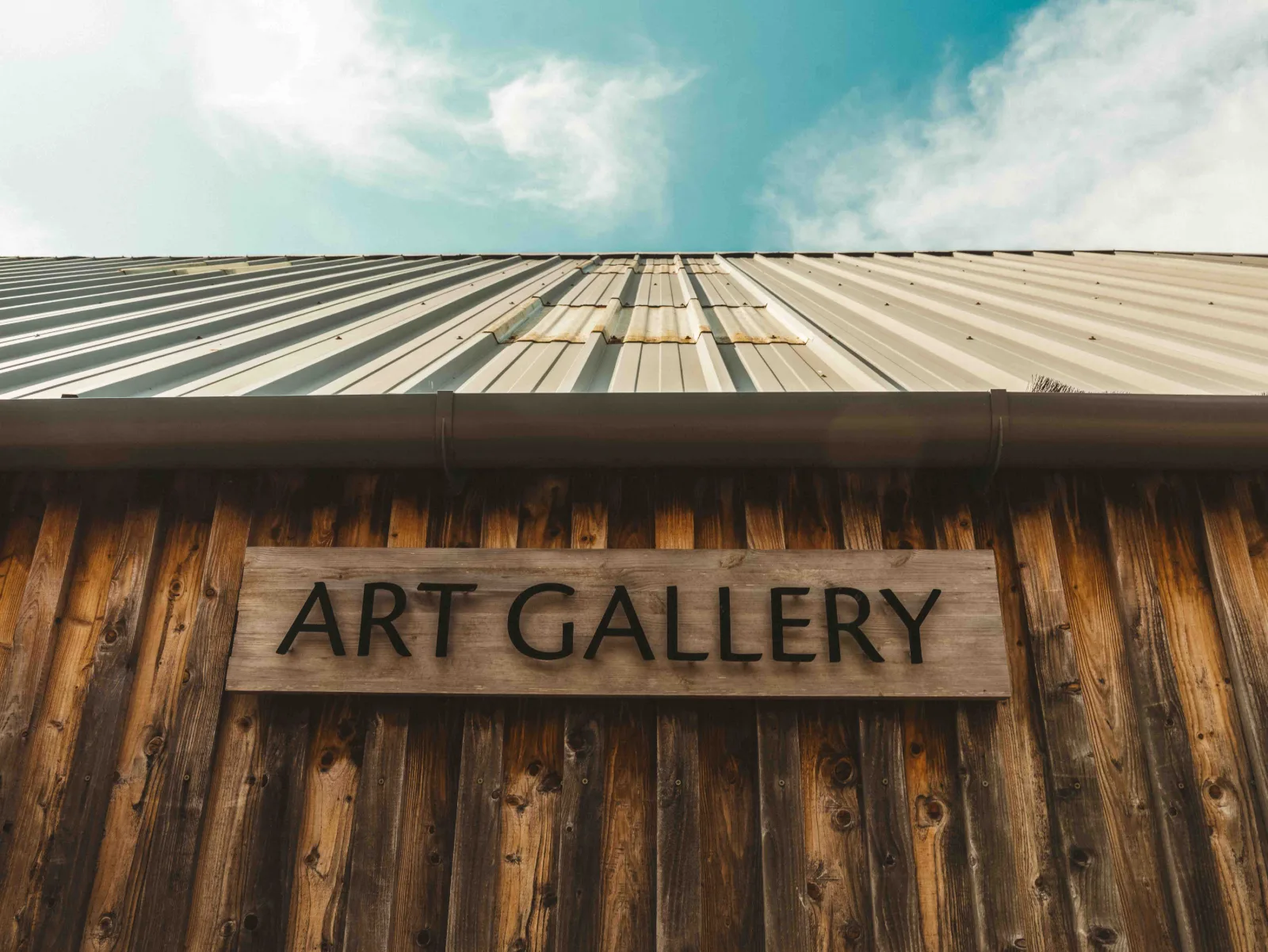
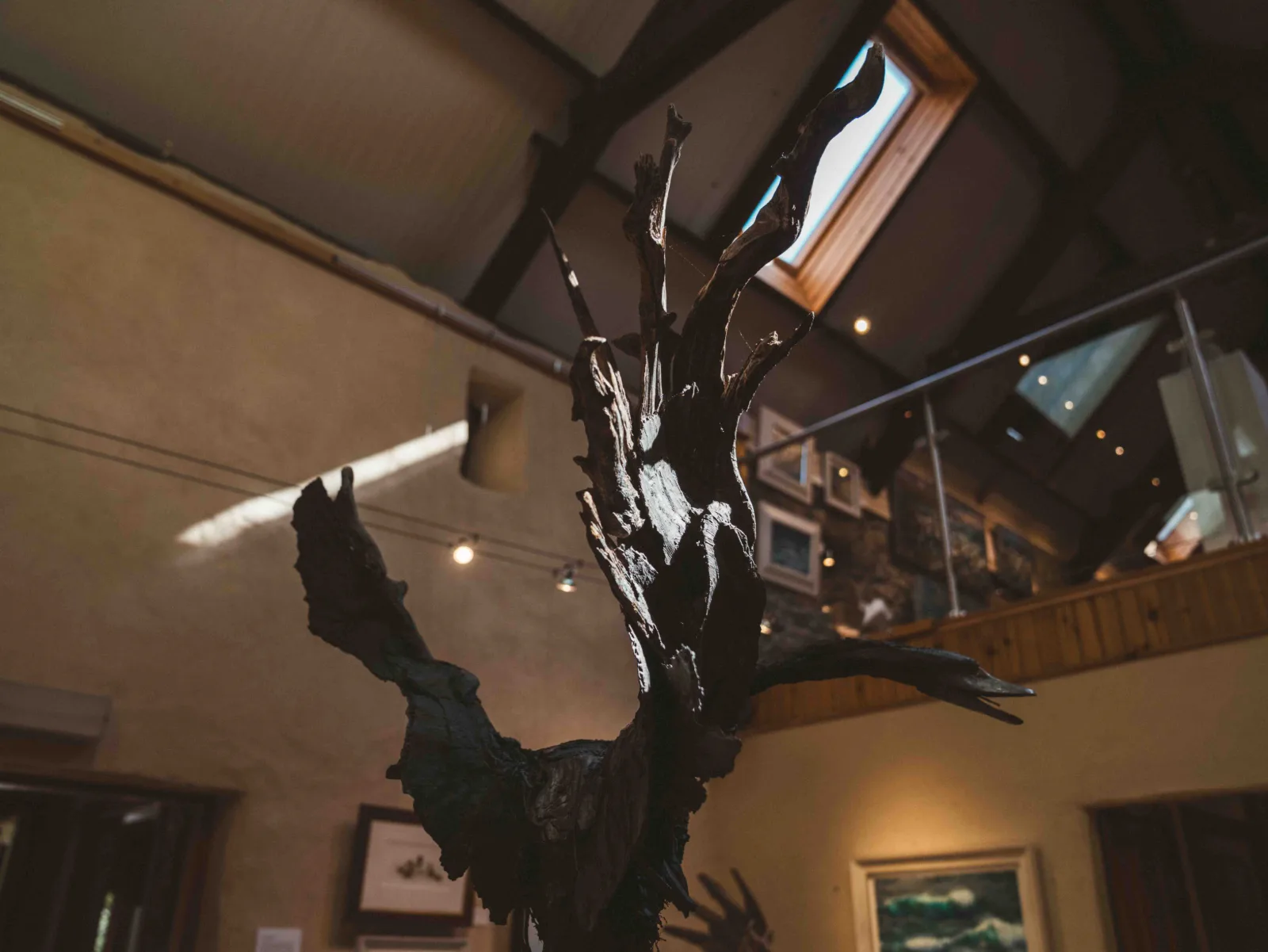
Part of what makes Resipole memorable is architectural. When renovating the building, Sinclair wanted “to keep some of the character of the original architecture.” The old agricultural structure was absorbed into the exhibition experience, its features repurposed rather than erased.
One detail is especially revealing: the original air vents, utilitarian openings designed for ventilation, have been transformed into small display windows for three-dimensional works. A subtle gesture of continuity: preservation through use.
And then there is the main hall. Sinclair hesitates to describe it in purely formal terms, and that hesitation says something important. What he finally offers is an atmosphere: “It has a sort of a quality like church.” High walls, silence, a suspended feeling of inwardness. The space is secular, yet it creates something close to contemplation.
He adds something that anyone entering the gallery immediately understands: “It plays with your sense of scale.” From the outside, the building does not prepare you for the spatial amplitude inside. That transition, from rural exterior to unexpectedly expansive interior, becomes part of the emotional architecture of the visit. This is exactly the kind of spatial narrative AnotherStory is drawn to: places where the act of entering is already part of the story.
More than a gallery: a lived artistic ecology
Resipole matters because it is deeply embedded in a local social ecology, not sealed off from life.
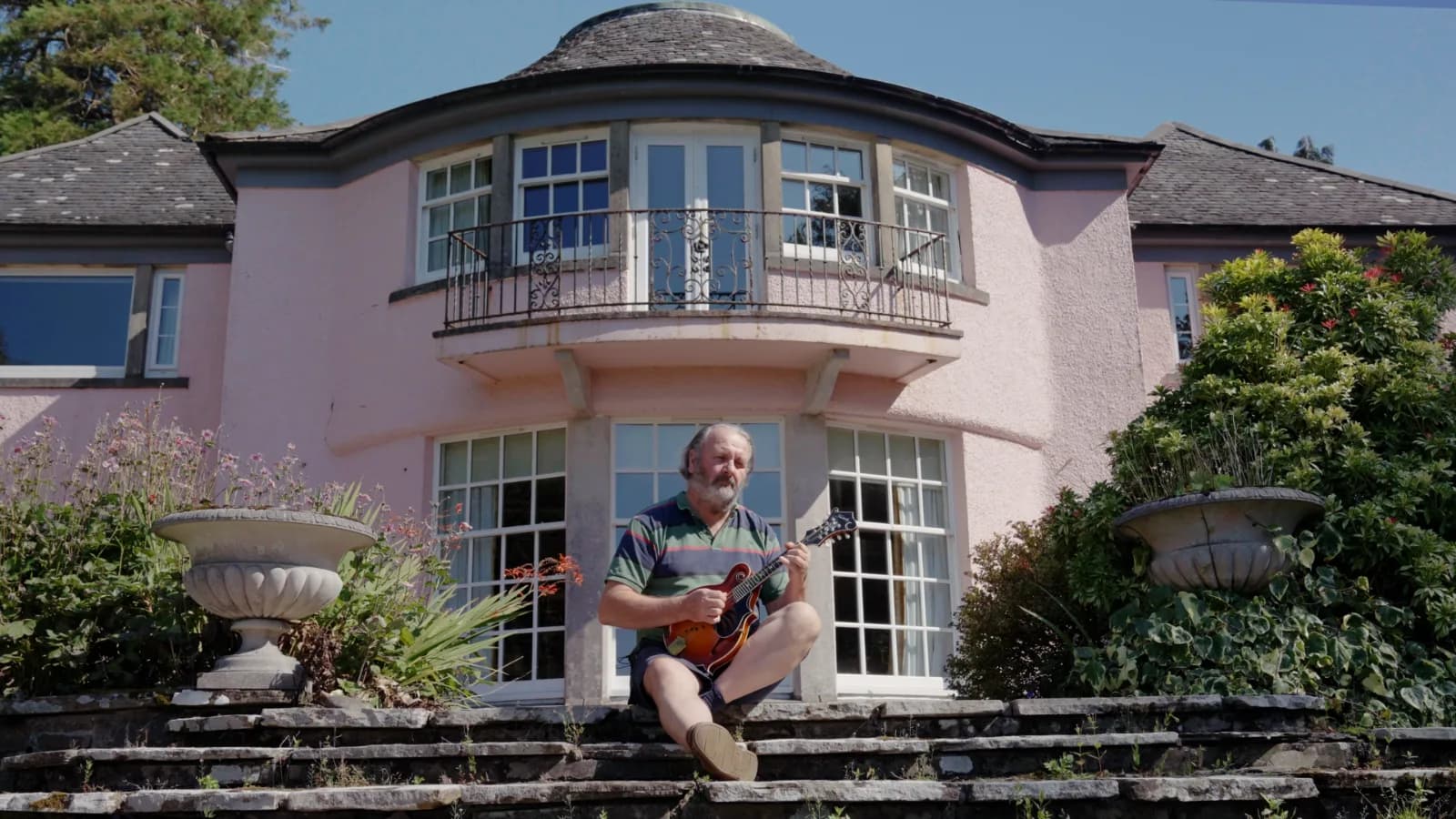
Sinclair speaks about exhibition openings as social occasions, moments when the local community gathers, when the gallery becomes a meeting place. There is live music. There is conversation. And there is something more lasting: the way the gallery has helped some people reconnect with their own creative lives.
One of the most moving passages in the interview concerns this lasting impact. The gallery, Sinclair says, can “reawaken their artistic spirit.” Resipole is a place where art becomes possible again, because it is woven into the fabric of daily life. In this sense, it is both a gallery and a cultural threshold.
It is also a place where memory, family history, local community and professional artistic standards coexist without contradiction. “The mission has been to not cater to tourists, to show high caliber art.” This may be the sentence that defines Resipole most sharply. In a landscape attractive to visitors, the gallery has resisted becoming decorative or merely picturesque. It has chosen seriousness without losing intimacy. Rootedness without provincialism. Hospitality without compromise.
Why Resipole matters to AnotherStory
At AnotherStory, we are drawn to cultural spaces that actively shape how art is received. Resipole Studios is one of those places. It tells us something important about the future of curatorial storytelling: that some of the most compelling cultural experiences today are found where architecture, landscape and artistic intent converge with unusual integrity, far from the centres that usually claim that privilege.
Resipole is a gallery in the Highlands, but it is also something else: a way of thinking about art through remoteness, through weather, through arrival, through scale, through silence. It reminds us that looking is never passive, and that place is never neutral. In an era of accelerated cultural consumption, Resipole offers something rarer: a space where art is encountered as discovery, and where discovery still feels personal.
As Sinclair puts it, visitors often leave with the sense that they have “almost personally discovered this gallery.” That feeling — intimate, unexpected, lasting — may be the truest measure of what this place offers.
A 19th-century farm on Loch Sunart, transformed into a haven for contemporary Scottish art. An intimate portrait of Resipole Studios.
An award-winning fine art gallery on the shores of Loch Sunart, surrounded by ancient oakwoods: remnants of the prehistoric rainforests that once carpeted the Atlantic coastline from Norway to Spain.
Founded in 2004 by artist and director Andrew Sinclair, who converted the family farm's 19th-century milking barn into four exhibition spaces. The gallery hosts an extensive roster of contemporary Scottish painters and international artists, among them Jonathan Shearer, Jim Wright, Kirstie Cohen, Kirsty Lorenz, Lotte Glob, Joyce Gunn Cairns, John Slavin, Lucy Gray, Moy Mackay, and Sinclair himself. Painting, sculpture, ceramics, photography, jewellery, woodturning.
At Resipole, exhibitions emerge from a dialogue between the west coast environment and the artists' response to it. The programme is shaped by the same landscape that surrounds it: seasonal, atmospheric, rooted in place.
Reached by scenic single-track road via the Corran Ferry or Lochailort, 30 miles from Fort William. Step-free entrance, wheelchair-accessible ground floor, disabled toilets, large-print texts, artwork shipping UK and abroad.
The Journal is the place where AnotherStory thinks aloud — where films find context, projects take shape, and stories continue beyond the screen. Not a blog, not a magazine: a living archive, a house for the eye that learns to stay.
In Argyll, reaching an artist's studio is already part of the work. Rory Gibson paints what he sees, travelling across islands by bicycle, choosing days of sun, finishing a canvas before the light shifts. His practice exists in the tension between the long time of the journey and the immediacy of the gesture.
Not all the studios we visited in Argyll were artist studios. Some were houses, some were kitchens and some were pubs. Melfort House is all of these things combined. In this beautiful house on the shores of Loch Melfort, Matthew Anderson serves breakfast, plays the guitar in the pub across the road, and sends you to a tiny island for an evening of music you would never have found alone. For him, hospitality is a creative practice. The landscape is the calm that holds it all together.
In her studio on the family farm, surrounded by sheep and sea, Mogs Mellor paints what catches her eye: oystercatchers, boats, a sprat on blue plastic. She calls her best work "happy accidents." What moves her most is when a stranger walks in and says: I love this.
In her studio on the family farm, surrounded by sheep and sea, Mogs Mellor paints what catches her eye: oystercatchers, boats, a sprat on blue plastic. She calls her best work "happy accidents." What moves her most is when a stranger walks in and says: I love this.
In Argyll, reaching an artist's studio is already part of the work. Rory Gibson paints what he sees, travelling across islands by bicycle, choosing days of sun, finishing a canvas before the light shifts. His practice exists in the tension between the long time of the journey and the immediacy of the gesture.
Half the title on the entrance panel has been struck through in red. Inside, sixty years of ink: maps that keep their coasts and lose their names, and the founding manifesto of Futurism blacked out in the house that holds its paintings.