CatalogJournal

Crafted in Italy,

inspired in London,

shared worldwide

AnotherStory is a startup in development/pre-launch. Not yet commercially operational.

Contribute

2025 Anotherstory ®

Anotherstory Lab LTD

hello@anotherstory.film

Back to Journal
Essays·Essays

The measure of light: Fabrizio Corneli at Studio Trisorio, Naples

An essay on light as material, shadow as image, and the art of not quite controlling what you make.

Curated Path — Studio Trisorio

22 April 2026·7 min read
AnotherStory

Written by AnotherStory Editorial

The measure of light: Fabrizio Corneli at Studio Trisorio, Naples

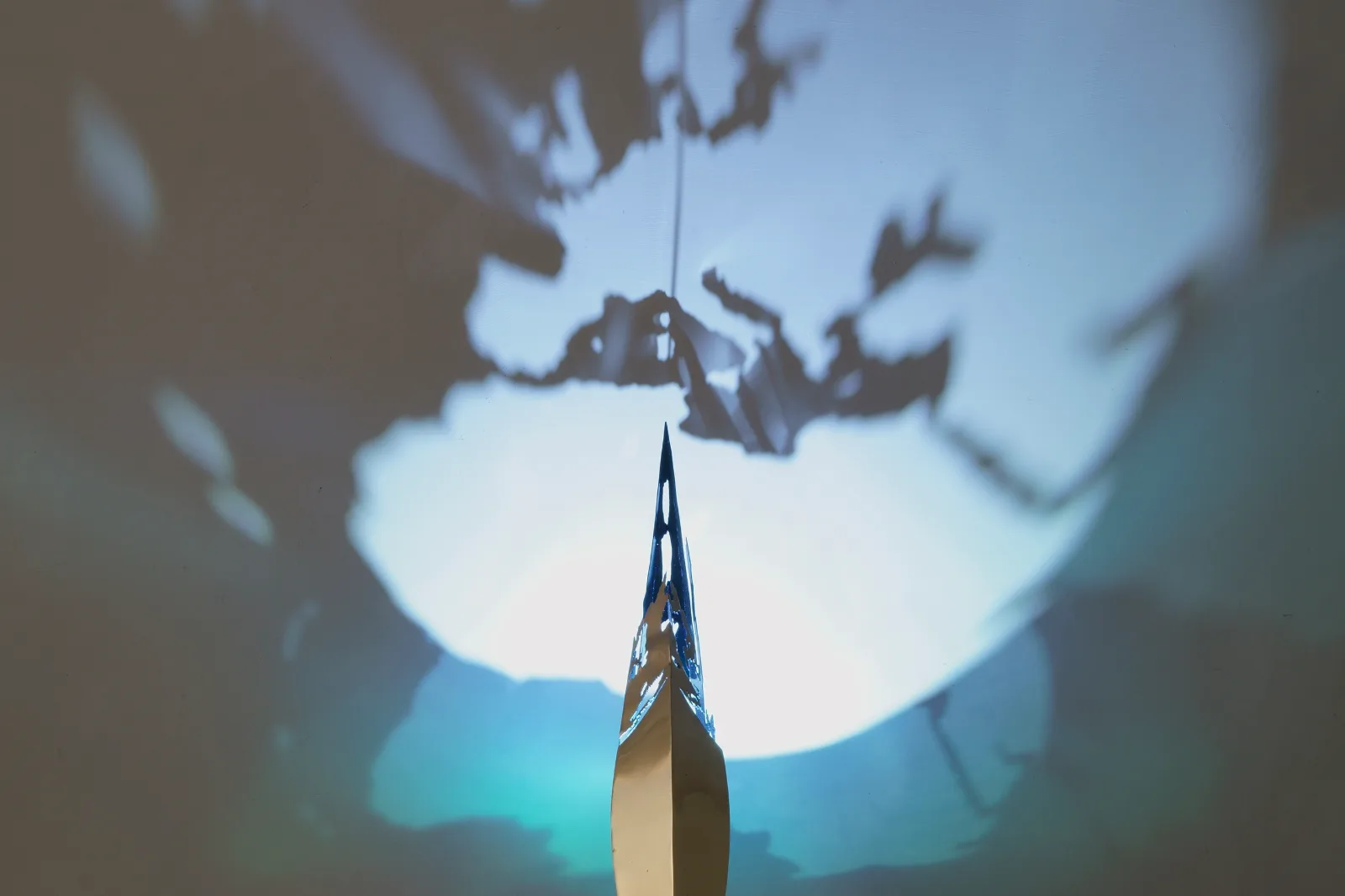
In a darkened room in one of Naples' most important galleries, a small LED projects the shadow of a globe onto a wall. Fabrizio Corneli has spent forty-five years making art from light. What he controls least is what interests him most.

At a Glance

At a Glance

Who: Fabrizio Corneli, visual artist

Born: Florence, 1958

Based in: Italy

Medium: Light, shadow, metal, glass, eggs, crystal spheres

Practice: Sculpture that exists only when illuminated — shadow-based installations where the image is made of absence

Currently on view: La misura della luce, Studio Trisorio, Naples — 19 March to 9 May 2026 (Riviera di Chiaia 215 and Via Carlo Poerio 116)

Key concept: The image appears through darkness. What you see is made of what is not there.

Light is therefore colour, and shadow the privation of it.

— J.M.W. Turner, Royal Academy Lecture (1818)

What the Light Does When You Are Not Looking

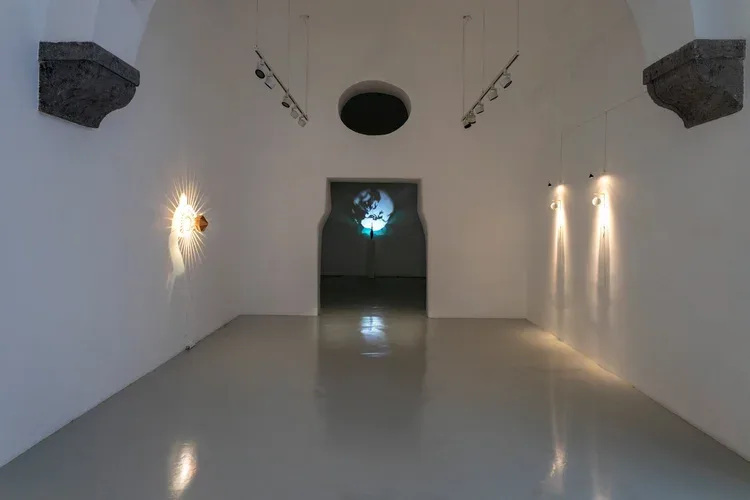
In the rooms of Studio Trisorio, on the Riviera di Chiaia in Naples, a small LED illuminates a metal form mounted on the wall. The form is abstract: a shape somewhere between a seed and a spacecraft, closer to Brancusi than to anything identifiable. It could be a tensile sculpture. It could be an object from a dream. But what it does, when the light hits it, is project.

On the wall behind, an image appears. A globe. The Earth, seen from a distance no human eye has known without the mediation of a photograph. Italy is at the centre. Or perhaps the Middle East. Or the Americas. The image shifts depending on where you stand, and it is made entirely of shadow.

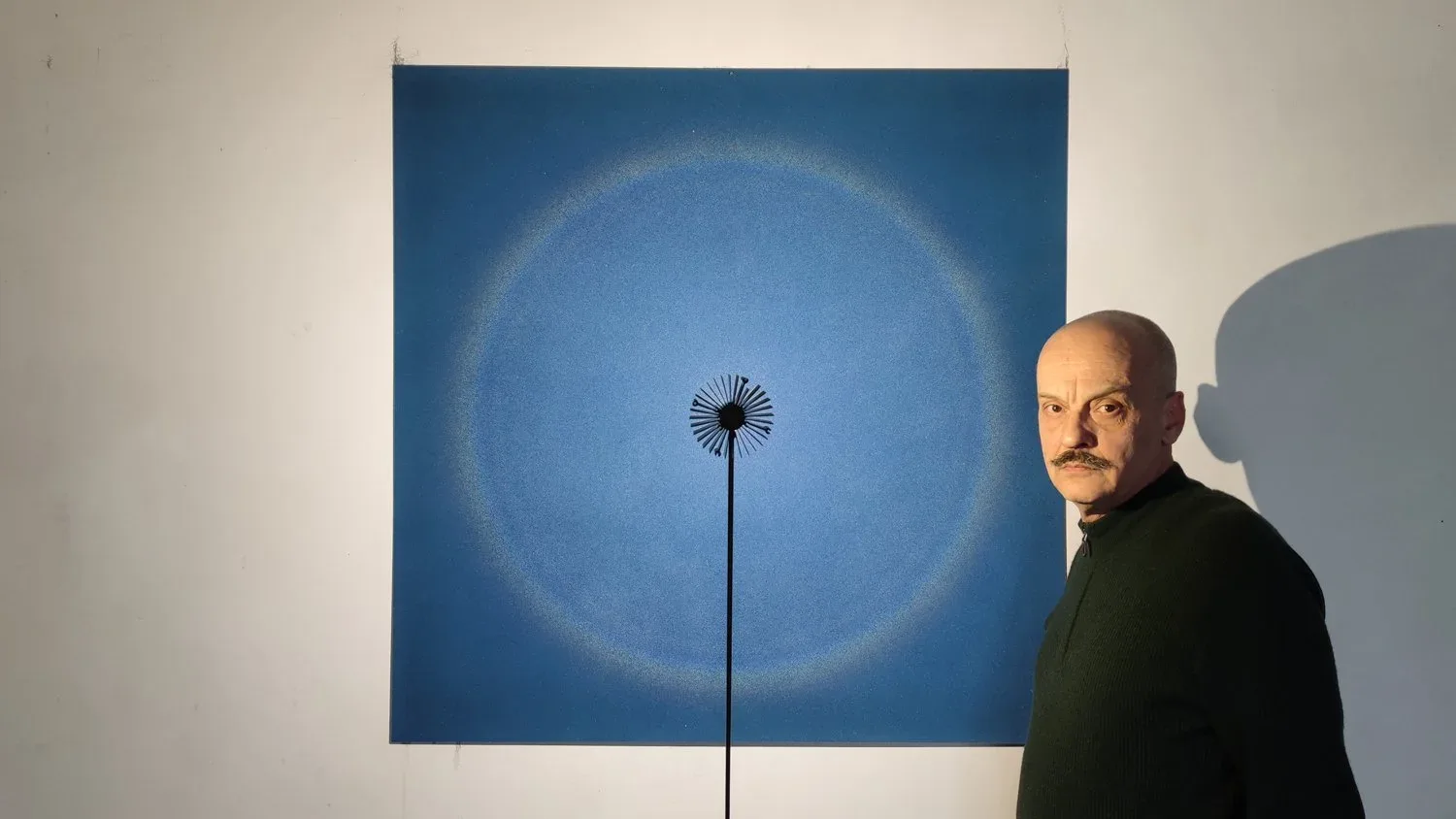
This is the work of Fabrizio Corneli. He has been making art from light for forty-five years, and in that time he has developed a practice so singular, so technically precise and yet so stubbornly unpredictable, that it resists almost every category the art world has to offer. He is not a light artist in the way James Turrell is a light artist. He is not a sculptor in any conventional sense. He is someone who builds objects that exist in order to produce images that are not there, images made of shadow, which is to say, of the absence of light.
Studio Trisorio - Corneli

Contemporary Art in the Galleries of Naples: Studio Trisorio

Studio Trisorio is one of Naples' most respected contemporary art galleries, with a programme that has included Louise Bourgeois, Daniel Buren, Jan Fabre, Jenny Holzer, Rebecca Horn, Martin Parr and Francesco Vezzoli. Founded in 1974, the gallery operates from three addresses in the city, and Corneli's current exhibition, La misura della luce, occupies two of them: the main space on Riviera di Chiaia and the gallery at Via Carlo Poerio 116.

It is a significant show in a city where contemporary art has deep roots and growing international visibility. Studio Trisorio has been part of that story for over fifty years, and its commitment to artists who work at the edge of perception, materiality and light makes it a natural home for Corneli's practice. The gallery is also the home of Artecinema, the international festival of film on contemporary art founded and directed by Laura Trisorio, which celebrated its thirtieth edition in October 2025 at the Teatro San Carlo and the Teatro Augusteo: thirty years of bringing art to the screen, and the screen to the city.

The works in the show span several typologies that Corneli has developed over the decades: shadow sculptures projected by LED, works with crystal spheres, egg-based installations, and a laminated piece installed in an exterior display window. Each uses a different relationship between light source, object and surface. Each produces an image that is, in a precise physical sense, not there.
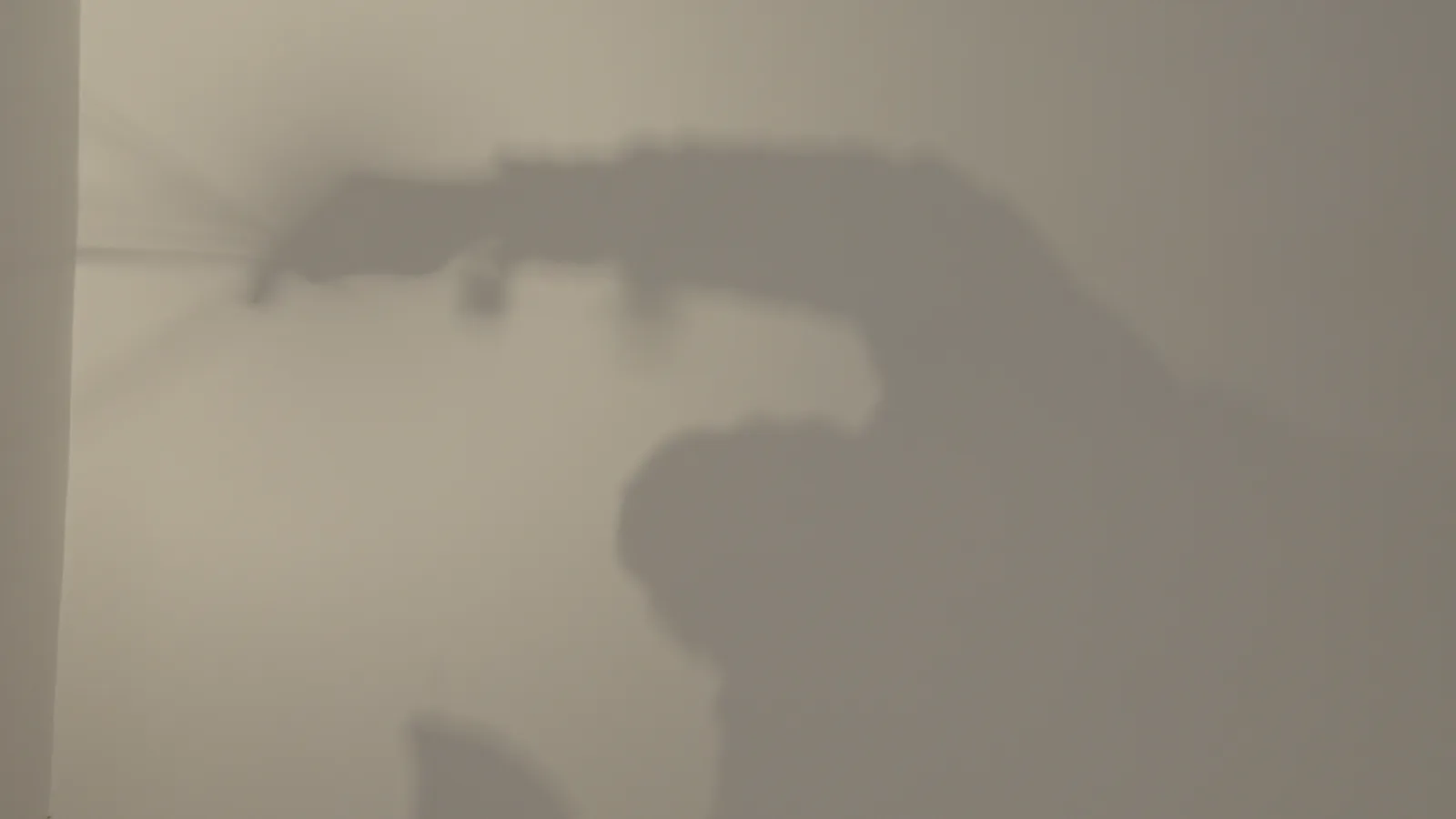
Fabrizio Corneli Cover 1

The Measure of What Cannot Be Measured

Corneli speaks about his process with the precision of someone who has spent decades thinking about optics, geometry and the behaviour of photons. And yet what he says, again and again, is that what interests him most is what he cannot control.

"I try to define, approximately," he says. "But then the work itself comes alive through a whole series of strange behaviours of the light, short circuits, reflections, that I control very little."

This is the paradox at the centre of his practice. The initial design is rigorous: the size of the light source, the distance between metal and LED, the geometry of the form. These are calibrated with mathematical care. But the result, the shadow, the image, the way the light bends and bounces inside a crystal sphere, the reflections that create unexpected auras around a figure, is only partially his. The rest belongs to the light.

He describes a passage from a story he loves: a tale about a swan holding a stone in its beak, ready to drop it as a warning to the other swans when danger approaches. The whole story is about the tension of the threshold, the moment just before seeing, just before knowing. Corneli's work lives in that same threshold. The image is there, but it has to be found. Some visitors see it immediately. Others never do.

"Some people cannot read the glancing shadows as an image," he says. "They see the letters, the metal, other things. And then sometimes, after a long time, they find it."
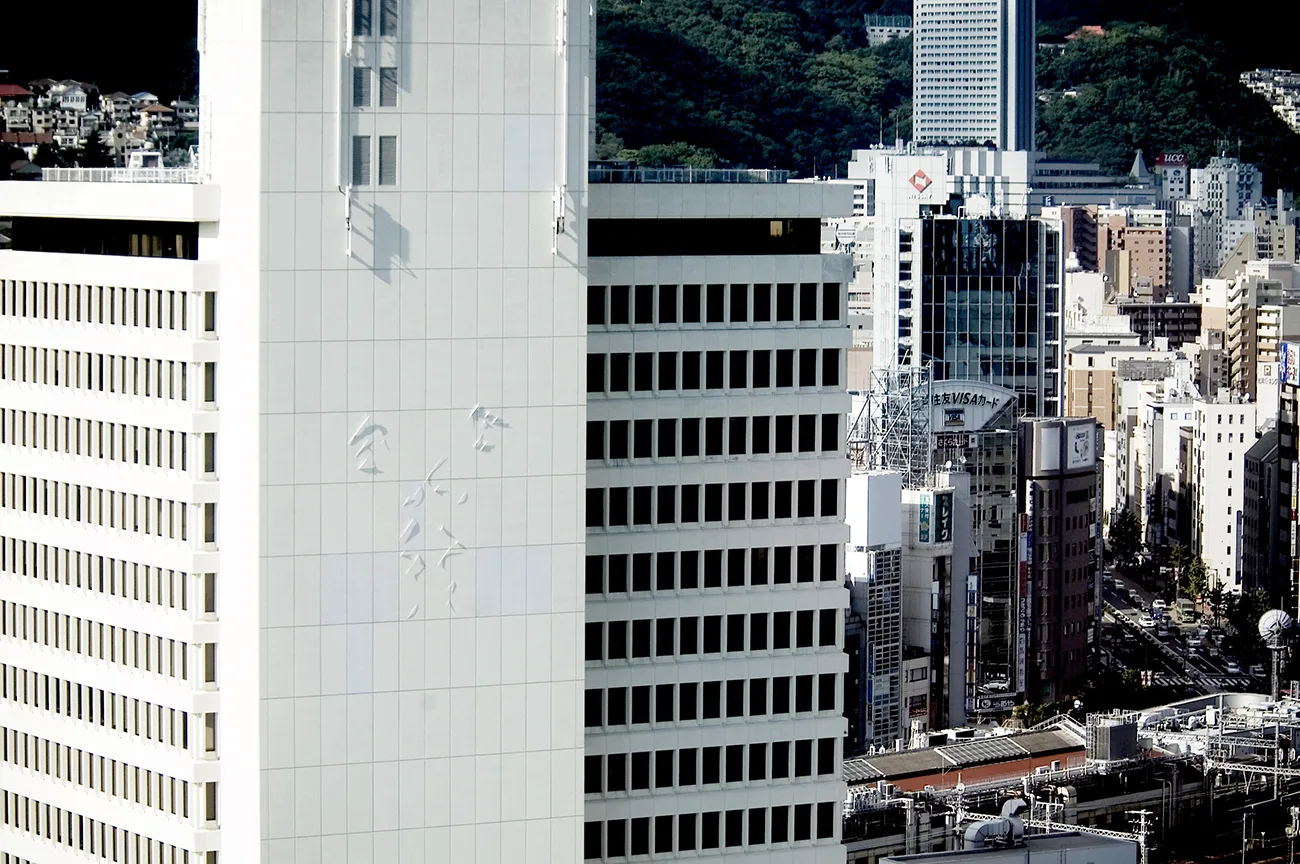
24 Duetto 2007

Solar Works: When Art Keeps an Appointment with the Cosmos

Among all his bodies of work, Corneli speaks with particular affection about the solar installations, outdoor pieces where sunlight, rather than an artificial source, produces the shadow.

These are works that function as cosmic appointments. The image appears as Corneli designed it only once or twice a year, when the sun reaches a specific position in the sky. On the solstice, or near it, the shadow aligns. The rest of the time, the image drifts, deforms, disappears when clouds pass, and returns when the sky clears.

"They have a life of their own," he says. "I try to define them approximately, but then they do what they want."

There is something deeply moving about this. An artwork whose full expression depends on the rotation of the Earth. A sculpture that waits for June or December. A form that speaks only when the planet is in the right position, and then falls silent again. It is art as astronomy, as patience, as an act of trust in forces far larger than the artist.
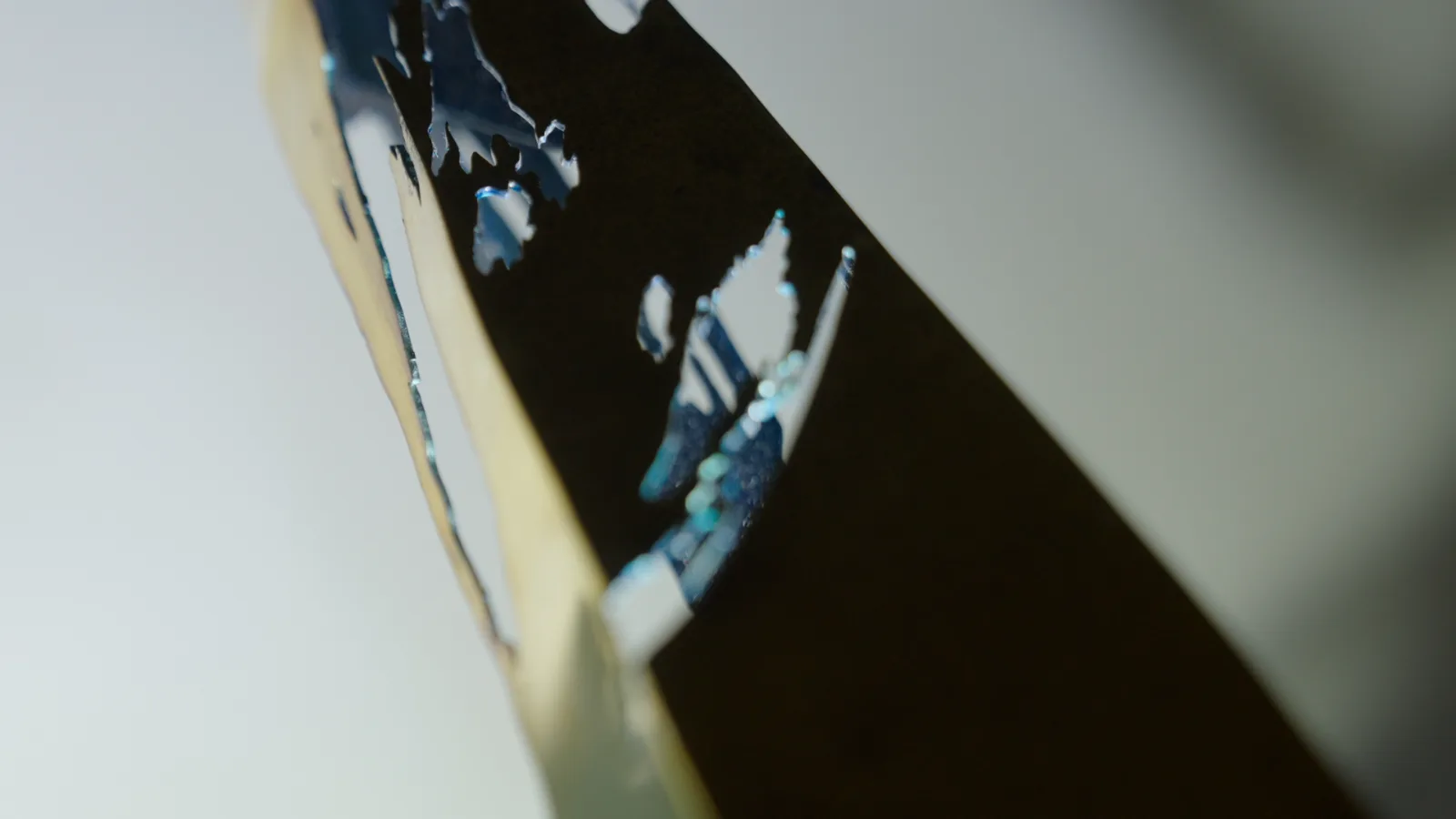
Fabrizio Corneli

The Recognisable and the Invisible: How Light Sculptures Shape Perception

Corneli is fascinated by recognisability, the deep human impulse to find familiar forms in what we see. Faces are the first shapes a child learns to read, followed by human figures, then letters, then maps. His work plays with this hierarchy of recognition, offering just enough visual information for the brain to begin assembling an image, and then withdrawing.

"The observer looks," he says, "and then, in times that are sometimes very long, some people never see anything. They cannot grasp the glancing shadows as an image."

This is not failure. It is the work functioning as intended. Corneli is not interested in clarity. He is interested in the edge between seeing and not seeing, in the moment when perception tips from abstraction into recognition and cannot go back. He describes a piece with a small candle and two profile portraits: no one has ever seen the faces immediately. They always see an architectural form first. Only later, sometimes much later, do the profiles emerge.

"Once you have focused on an image," he says, "it is very rare that you can reset and find another one."

It is a remark that says something about all art, and perhaps about all perception. The act of seeing is irreversible. Once you know what you are looking at, you cannot unknow it.
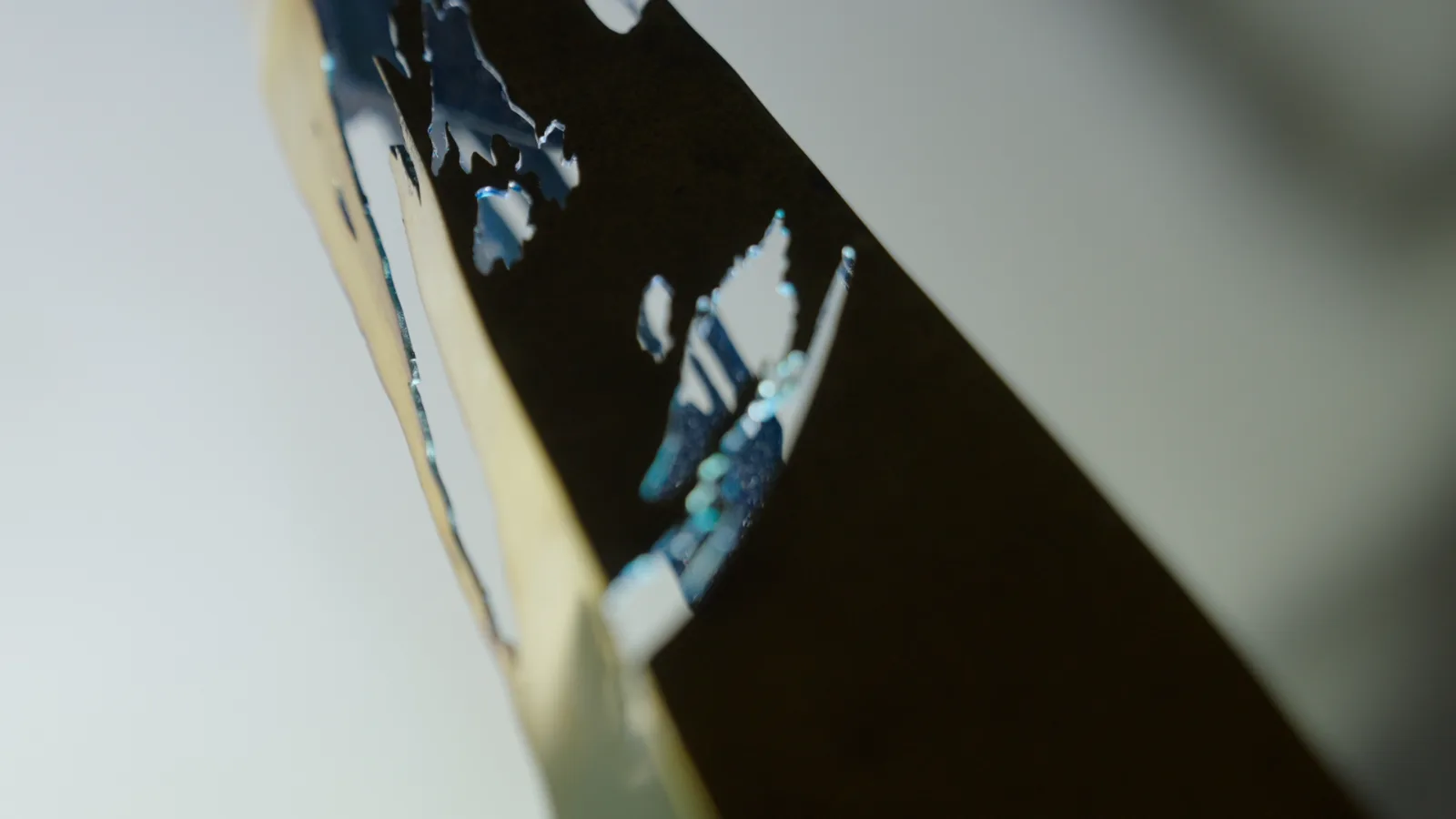
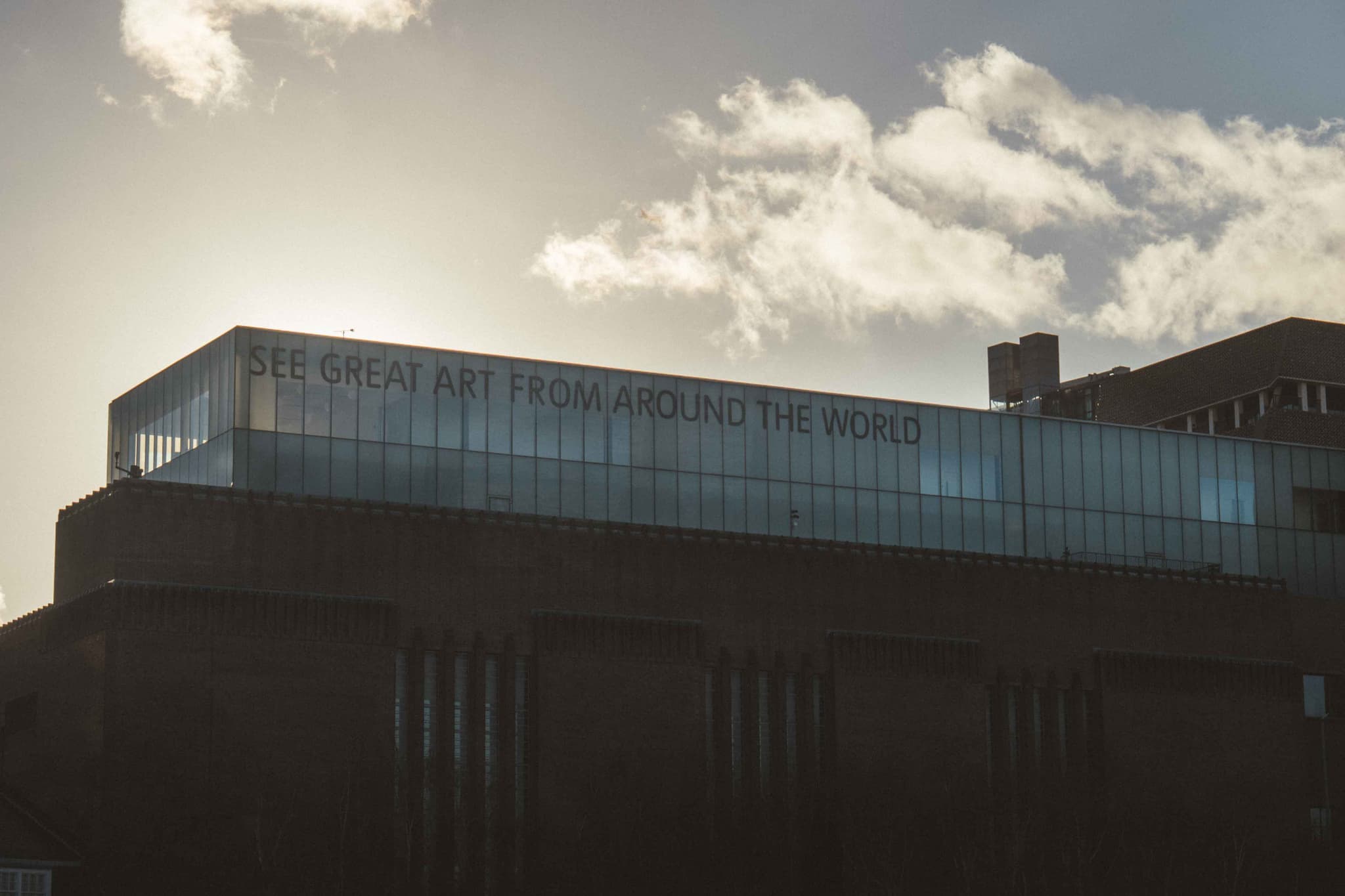
Light as Material: Between Science, Art and the Invisible

What makes Corneli's practice unlike almost any other is that his material does not exist as an object. Light has no mass, no permanence, no edges. It is, as he says, "a continuous source of photons, of things that move in strange ways." And yet he shapes it with the care of a sculptor working in marble.

His installations combine three levels of form. There is the rigid geometry of the metal structure: aluminium, brass, copper. There is the organic softness of forms like eggs (real eggs, reinforced internally but retaining their original shape, because, as he notes with evident delight, "hens manage to make marvellous forms that no one can replicate"). And there is the projected image itself, abstract, figurative, deformed, alive, made of a material that does not exist.

These three levels create a visual experience that is layered and unstable. The object on the wall is precise. The shadow on the surface behind it is approximate. The reflections that surround both are uncontrolled. And the viewer, moving through the room, is constantly recalibrating what they see.

Turner declared that light is colour, and shadow the privation of it. Kassia St Clair, two centuries later, pushes the idea further: "The colour we perceive an object to be is precisely the colour it isn't: the segment of the spectrum that is being reflected away." Corneli's logic belongs to the same lineage, and extends it into three dimensions. The image we see in his work is precisely the image that is not there. It is made of shadow, shaped by what blocks the light. The form is what is missing. The art is in the gap.

Currently on view: La misura della luce — Studio Trisorio, Naples 19 March — 9 May 2026 Riviera di Chiaia 215 and Via Carlo Poerio 116

Watch on AnotherStory Film

The measure of light

Portraits & Insights

The measure of light

Italy · 06:13

AnotherStory Original
The measure of light

Portraits & Insights

The measure of light

AnotherStory Original

Fabrizio Corneli has worked with light for over forty years. His sculptures remain silent until a beam strikes them — then a figure, a globe, a face appears on the wall, made entirely of shadow. At Studio Trisorio, Naples.

Italy · 06:13

Read on AnotherStory Journal

A House for Stories

A House for Stories

The Journal is the place where AnotherStory thinks aloud — where films find context, projects take shape, and stories continue beyond the screen. Not a blog, not a magazine: a living archive, a house for the eye that learns to stay.

Read article

Kassia St Clair

Literary Companion

Kassia St Clair

(b. 1984)

The Secret Lives of Colour (2016)

The literary companion to this essay is Kassia St Clair (b. 1984), the British cultural historian and author of The Secret Lives of Colour (2016), a study of seventy-five shades, dyes and hues that traces the cultural, political and sensory history of colour from antiquity to the present. The book was a Sunday Times top-ten bestseller and has been translated into twenty-one languages. St Clair's work sits at the intersection of science, art and everyday perception, the same territory Corneli inhabits, from the opposite direction. Where St Clair explores what light produces (colour), Corneli explores what light leaves behind (shadow). Both share a fascination with the gap between what we see and what is actually there. St Clair writes for The Economist, Washington Post and Elle Decoration, and has spoken at the Victoria & Albert Museum, the Hay Festival and for brands including Chanel and Farrow & Ball. She lives in London.

Tags

EssaysJ.M.W. Turnerlight artArtecinemaKassia St ClairNaplesshadow artart galleries NaplessculptureStudio Trisoriocontemporary art NaplesLaura TrisorioItalian artFabrizio CorneliLa misura della luceperception

Back to archive

Journal

About

In partnership with

Studio Trisorio
Visit website →

Locations

  • Naples

    215 Riviera di Chiaia

  • Naples

    110 via carlo poerio

Contact

  • info@studiotrisorio.com
  • +39 081 414306

Follow

  • Facebook
  • Instagram

Related writings

Further connections across the Journal

Articles connected by editorial field, category or shared themes, extending the reading path beyond a single entry.

Studio Trisorio: Fifty Years of Seeing Differently in Naples

Studio Trisorio: Fifty Years of Seeing Differently in Naples

Founded in 1974 with a show by Dan Flavin, Studio Trisorio has spent fifty years changing the way Naples sees contemporary art. From the first photography exhibitions to the invention of Artecinema, from Villa Orlandi in Anacapri to three gallery spaces on the Chiaia waterfront, this is the story of a family, a city, and the conviction that art can reach everyone.

Read article
Artecinema: Thirty Years of Art on Screen in Naples

Artecinema: Thirty Years of Art on Screen in Naples

Since 1996, Artecinema has been bringing contemporary art to the screen in Naples. Thirty editions later, the festival founded by Laura Trisorio remains one of Europe's most important programmes of film on art, and one of the most generous: admission is free.

Read article
Harkeerat Mangat & Balázs Virágh: Alignment, Time and the Space Between Two Instruments

Harkeerat Mangat & Balázs Virágh: Alignment, Time and the Space Between Two Instruments

Before the music begins, there is tuning — an act of alignment between two instruments that is already part of the performance. Harkeerat Mangat and Balázs Virágh make Indian classical music with the precision of cognitive science and the playfulness of two friends who find their shared obsession "totally hilarious and absurd."

Read article
Forty Years of Galerie Gisela Capitain: From Cologne to Naples

Forty Years of Galerie Gisela Capitain: From Cologne to Naples

In the late 1970s, a young German teacher arrived in Berlin and met Martin Kippenberger. Four decades later, the gallery she built from that encounter celebrates its fortieth anniversary in Naples, with a double exhibition that brings Kippenberger's Italian obsession to the city he never reached in his lifetime.

Read article

Conversation

Comments

Sign in to join the conversation.

Loading comments...