A Gallery That Shaped a Generation
There is a German word for it: Italiensehnsucht. The longing for Italy, the gravitational pull that has drawn northern Europeans southward for centuries, from Goethe's Roman journals to Thomas Mann's Venetian fevers. It is a desire that runs so deep in German culture that it has its own compound noun.
Gisela Capitain arrived in Berlin as a young teacher, far from the chaotic, ferociously creative world that the city was in the late 1970s. Then she met Martin Kippenberger. She has said more than once that she owes everything to that encounter: it was Kippenberger who brought her into an artistic circle that had, until then, been entirely foreign to her life. In 1978, together, they founded Kippenbergers Büro, a space that operated as something between a studio, an office and a Warhol-style factory, frequented by artists who would go on to reshape German art, among them Albert Oehlen. Eight years later, in 1986, Capitain opened her own gallery in Cologne.
Four decades on, that gallery has become one of the most respected platforms for contemporary art in Europe. The founding generation reads like a map of late twentieth-century painting and sculpture: Günther Förg, Charline von Heyl, Zoe Leonard, Albert Oehlen, Stephen Prina, Franz West, Christopher Williams, Christopher Wool, and Kippenberger himself. In more recent years, the programme has widened across continents and generations: Jadé Fadojutimi, Monica Bonvicini, Isabella Ducrot, Samson Young, Ximena Garrido-Lecca, Ryan Sullivan.
Now the gallery turns forty. And it is celebrating in Naples.
Naples as Zweigstelle: A Cologne Gallery Finds Its Italian Stage
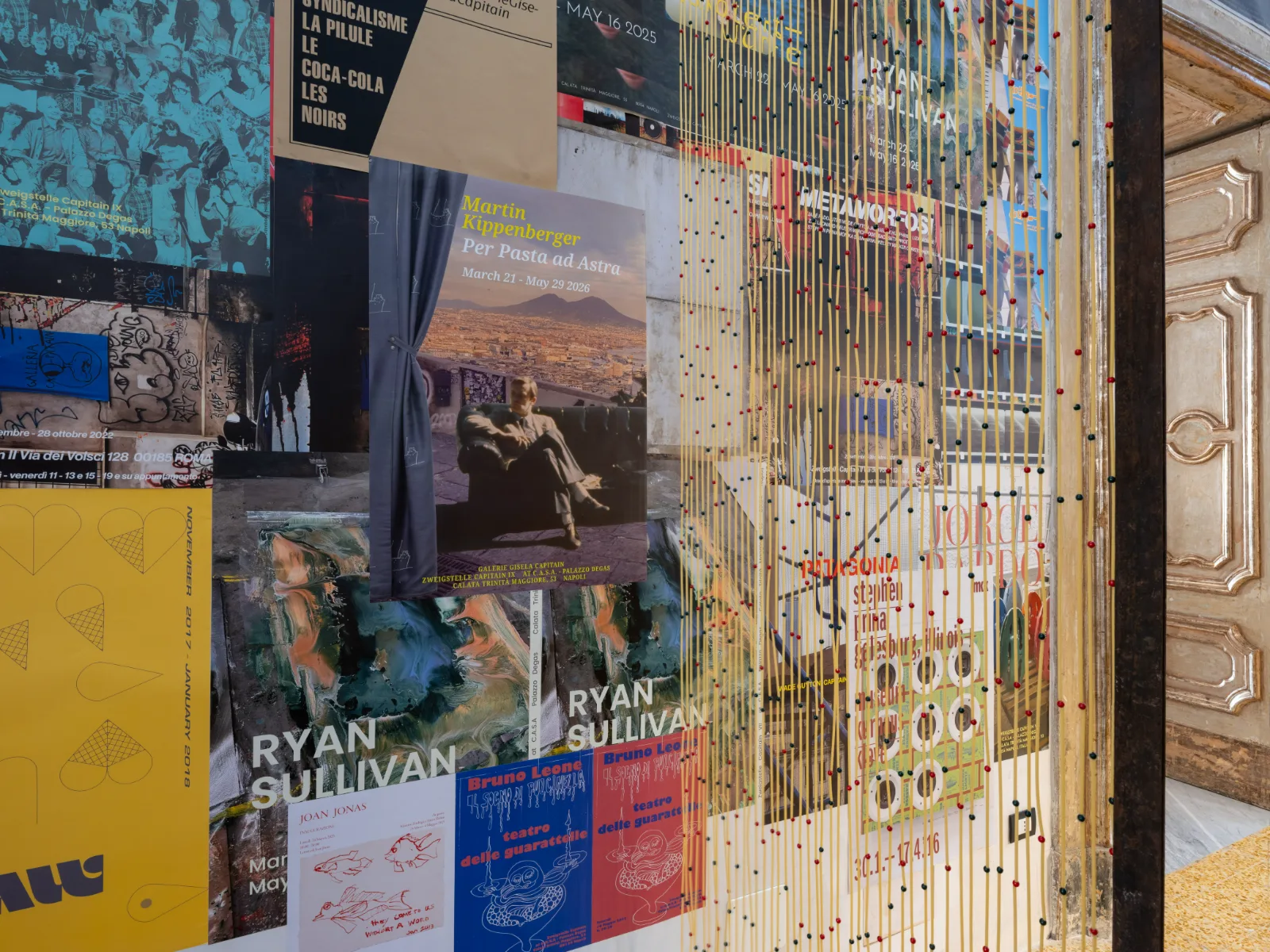
Four years ago, Galerie Gisela Capitain began a project of temporary exhibitions in Italy. The first stop was Rome, prompted in part by the gallery's work with the Italian artist Isabella Ducrot, whom Capitain had brought into the international art world and whose presence in major collections and museums has grown steadily since. What started as a roving experiment soon found a permanent form: from 2023, Palazzo Degas on Calata Trinità Maggiore became the home of the Zweigstelle Capitain. Two editions in Rome, seven in Naples. The ninth is now on view.
Zweigstelle means something like "branch" in German, but the word carries a lighter weight than its English equivalent: less corporate satellite, more affectionate extension. Naples is now the gallery's third fixed address, after Cologne and Berlin, where Capitain Petzel has operated since 2008 in a glass pavilion on Karl-Marx-Allee. The Neapolitan programme runs twice a year, spring and autumn, and is planned for at least three more seasons.
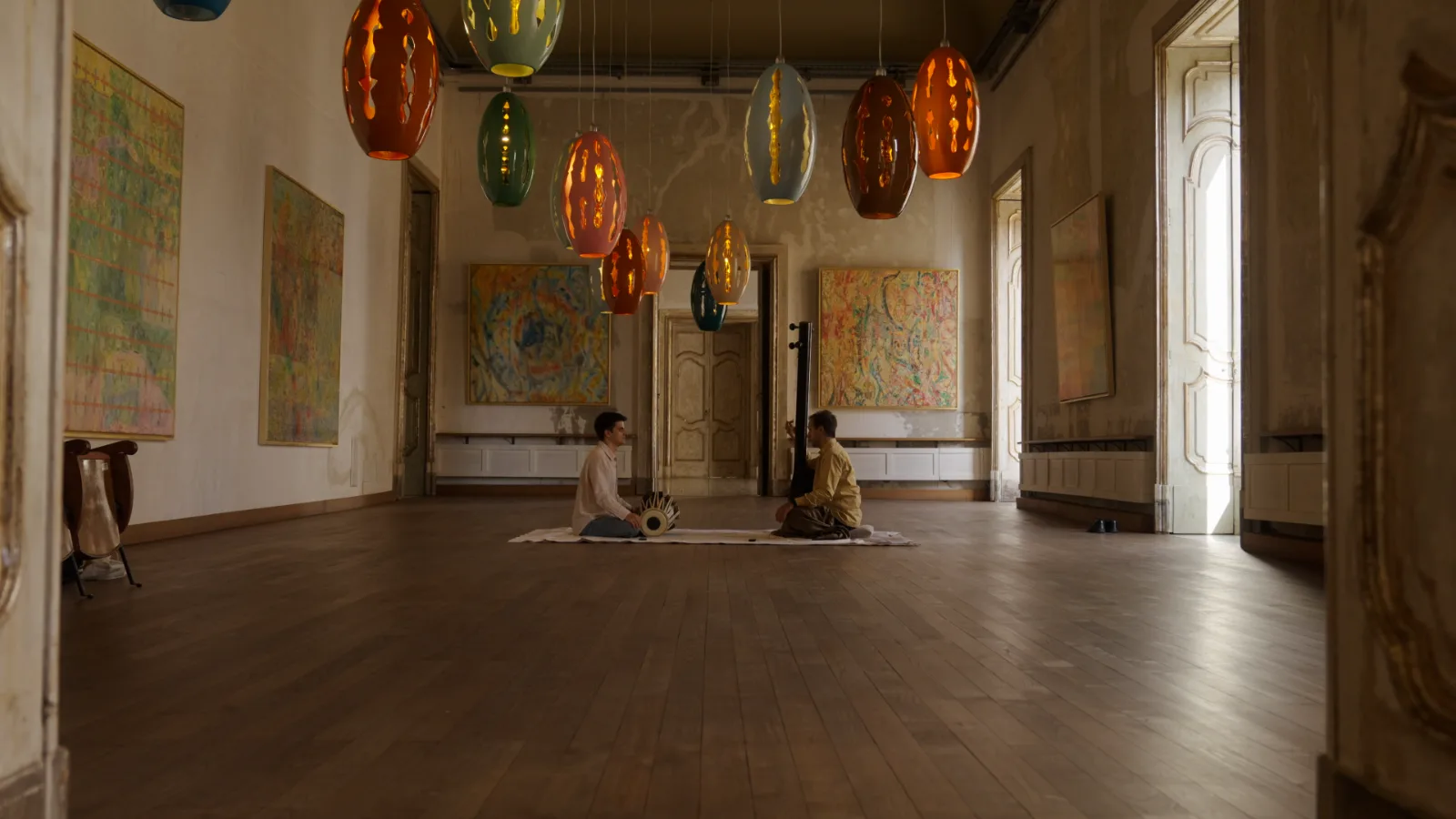
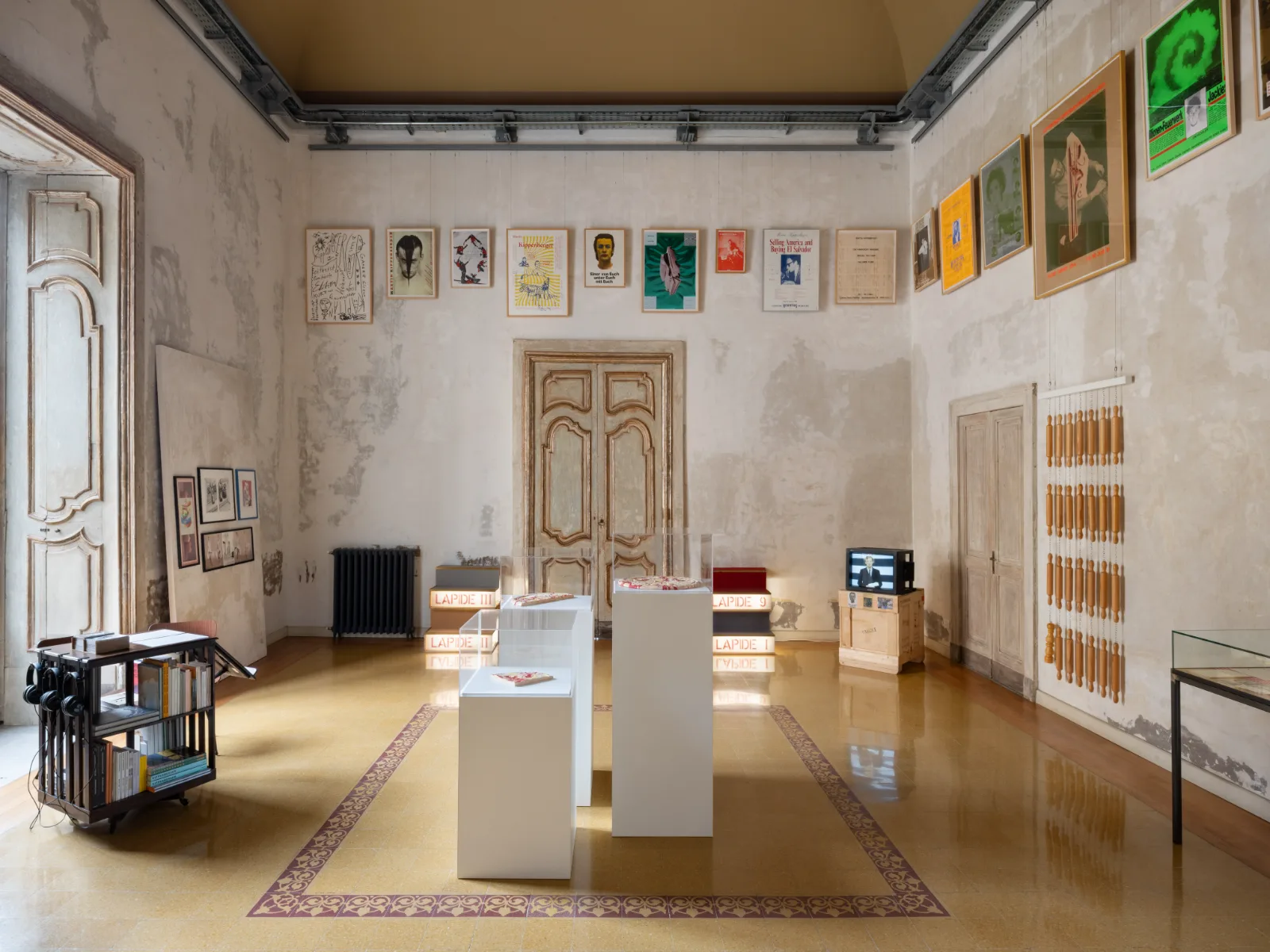
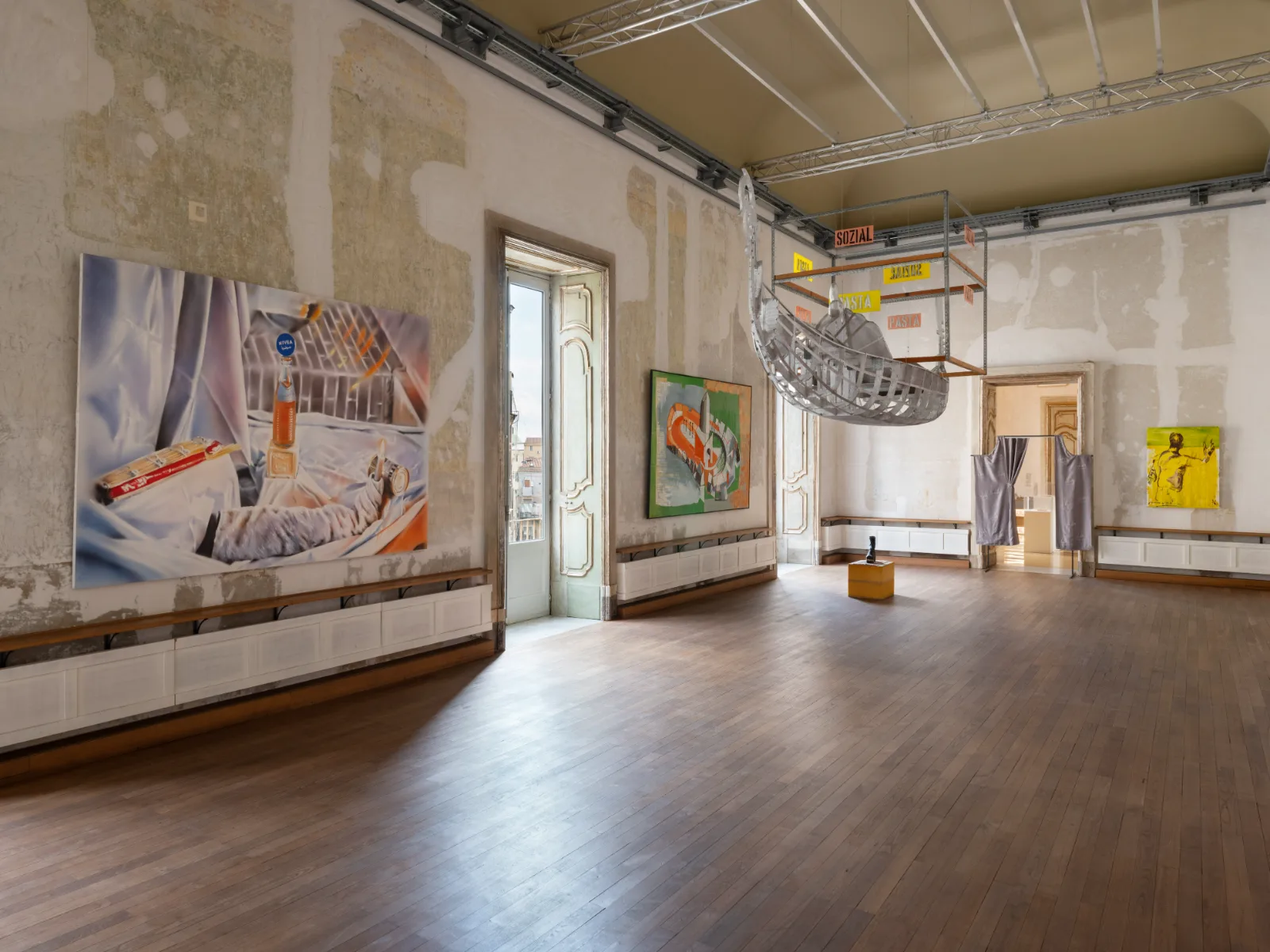
What Palazzo Degas offers is the opposite of the white cube. The rooms are old, the walls carry the memory of their own surfaces: scuffed plaster, original majolica floors, heavy wooden doors that open onto something the clean geometry of Cologne cannot provide. Artists who exhibit here, Joan Jonas, Seth Price, Jorge Pardo, Jacqueline Humphries, Jadé Fadojutimi among them, encounter a space that talks back. The architecture is not neutral. It has opinions. And it tells a story that still speaks through its gilded surfaces, memories of an opulent past.
Each edition is accompanied by live events that turn the palazzo into something closer to a stage than a showroom: concerts, conversations, performances that could not happen anywhere else. The Indian-Hungarian duo Harkeerat Mangat and Balázs Virágh have performed here. An East Frisian tea ceremony has been held in these rooms. Art at the Zweigstelle is never only on the walls.