Science fiction is not predictive; it is descriptive.
You sit down to listen to a story: the antechamber speaks before it shows the scene
The Curve opens into an antechamber of heavy drapery, and what happens there is sound. The voice is played into the space itself and reaches everyone standing in it at the same moment, before anyone has pushed through the first curtain.
It is worth pausing here, because the first language of the exhibition is not cinematic. Young has assembled an ensemble that includes Diego Luna, Jeffrey Wright, Maxine Peake, Richard Ayoade, Alma Pöysti, Denise Gough, Natasha Wanganeen, Jordan Stephens, Shannon Woodward and the space scientist Maggie Aderin, reading texts written by Lisa Joy, Kim Stanley Robinson, Chen Qiufan, Claire G. Coleman, Jane Wu, Kate Crawford and Holly Jean Buck. Before a single frame arrives, the work has chosen the spoken voice over the moving image, and something older than either: someone telling you a story. A kind of prologue, before you are inside the scene at all.
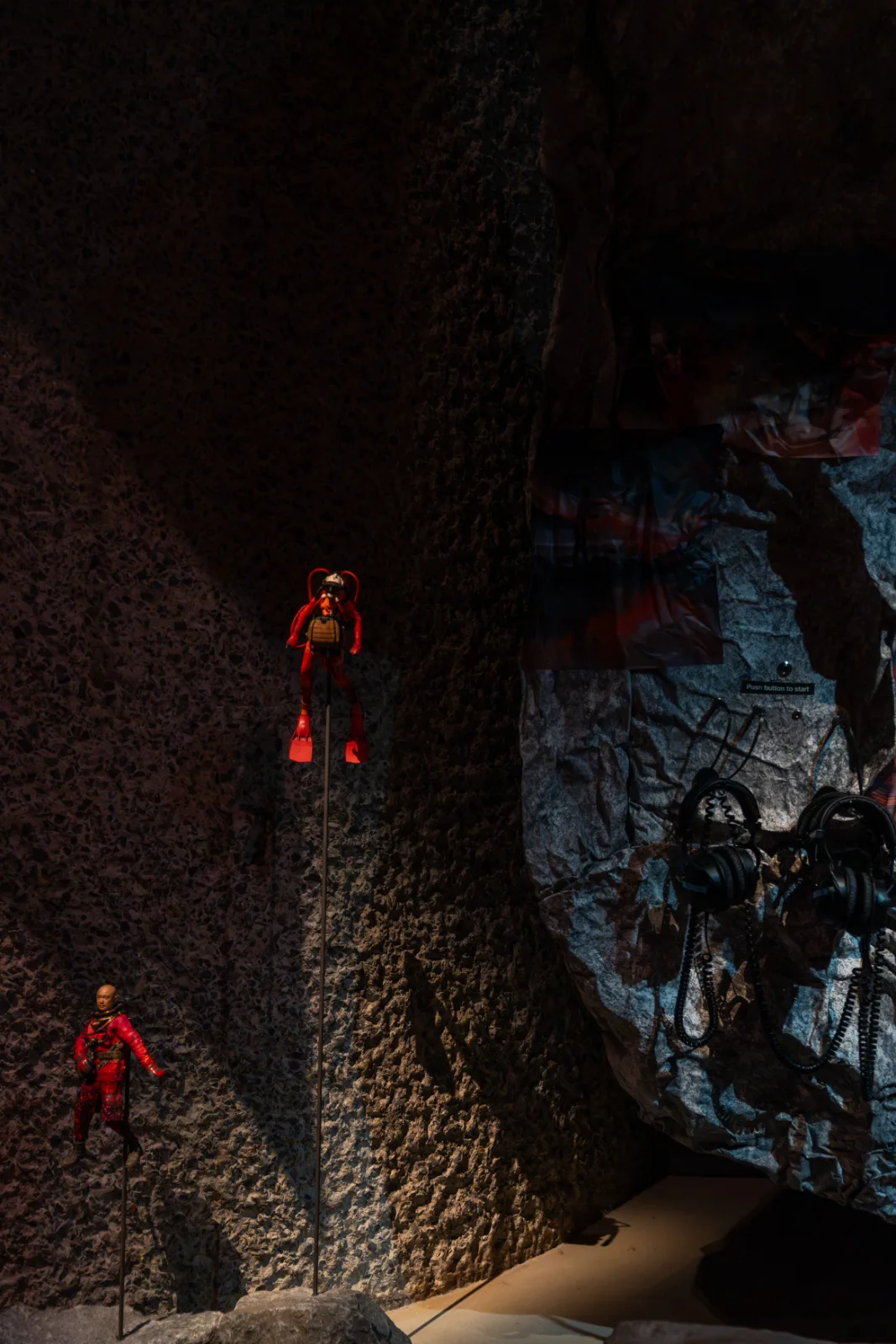
Once across the threshold, the arrangement reverses. The audio stories are on headphones that hang from the walls beside a button you press to start, and listening becomes a private decision taken inside a shared room. The stepped seating fills with people hearing the same world one at a time, each on their own pair.
The building does the editing
The Curve is a gallery that unfolds along a ninety-metre curve, wrapping around the Barbican's concert hall. Since 2006 the institution has commissioned artists to work directly with those proportions, and in twenty years there have been more than forty of them: the curvature is an established tradition. What is interesting here is that a cinematic apparatus enters it, and the curve becomes the instrument for building a narrative designed around the space. The architecture is itself a dimension of the story, and it enters the edit, making the scene multidimensional.
Because you never see ahead, each world arrives without warning and disappears behind you. The cut is not made in an editing suite. It is made by the space itself, and by the rhythm at which you happen to be walking. The Barbican gives the visit an approximate duration of ninety minutes, and that figure behaves differently from a runtime. It is not how long the films last. It is how long it takes to cross the gallery, at whatever pace the building manages to impose: you walk, then you sit down on a step, then you stand still in front of a wall of water for as long as you want to. Seated, listening to the stories of these other worlds, in a plural dimension produced by the different voices and vantage points telling them.
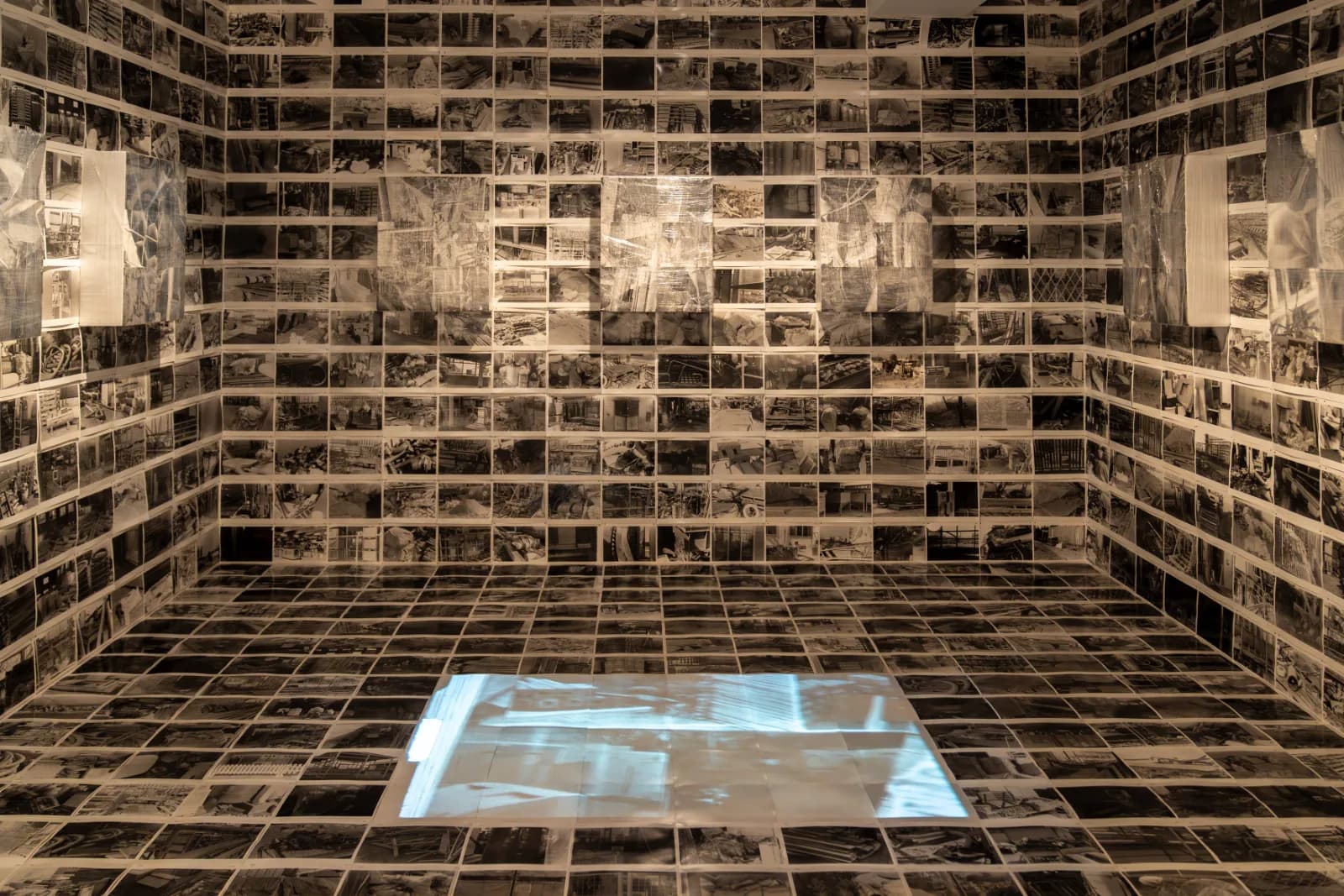
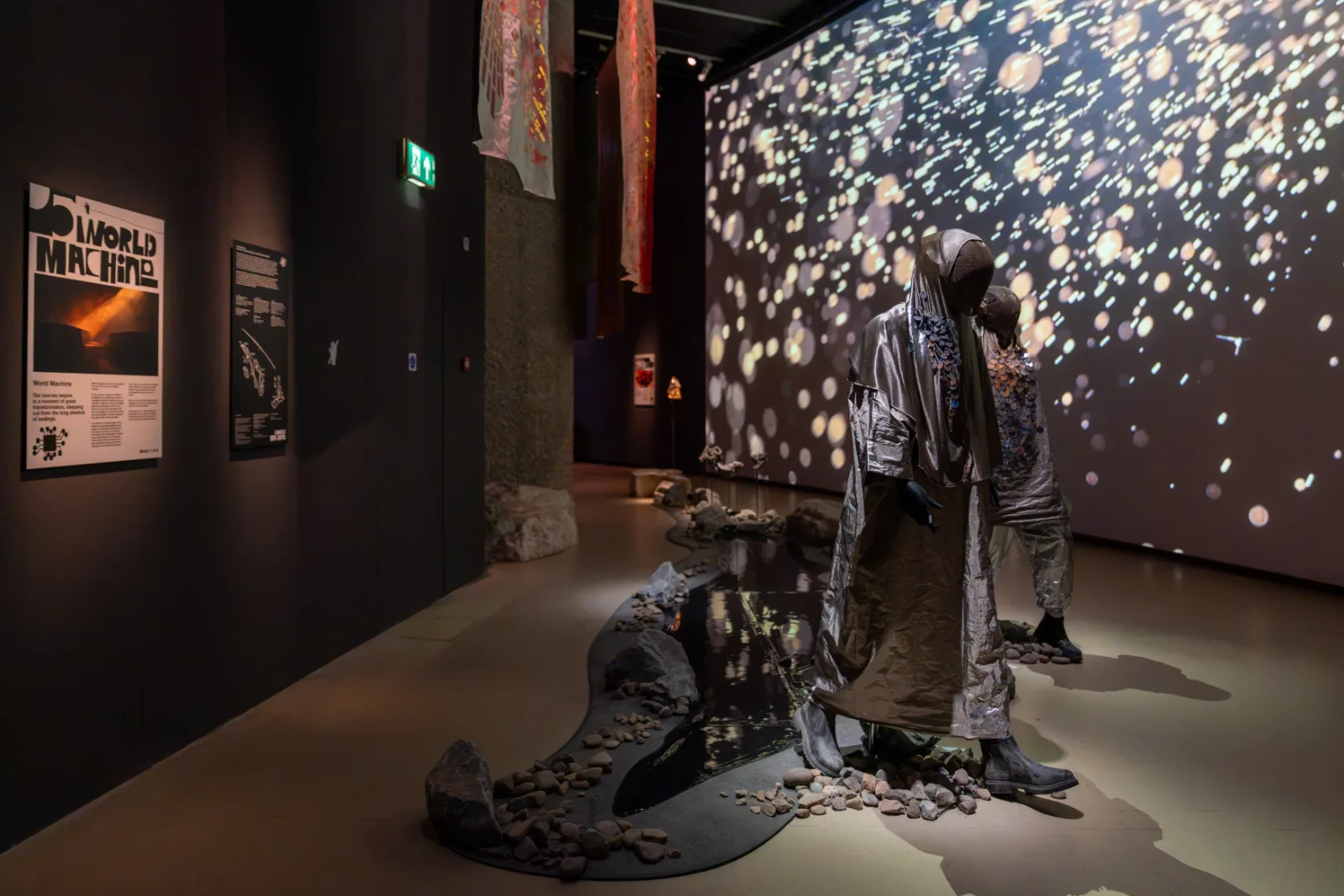
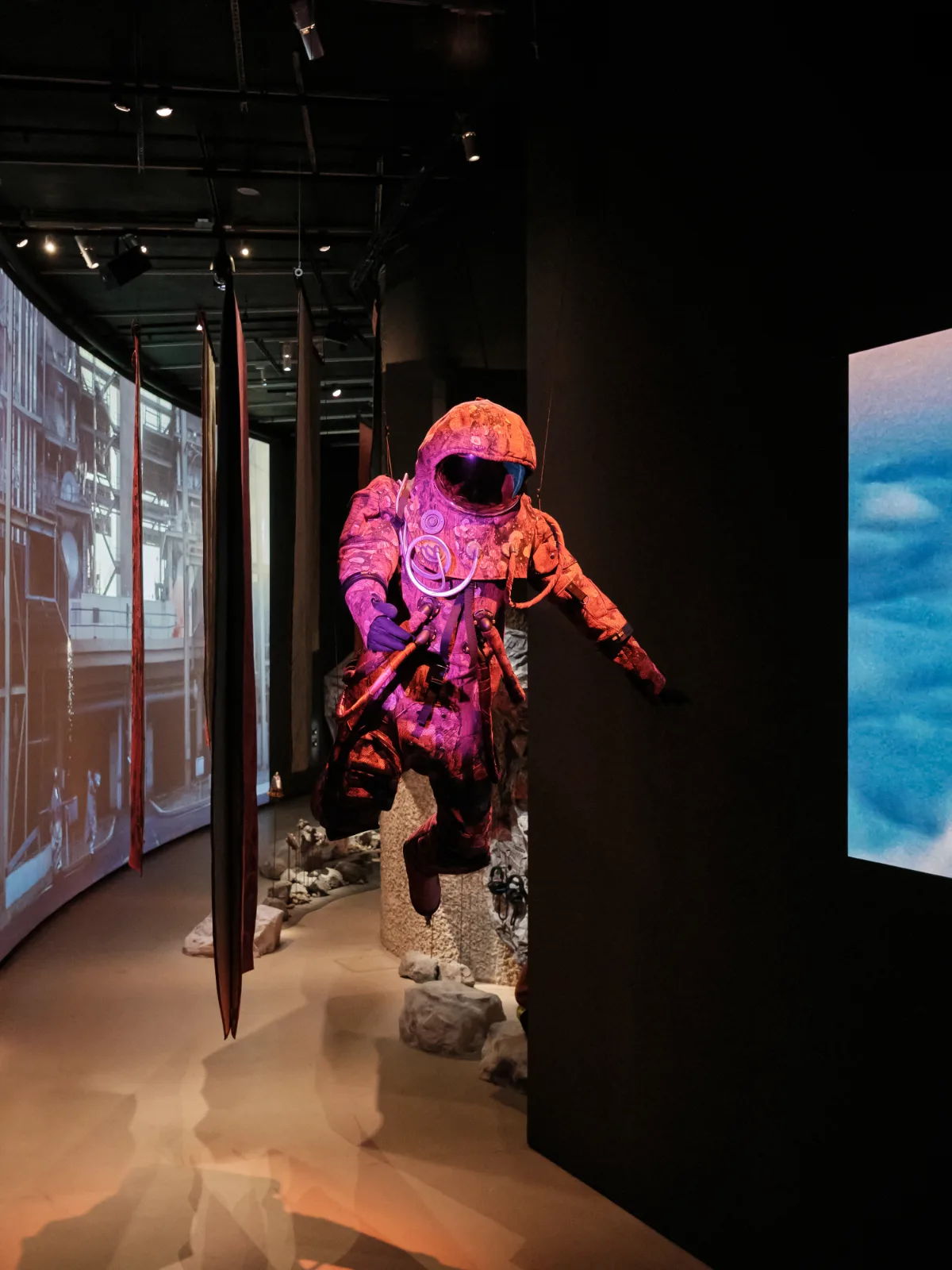
The installation design is cut to these spaces. The Barbican describes the exhibition as a takeover and transformation of three of its locations: tapestries that drop the full height of the ceiling, a channel that runs along the floor, small figures placed among the architectural models. The works, on the other hand, have a previous life. Planet City was commissioned by the National Gallery of Victoria for the Melbourne Triennial and entered its collection; The Great Endeavour premiered at the Venice Architecture Biennale; the costumes made with Ane Crabtree for Planet City had already been exhibited in Melbourne. What is new here is not the films but the route that holds them together. And the space stops being a container for the story and becomes part of the way the story unfolds.
Worlds built backwards
Every film in The Curve has a room built out of it.
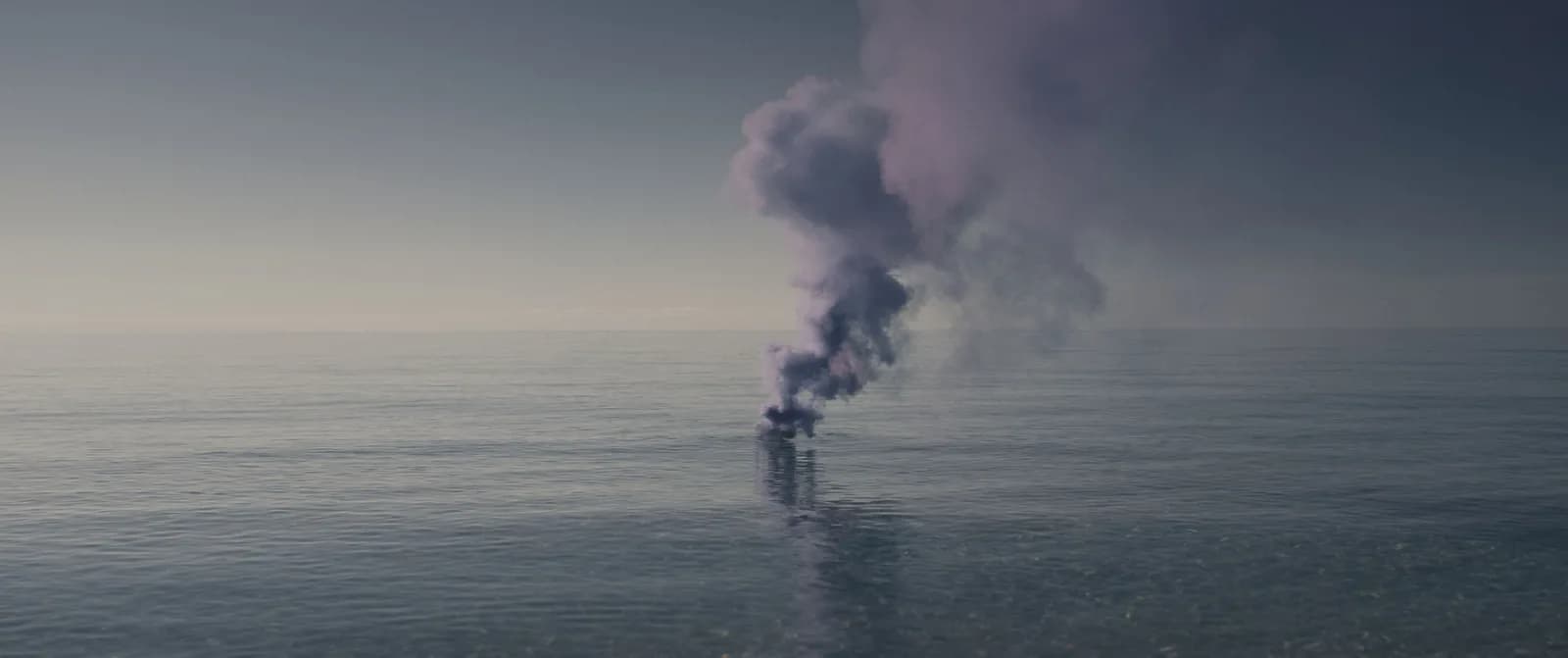
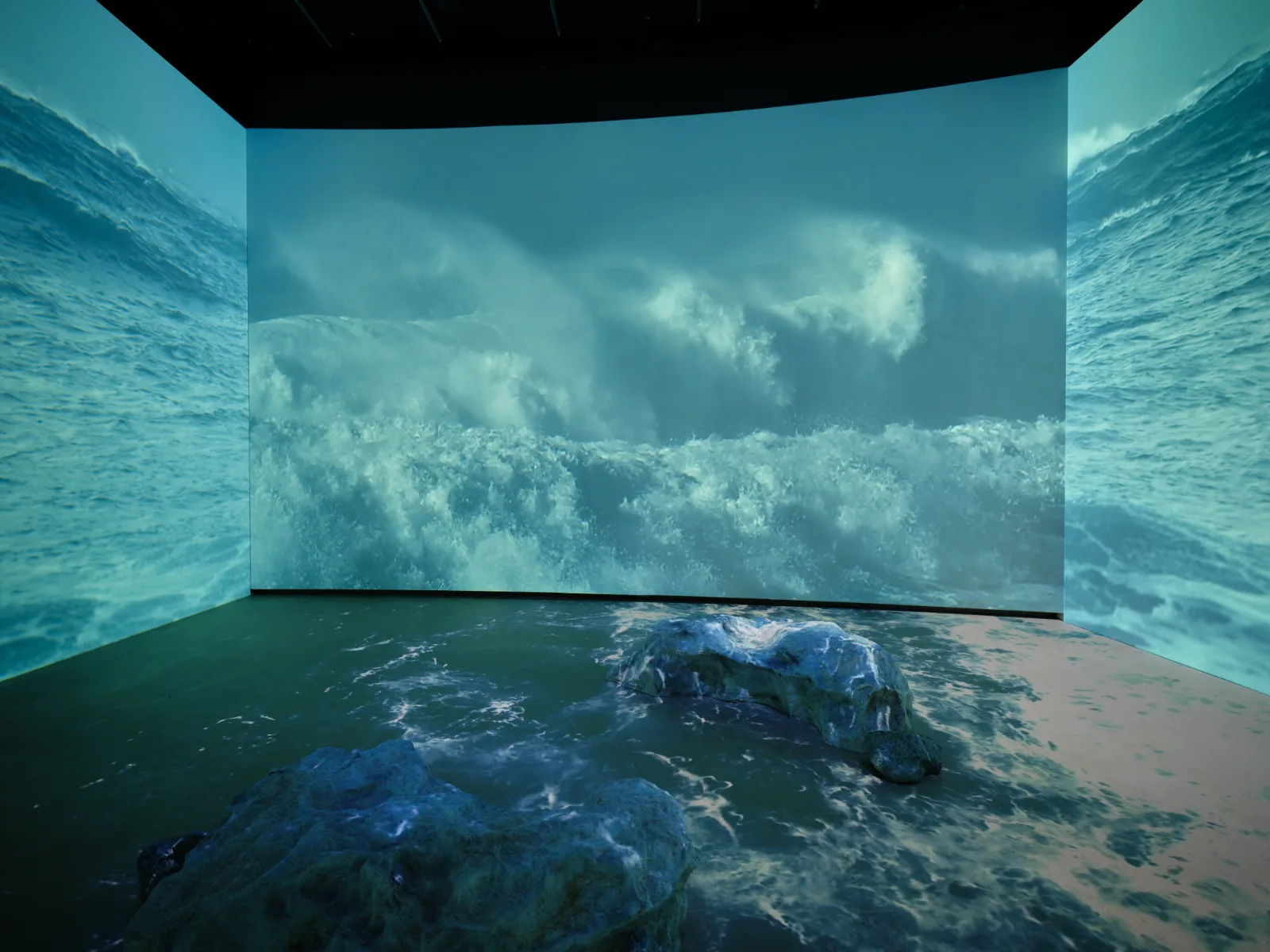
World Machine (2026) is new, commissioned by the Barbican, and premieres here on a projection twelve metres wide. It imagines a planetary supercomputer, every surface of the Earth drawn into the work of calculation, vast wind and solar farms powering AI data centres and coexisting with rewilded landscapes. Young builds it by cutting live footage against computer-generated imagery, which means the film makes its case formally before it makes it in words: the real and the modelled in the same frame, indistinguishable at a glance.
The Great Endeavour (2023), which premiered at the Venice Architecture Biennale, designs the infrastructure that pulling carbon dioxide back out of the atmosphere would actually demand, at its true and absurd scale.
Planet City (2021) gathers ten billion people into a single hyper-dense metropolis and hands everything else back to wilderness.
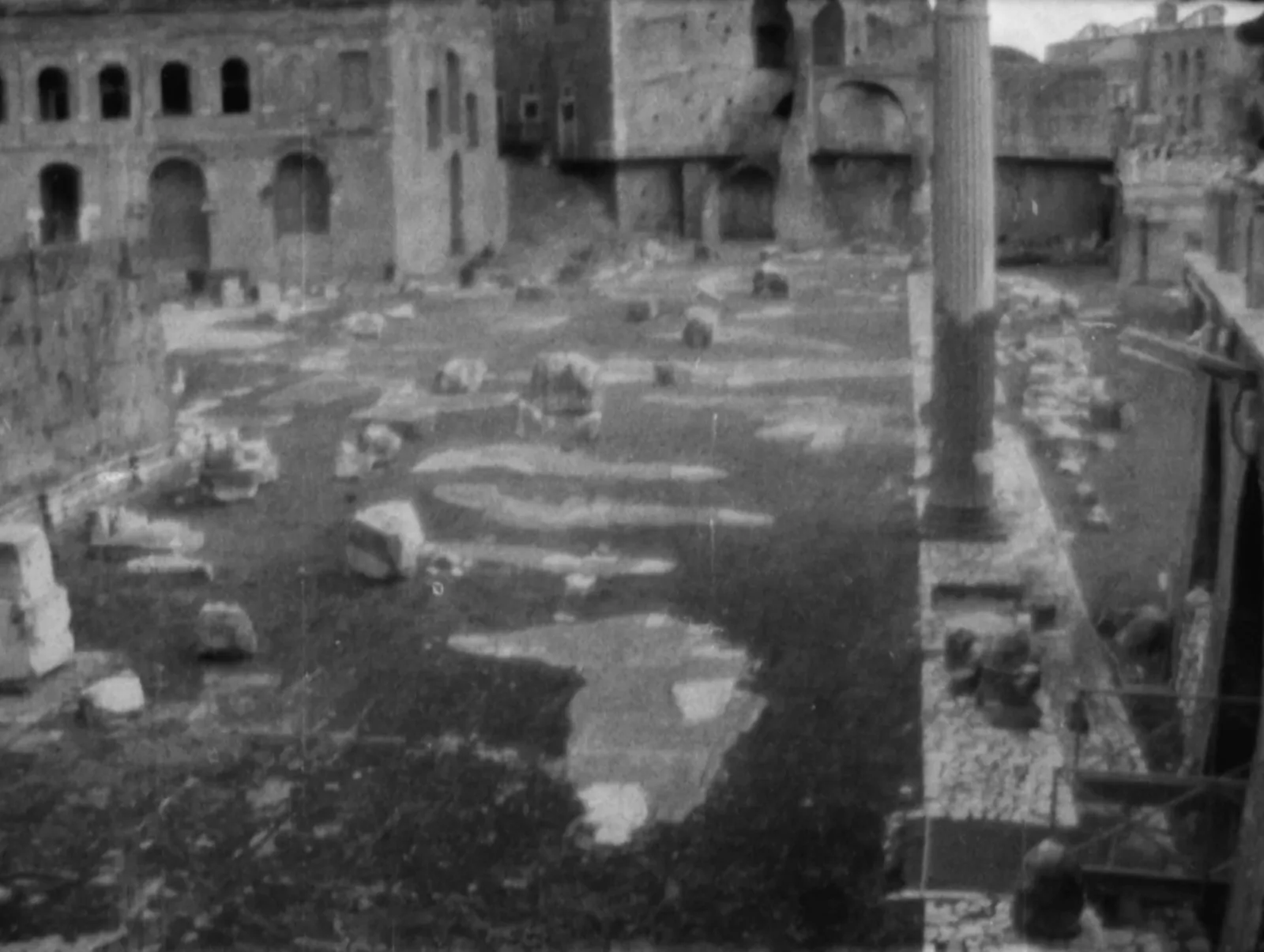
After the End (2024), co-authored with the Aboriginal actor and activist Natasha Wanganeen, who is also its narrator, compresses fifty thousand years of Australian time into one film, from the earliest First Nations communities through colonisation and extraction to a future in which people return to land they were once removed from.
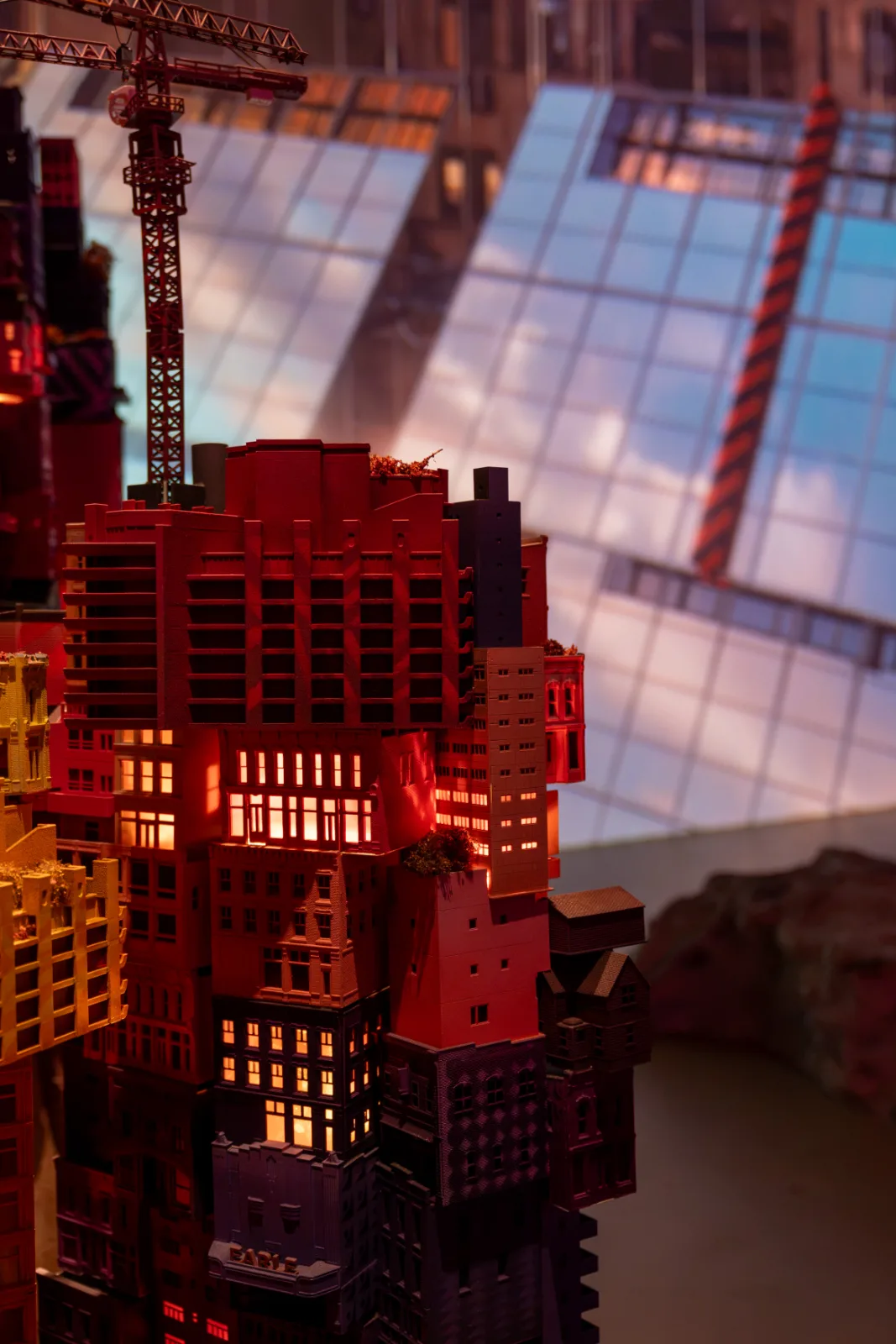
What matters here is not the argument of each world but the direction of the work. Normally a set is built so that a film can be shot in it. Here the films came first, and the rooms were built backwards out of them. Planet City makes this visible twice over. The metropolis runs on screen, and elsewhere in the same space it stands in miniature, towers stacked and windows lit.
World Machine imagines a planet handed over to calculation, and it was produced partly with tools that belong to that calculation. Young's studio works in the visual effects pipelines standard to film and television, where some AI-enabled tools are now built in. The Barbican states that the works remain conceived and created by Young and his collaborators, out of live action footage combined with digital modelling, compositing, physical modelmaking and costumery. The line between what a tool does and what an author does is the same line the film stages on a planetary scale.
A rehearsal, not a prediction
The word the exhibition keeps returning to is rehearsal. Young uses it about his own films, the Barbican uses it in its own account of the work, and Young says plainly that imagined worlds are not in the business of predicting the future but of preparing us for it.
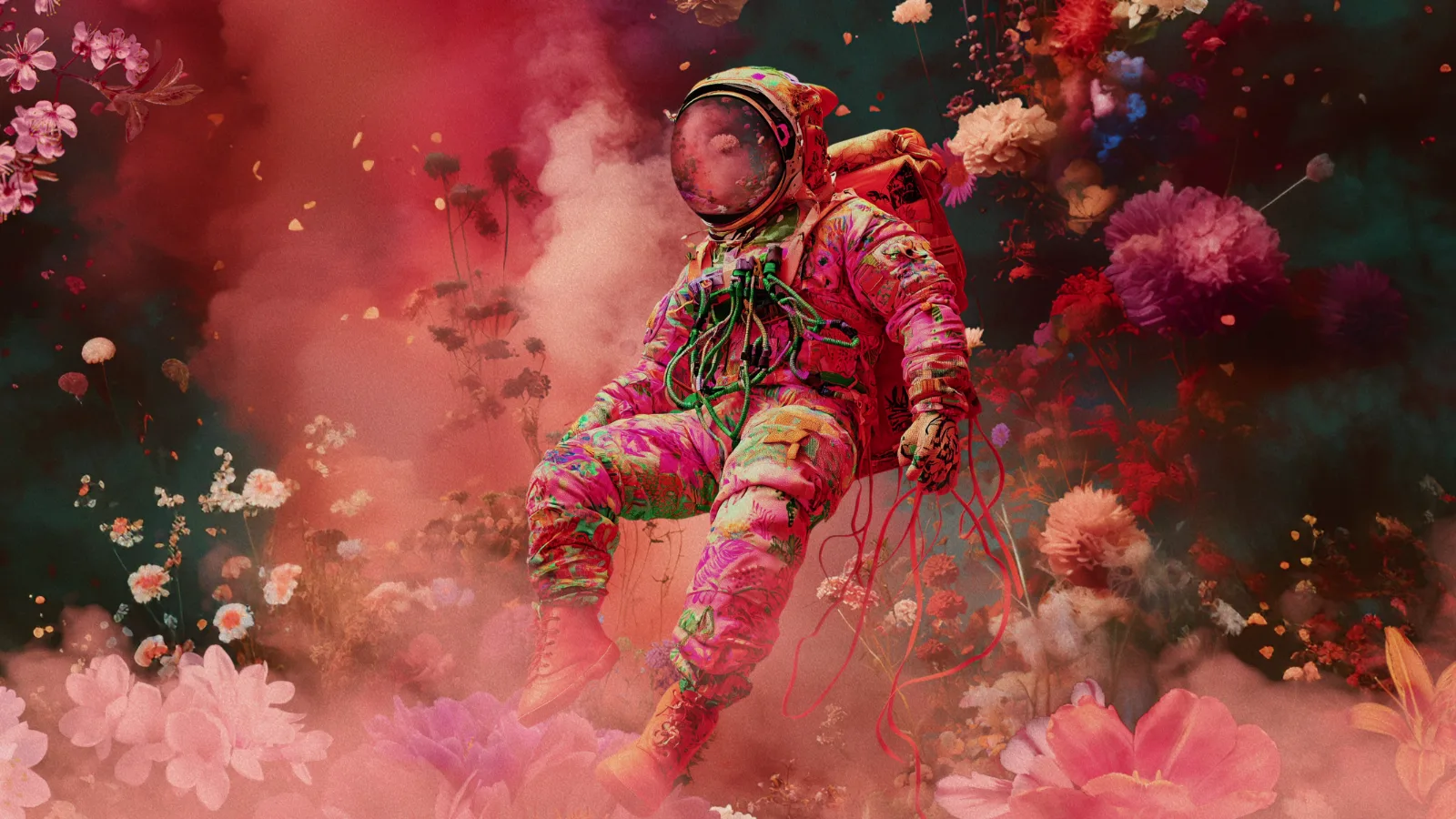
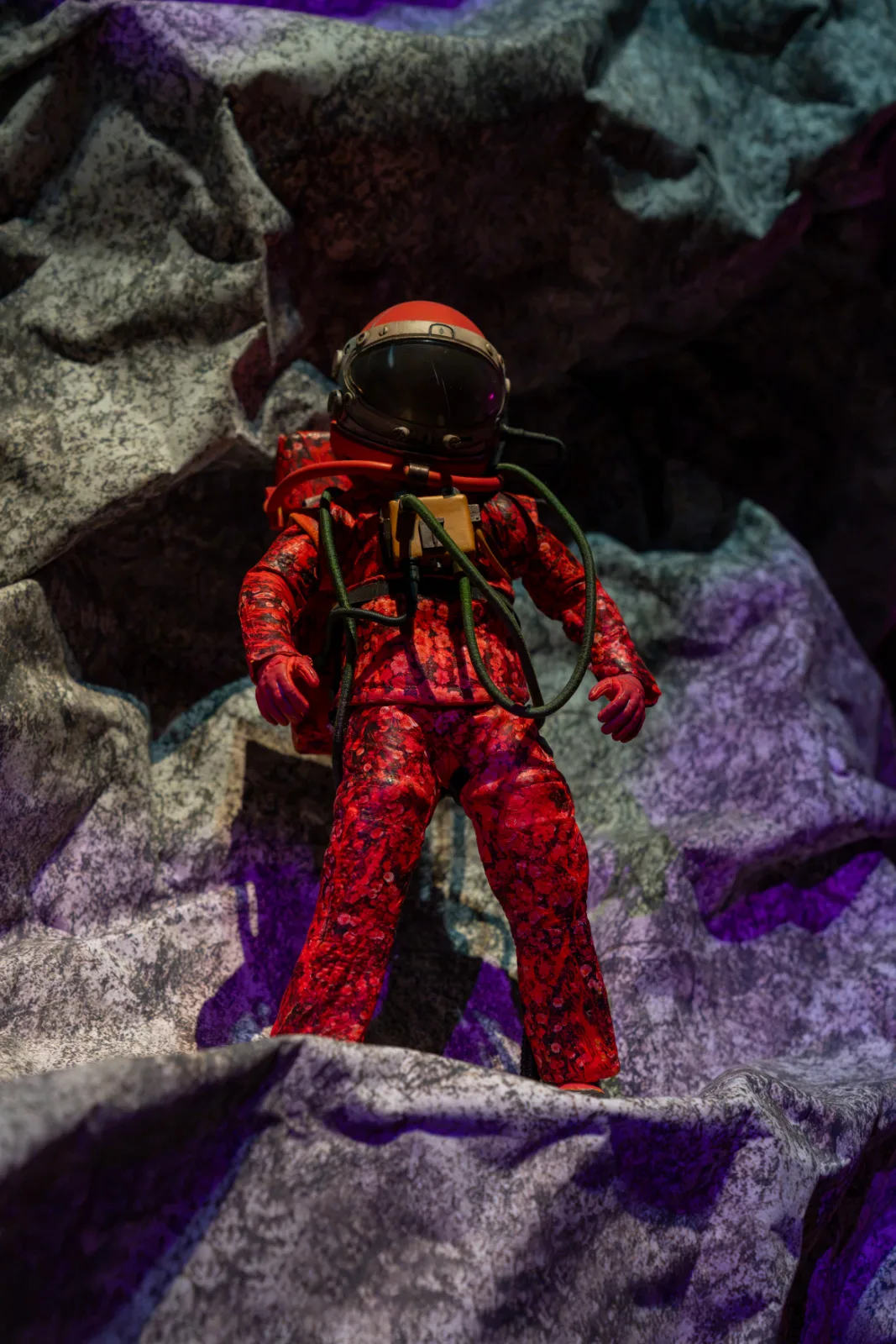
It is worth taking the word literally, because it is a theatre word and it changes what kind of object this is. A rehearsal happens in a room. It uses a script, costumes, props and other people. It is repetitive, physical and unfinished, and it happens before any audience exists. Young supplies all of it: scripts written by novelists, costumes by Ane Crabtree, movie miniatures and speculative artefacts standing in for things that do not exist, and a company of actors on the audio track.
Which also explains the tone. None of these worlds is a collapse and none is an idyll. They are working versions, tested to see whether they hold.
Liam Young and Collaborators: a plural exhibition
The exhibition's official title is In Other Worlds, an exhibition by Liam Young and Collaborators. Putting the collaborators in the title is a choice, and the rooms bear it out.
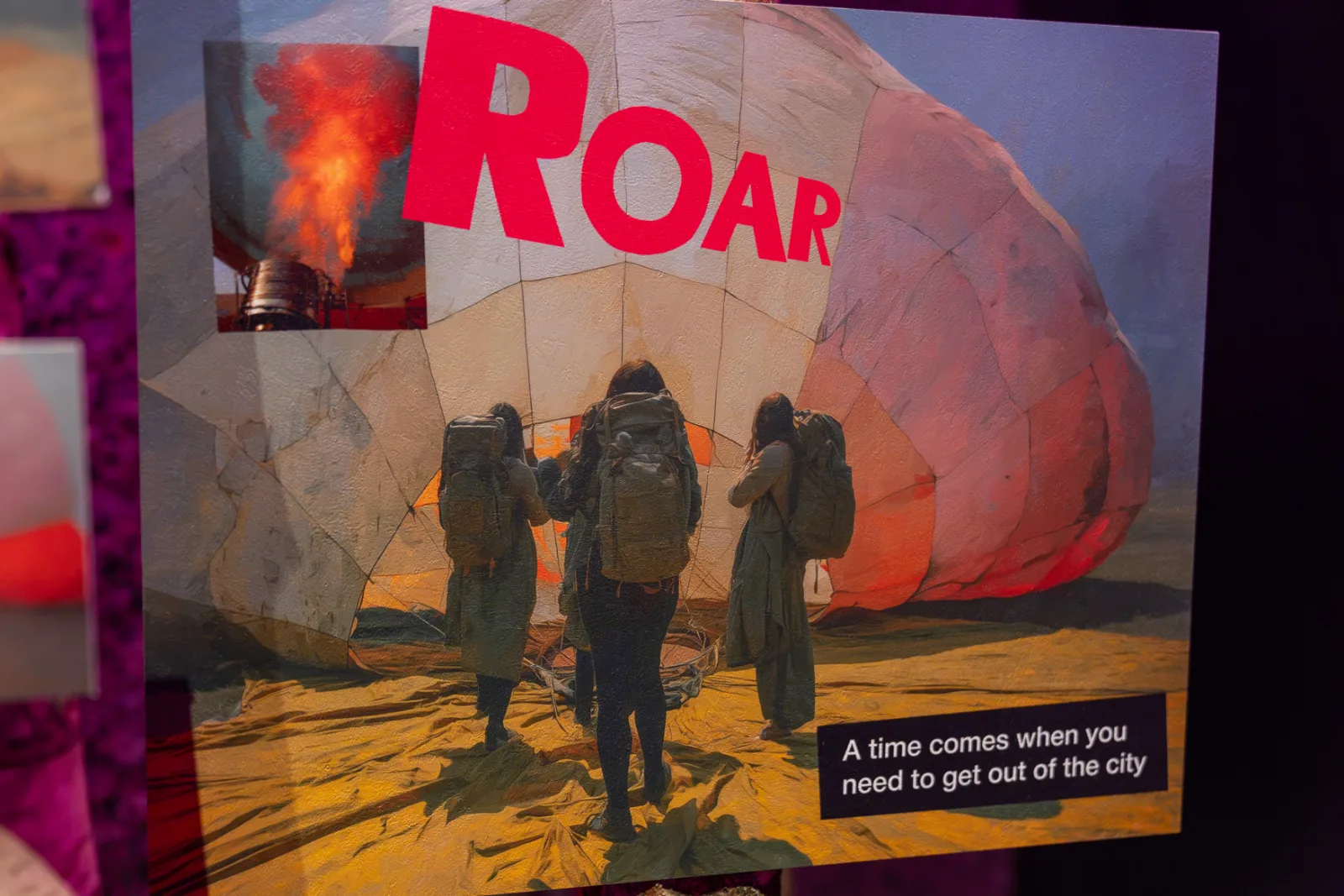
Count the languages in the gallery: film, voice, written text, fabric, object, drawing, set design and costume, music, architecture. Add the graphic narratives displayed as fragments recovered from the worlds themselves, and the soundscapes by Forest Swords, Emel Mathlouthi, Lyra Pramuk, Alex Somers, Ben Frost, Julianna Barwick, Space Afrika, Eleanor Jawurlngali and the Iwiri First Nations Choir. Different grammars holding up a single story, none subordinate to the others. A visitor who mostly listens and a visitor who mostly looks leave with different halves of the same world.
Young's authorship here is of a particular kind. It consists in deciding which languages a story needs, who is best placed to speak each of them, and where they should meet: a curatorial act, and an act of direction, carried out at the scale of a film production.
Down in the car park
You leave The Curve and go down into Car Park 5, and the register changes completely.
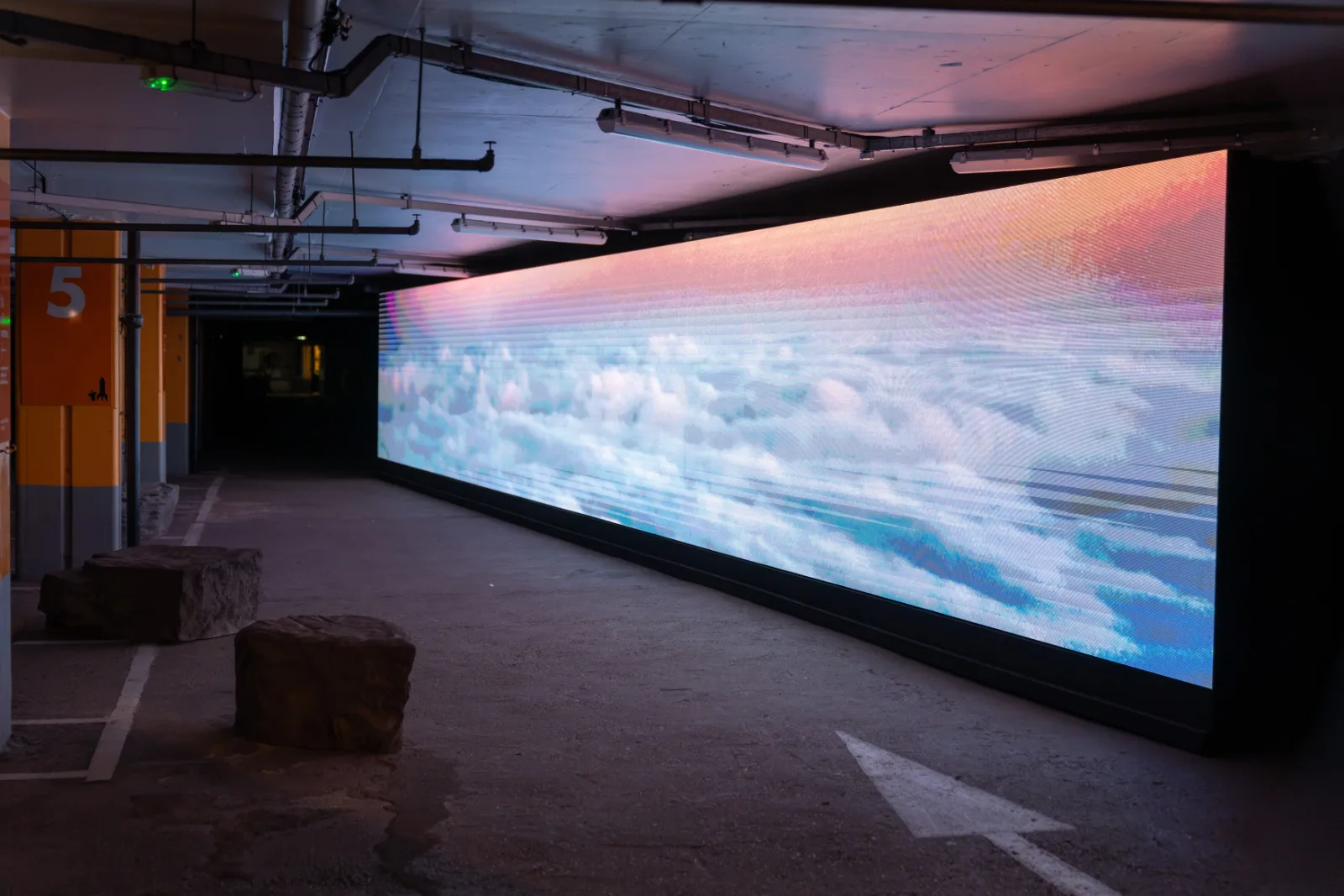
Future Present runs across seven LED screens: short documentaries assembled from Young's research travels with Unknown Fields, the nomadic studio he founded with the artist and architect Kate Davies. Renewable energy sites, climate repair, automated agriculture. All of it real, all of it already standing somewhere on this planet. The most documentary material in the exhibition sits in its least cinematic room, on the parking deck under strip lighting, and the effect of that placement is to make the fiction upstairs look retrospectively like a technical drawing.
Alongside it, Emissary (2024), made with engineers from NASA's Jet Propulsion Laboratory, follows an invented spacecraft through the solar system carrying a record of everything humanity has produced. It is the exhibition's epilogue, and the question it asks is not about space. It asks what a civilisation would choose to send if it knew it was ending. The screen is long and low, the level number is still there on the wall beside it, and rock-shaped blocks sit on the tarmac in front of it.
Le Guin's line holds here better than at any other point on the route. None of this predicts. All of it describes, and the thing described is the present.
Where the image goes next
In Other Worlds will tour nationally and internationally after London, with the United Kingdom leg supported by the British Film Institute through its Audience Projects Fund, which between 2026 and 2029 is distributing National Lottery money to the exhibition and distribution of film and immersive work. Barbican Immersive exhibitions tour the world after their opening run, and Young's films, designs and costumes have already been acquired by museums including MoMA in New York, the Smithsonian, the Victoria and Albert Museum and the National Gallery of Victoria. Whether this work survives the loss of its building is a question that has already been answered: it is designed to be rebuilt somewhere else, and in part it already has been.
The more interesting question is where. The exhibition's lead sponsor is Panorama St Paul's, the redevelopment of the former BT headquarters into offices in the City, and it opens a three-year partnership under which, from 2027, moving image curated by the Barbican will run on a large-scale digital display wall in the building's new public passageway.
Moving image is migrating into circulation space: corridors, foyers, thresholds, the parts of a building that were built for something other than sitting down to watch a film. The question underneath may be exactly where a film can be met at all. Artists' moving image has never had many places to be seen: a gallery takes it in and then dismantles the room, a cinema rarely programmes it, and a screen glimpsed in passing is not the same thing as an audience that has stopped, meaning to sit and watch. The Barbican's answer is ninety minutes of architecture reimagined, redesigned as an instrument of multidimensional storytelling.
The future doesn't rush over us like water.
In Other Worlds, an exhibition by Liam Young and Collaborators, presented by Barbican Immersive. Silk Street Entrance, The Curve and Car Park 5, Barbican Centre, London. Until 6 September 2026, then touring nationally and internationally. Lead sponsor Panorama St Paul's; UK tour supported by the BFI, awarding National Lottery funding. The Silk Street installation is free.
Watch films on AnotherStory Film Artists' moving image, curated and open to all.
Read our editorial manifesto: A House for Stories