This is a story of two times: Before and After.
The Film
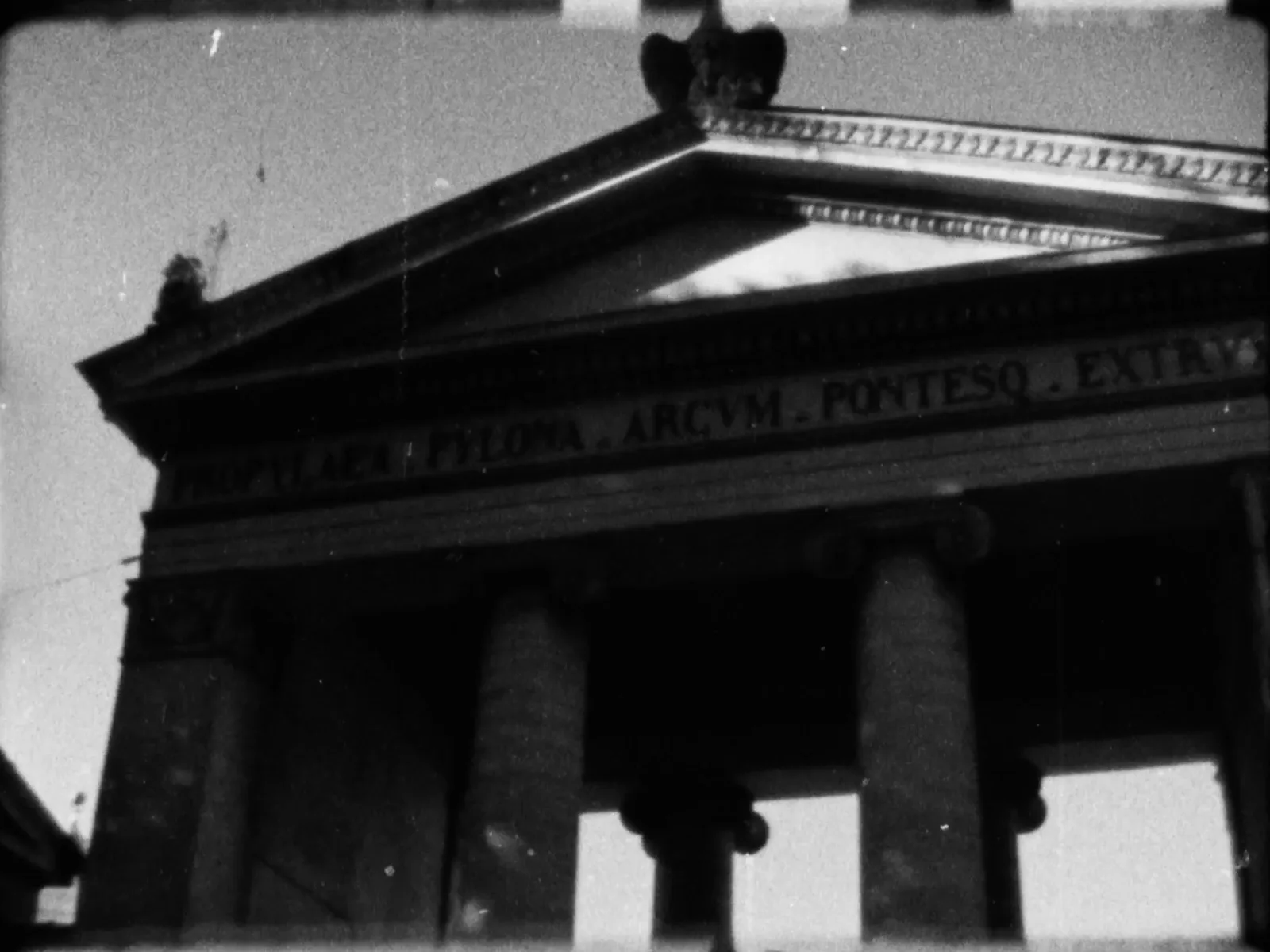
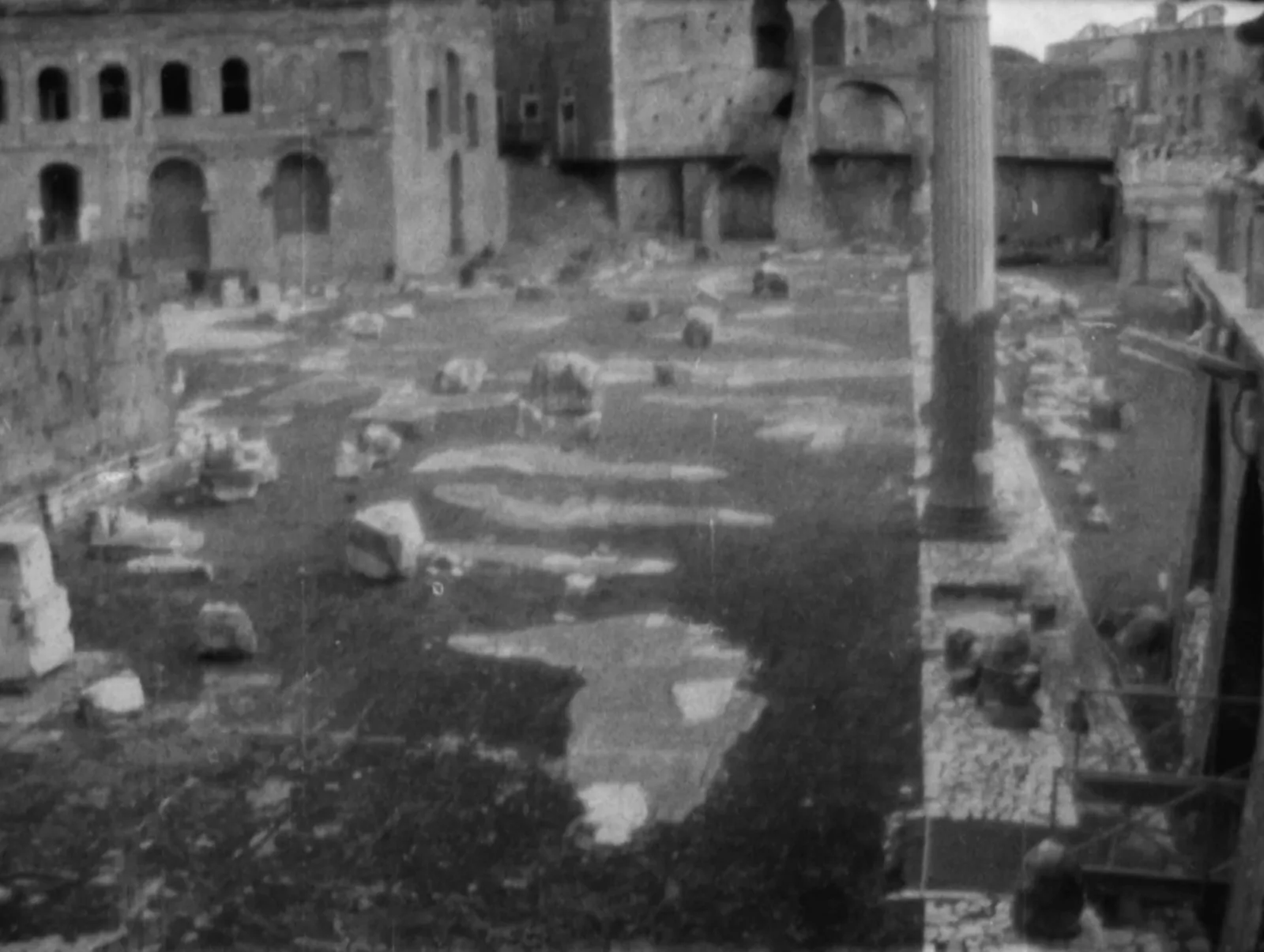
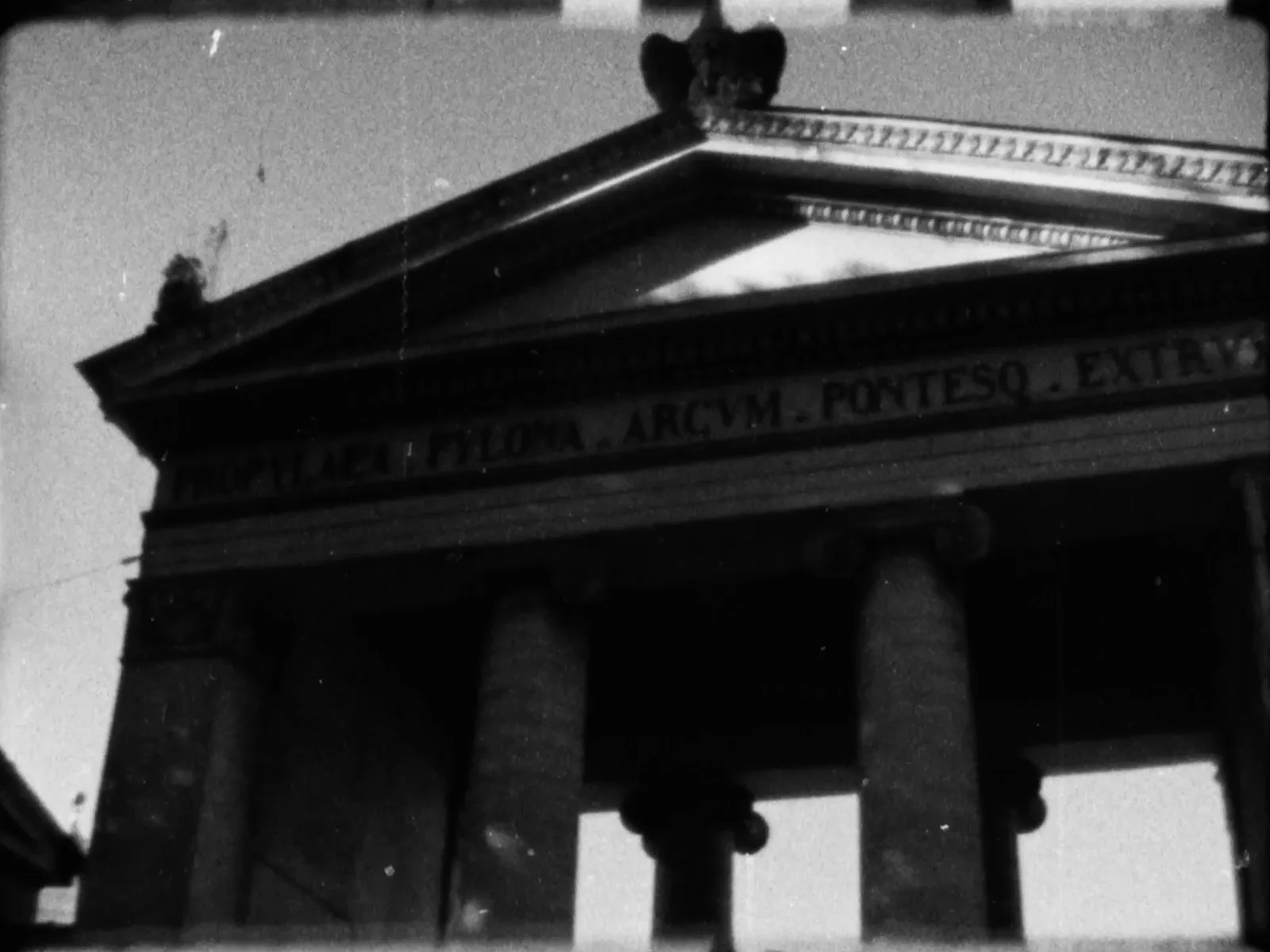
It opens with stone. Fragments of ancient Roman architecture seen through vegetation, filmed so close that the surface of the relief becomes almost tactile. The Super 8 grain makes the stone tremble: marble and travertine flicker under the amber warmth of the celluloid, as if the ruins were breathing. For a moment, the boundary between the material of the monument and the material of the film dissolves. Both are surfaces. Both are fragile. Both carry time.
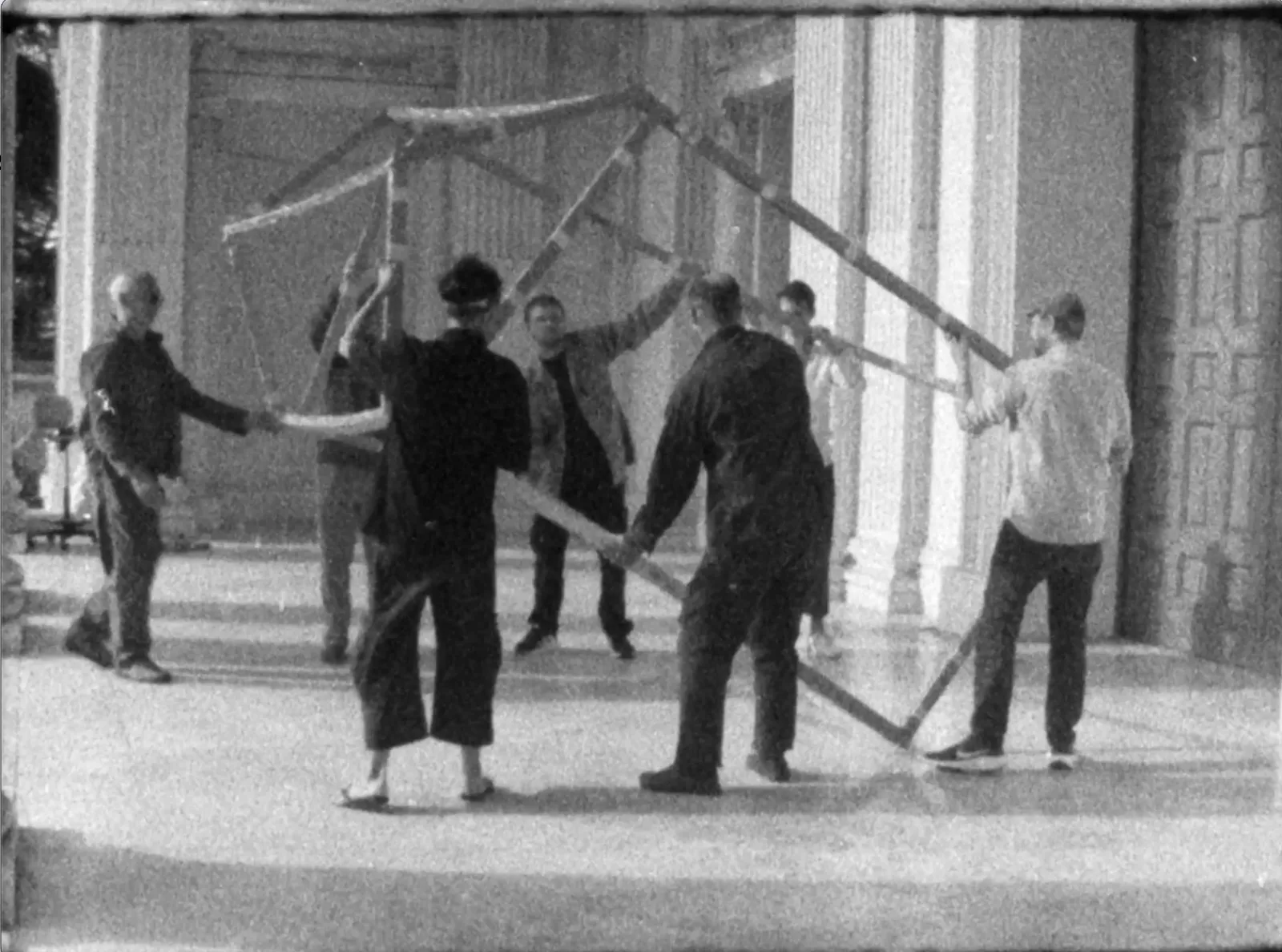
Then the scene shifts. Figures appear in a garden, carrying large structures made of cardboard and paper. They walk slowly through the trees, holding fragments of something that does not yet exist. These are the messengers, and the garden is the British School at Rome. When they reach the porch, they assemble the fragments into a temple. Columns, pediment, base. A structure appears where there was nothing. And then, with the same deliberateness, they allow it to collapse. The screen goes dark.
This is Rise and Fall of a Temple, a film by Eva Sajovic, and it lasts three minutes and forty-eight seconds. The ancient ruins and the cardboard temple are filmed in the same light, with the same grain, in the same amber warmth. The film does not distinguish between them. That is the point: the monumental and the makeshift share the same vulnerability when seen through a medium that can barely hold itself together.
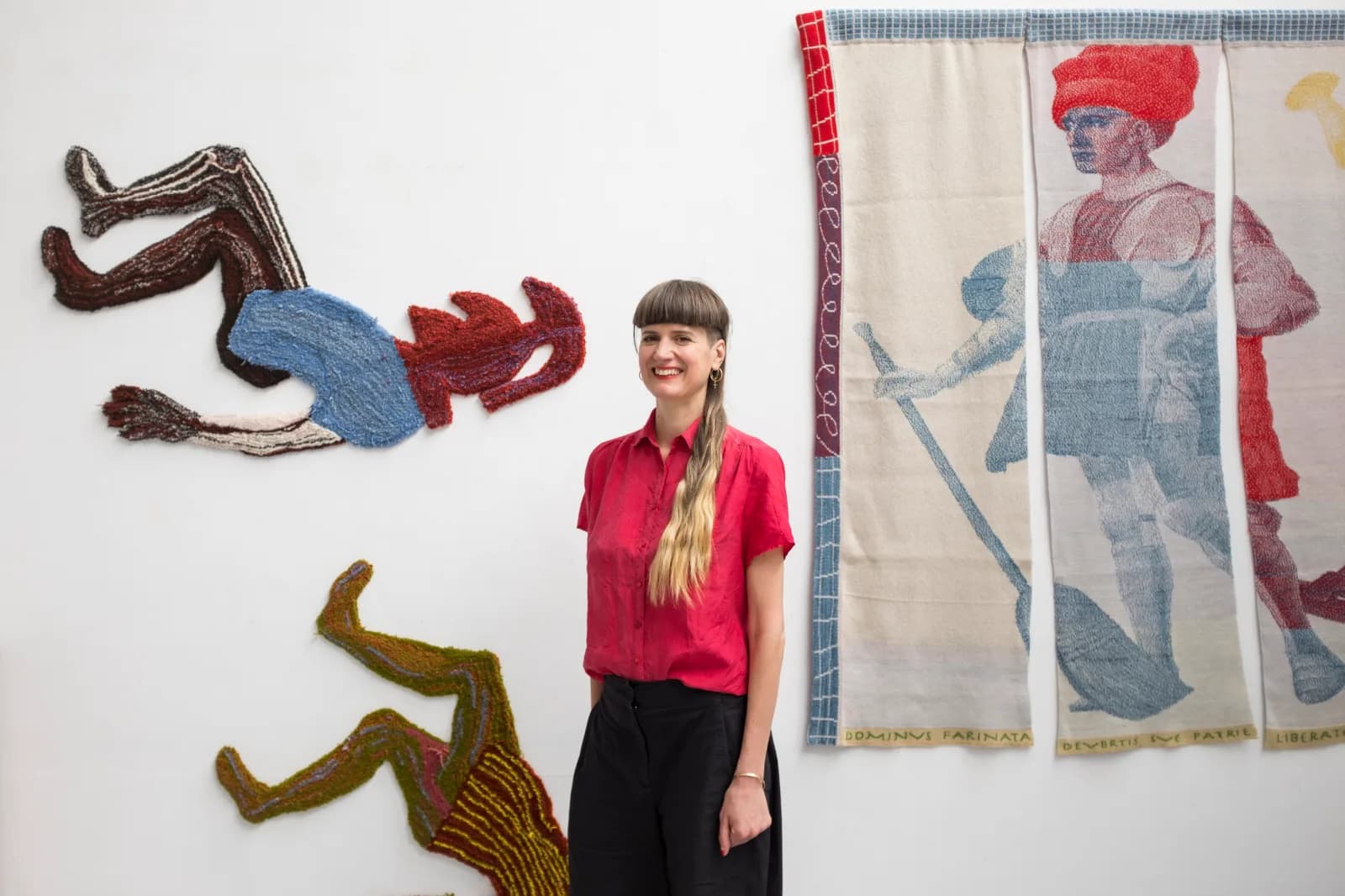
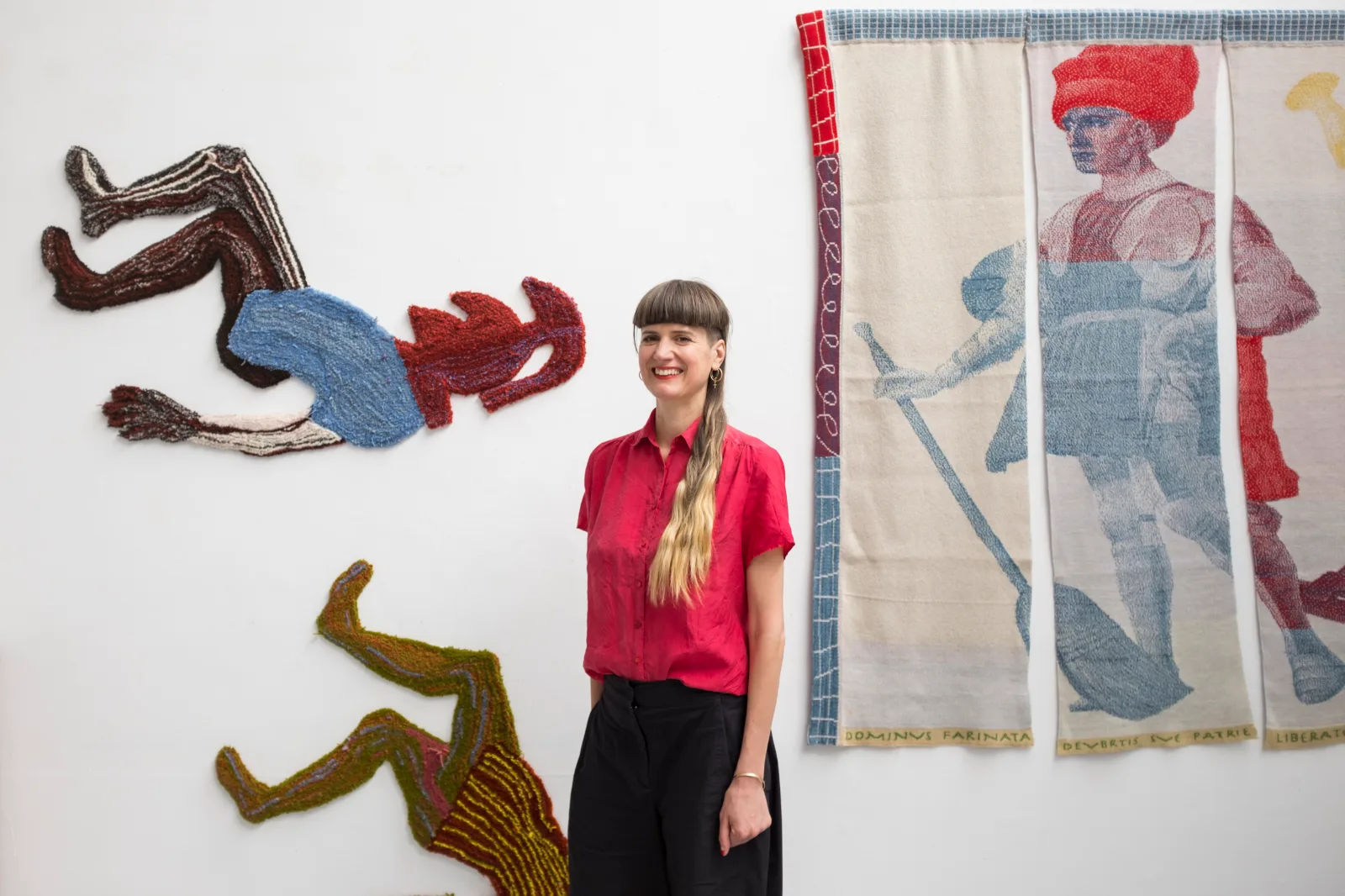
The film was made during Sajovic's 2024–25 fellowship at the BSR, where she was the first ever recipient of the UAL Fine Art Research Fellowship. It sits at the centre of a larger project of the same name that has unfolded across sculpture, tapestry, embroidery, ceramics and participatory performance at Chelsea Space, Chelsea College of Arts (UAL), from 6 February to 17 July 2026. But the film is not a document of the exhibition. It is the seed from which the exhibition grew: the first gesture, the original image, the act that everything else followed. As Sajovic has said: "The film is more of an abstraction, an idea, whilst the exhibition space is more concrete."
Before was a time of extraction and appropriation. A time when having meant being. It was a time of straight lines and big dicks. Of putting down in order to clamber up. Of slavery and exploitation. Winners and losers. Of gambling and gaming, risk-taking and blind belief. Ego reigned. Fear had a field day. Structures were built to keep everything, and everyone, in place.
- Sarah Butler, from the voiceover of Rise and Fall of a Temple
The Medium
Sajovic shoots on Super 8. The choice is deliberate: the medium is the message, and the message is fragility.
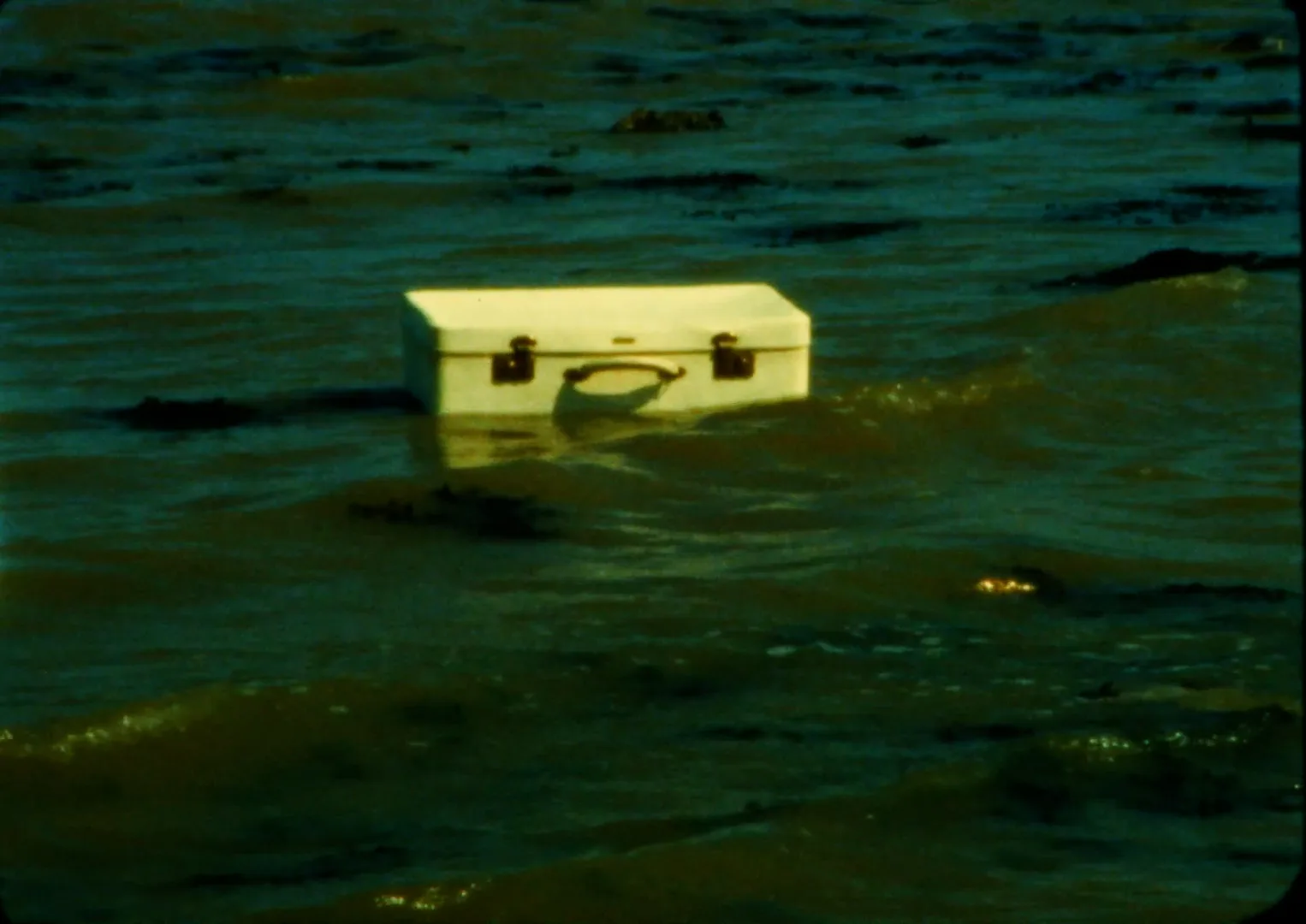
Super 8 is the most precarious film format still in use. The frame is tiny. The grain is visible. The colours shift unpredictably. Each reel lasts three minutes and twenty seconds. There is no playback: you shoot, and then you wait. You do not know what you have until the film is developed. It is the opposite of the controlled, repeatable, instantly reviewable image that digital cameras produce. It is closer to memory than to recording: imperfect, partial, coloured by the chemistry of the moment.
The format is 4:3, the proportions of a home movie, not a cinema screen. An empire seen through the frame of a family film. Another transformation of the monumental into the intimate, another act of softening that runs through the entire project: stone becomes wool in the exhibition, marble becomes cardboard in the performance, and the Roman Empire becomes a three-minute Super 8 in the format of something you might have found in your grandmother's attic.
And then there is the caffenol. Sajovic develops the Super 8 by hand, not in a professional lab but in a solution made from instant coffee, washing soda and vitamin C. Caffenol is a DIY photographic developer invented by amateur chemists and adopted by artists who want to keep the entire process in their own hands, from exposure to image. The most quotidian substance, the liquid we drink every morning without thinking, becomes the agent that reveals the ruins of Rome.
This is not a technical eccentricity. It is a poetic choice that runs through the entire project. Rise and Fall of a Temple is about what happens when monumental structures are remade in fragile materials. In the exhibition, stone becomes wool, iron becomes thread, warriors carry mops. In the film, the Roman Empire is seen through a strip of celluloid developed in coffee, carried by hand from the darkroom to the light. Every frame carries the hand that made it.
Why We Are Hosting This Film
We are bringing Rise and Fall of a Temple onto AnotherStory Film because it is a work that embodies something we believe in: the idea that the most powerful images are often the most fragile, and that giving them a lasting home is a form of care.
The exhibition at Chelsea Space closes on 17 July. The participatory performances have happened. The temple has been built and deconstructed. What remains is the film: the first image, the one that started everything, now continuing its life beyond the gallery walls on a platform built for exactly this kind of work. As Sajovic herself has said, once the exhibition closes, the film remains as a circulating fragment, capable of entering new contexts and generating new interpretations.
There is something fitting in the fact that a film made on Super 8 and developed in coffee now lives on a streaming platform. It is another transformation, another passage from one state to another: from celluloid to digital, from a garden in Rome to a screen anywhere in the world, from a temporary fellowship to a permanent archive. The medium changes. The fragility endures. And the question the film asks, what do we build, and what do we let fall, keeps turning.
After was a time of giving back; of return. A softer time. A time of wombs and vulvas. Of wandering and thought. Dissipation and dispersal. A time of bending with the wind. Of worshipping buttercups and buzzards, dandelions and daisies. Hawthorn. Holly. Bramble. Bees.
A time when the small mattered: a grain of sand, blade of grass, half-curled leaf, speck of pollen. Chaos. Cacophony. Contradiction.
Now streaming: Rise and Fall of a Temple — Eva Sajovic