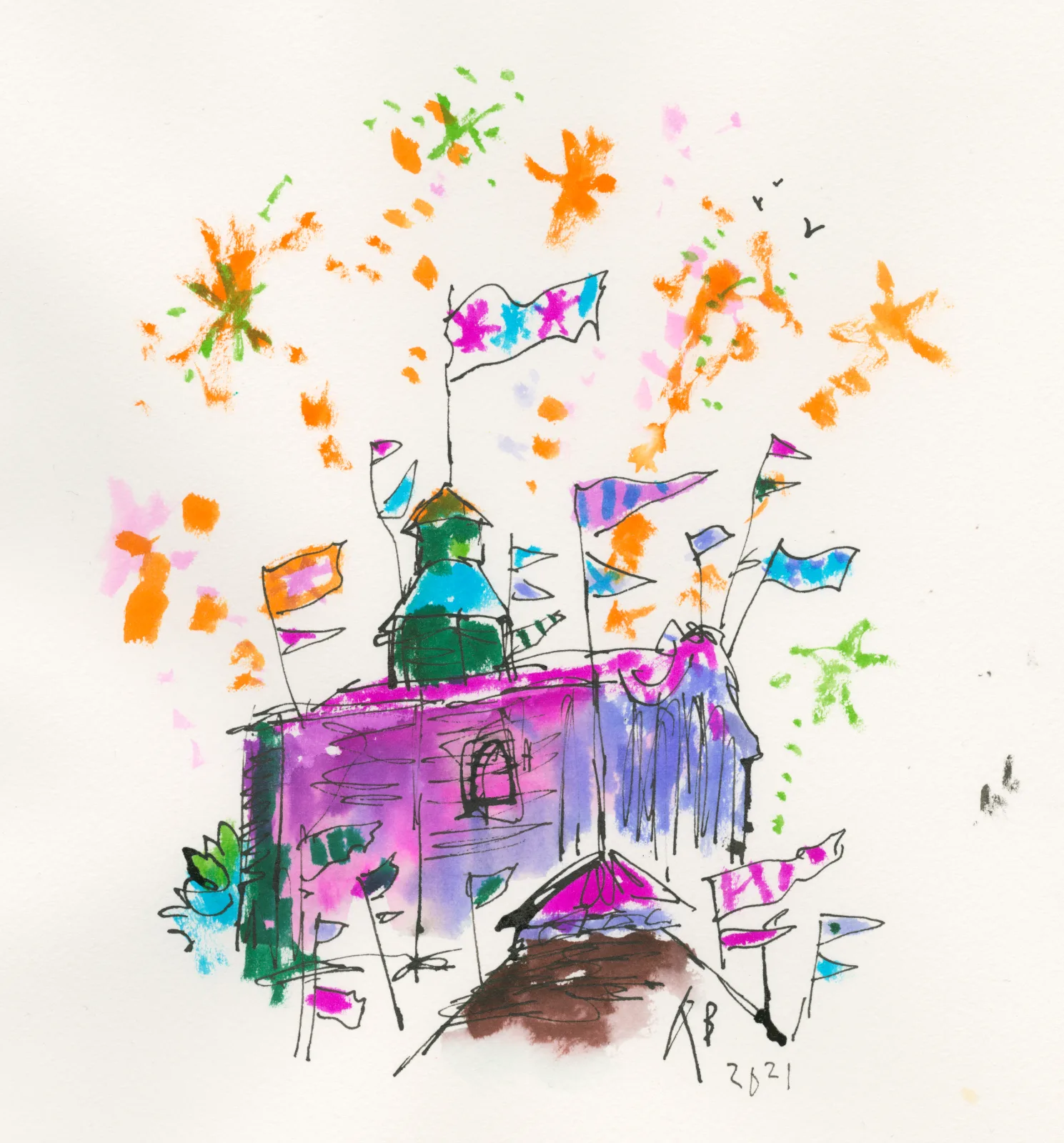
Where the Water Was: New River Head and the Quentin Blake Centre for Illustration
A Note from the Lab on a place that has been bringing something essential to London for four hundred years, and has just changed what that something is.
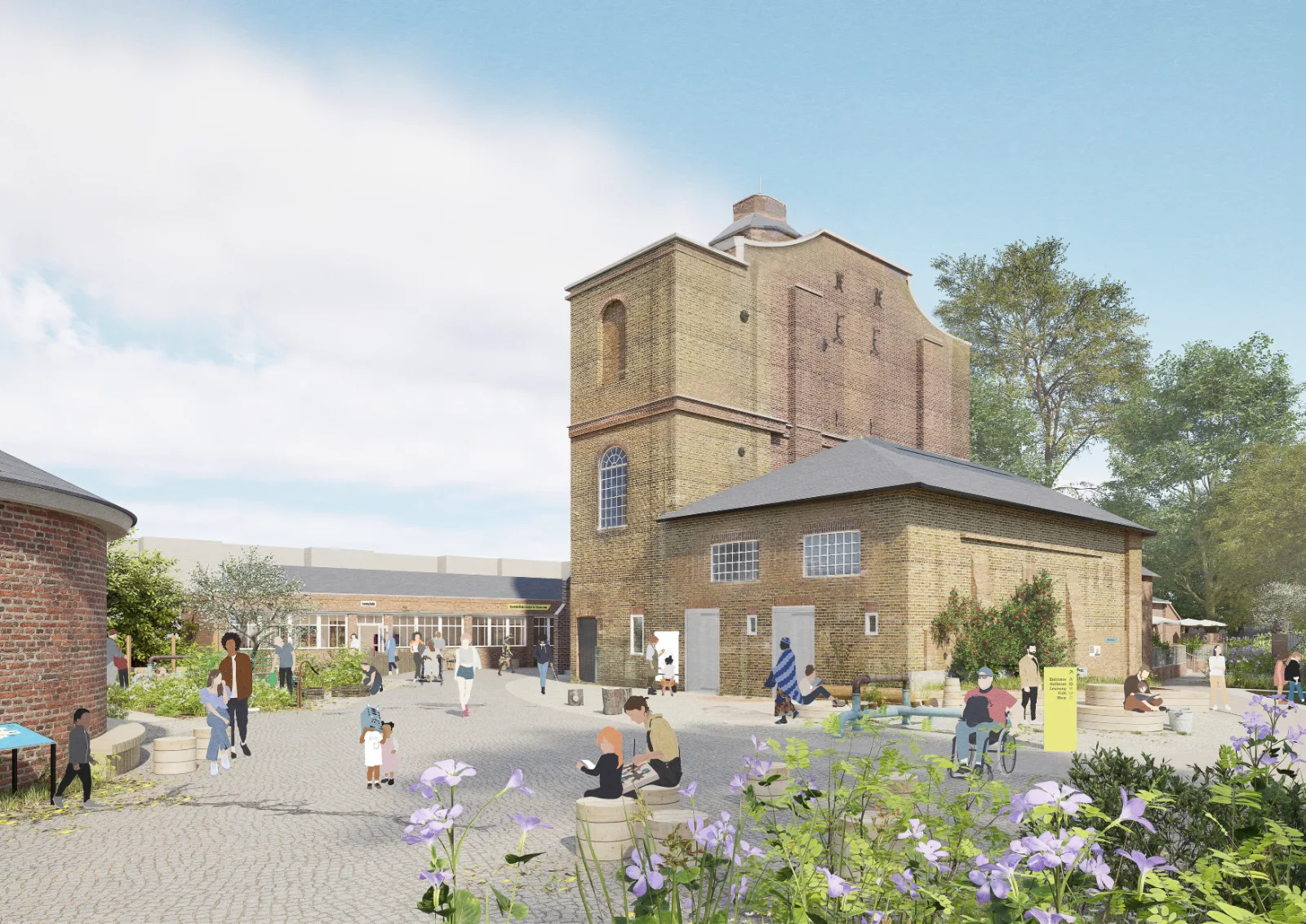
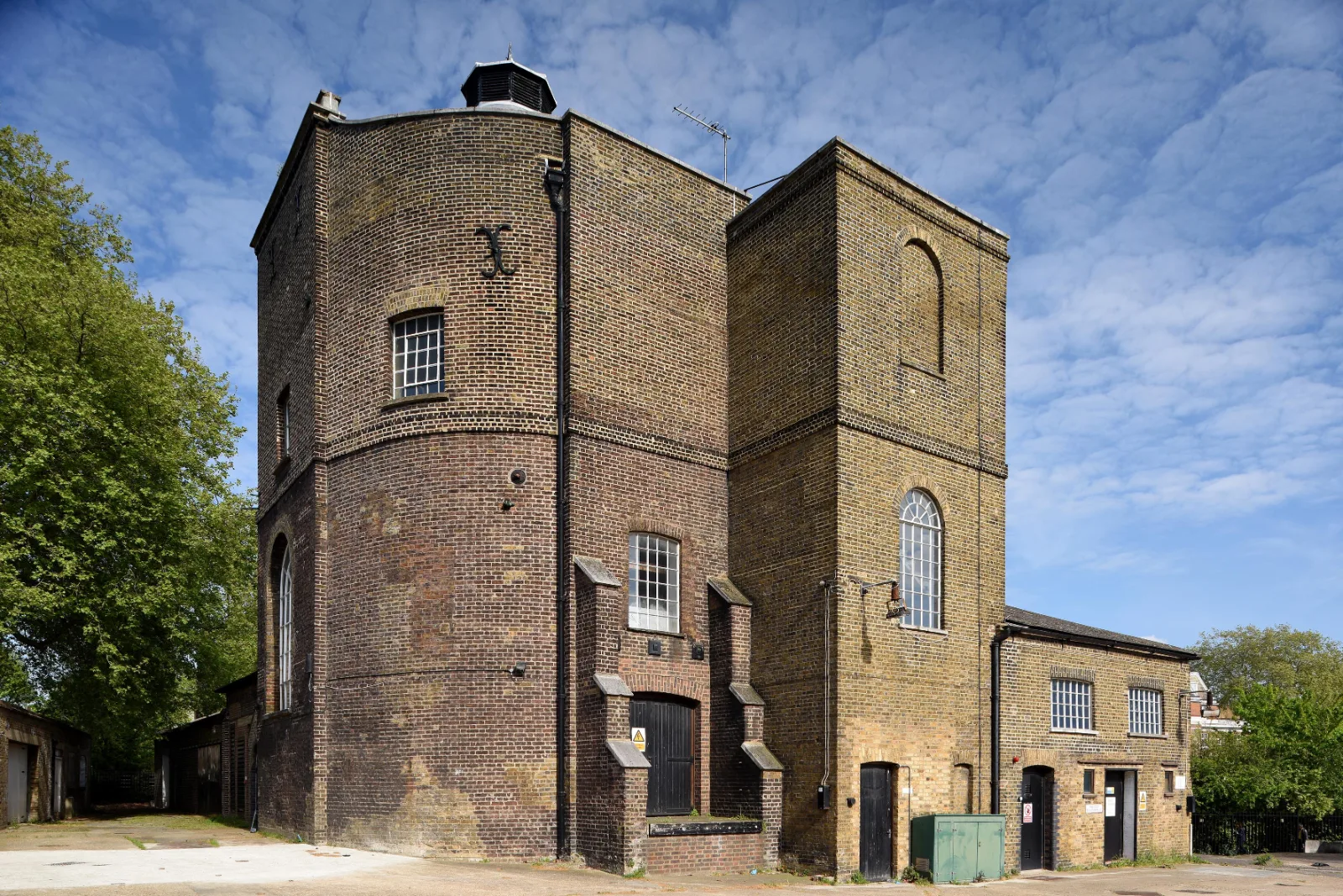
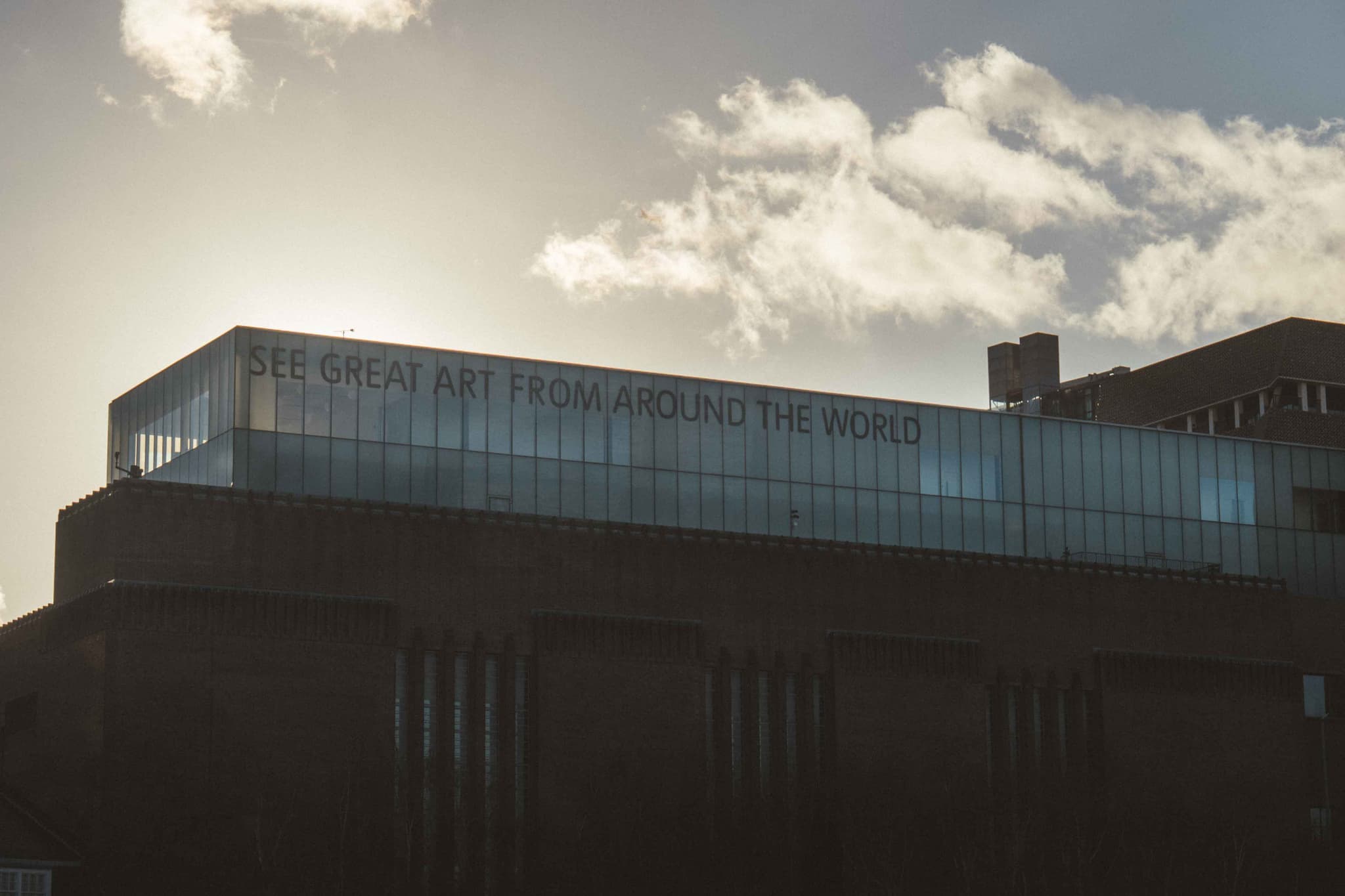
In 1613, water arrives in London through a new channel. Forty miles of hand-dug river, sloping gently from the springs in Hertfordshire to a natural pond on the edge of the city, where it collects and flows downward through wooden pipes into the houses of those who can afford it. The place where the water gathers is called New River Head. It sits on a rise in Clerkenwell, elevated above the city, which is why the water flows. Gravity does the work. For the next three centuries, this site carries water to London. It is one of the most important pieces of urban infrastructure in the history of the city.
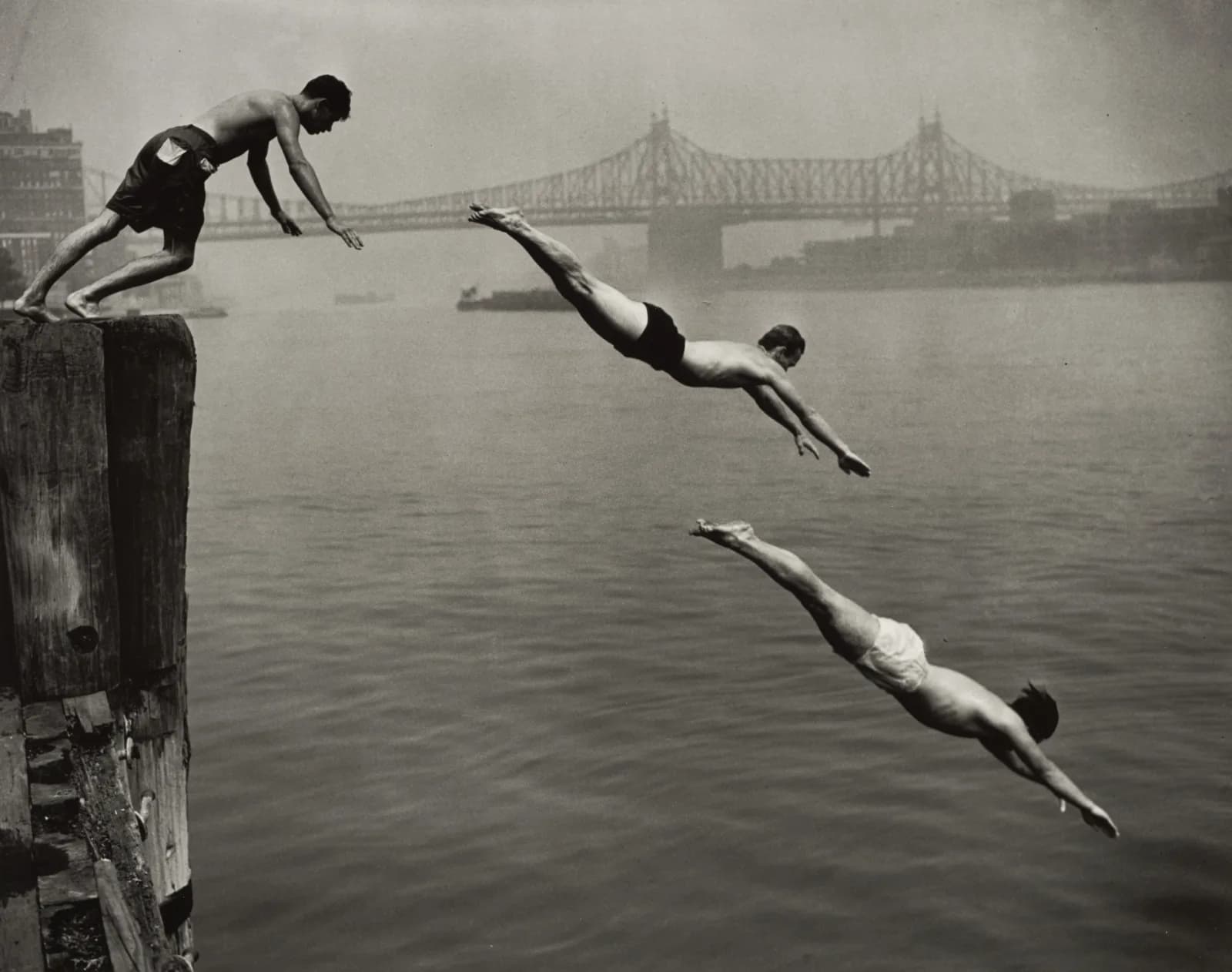
By 1700, the New River Company is one of the three richest companies in London. Windmills, horse-powered engines, then steam pumps are built on the site to push the water further, higher, into the expanding city. Stokers work long shifts feeding coal into boilers. The chimneys add smoke to London's sky. The ponds become habitats for fish and migrating birds, and people swim in the river even though it is against the law. The water is a public good and a private business at the same time, and the tension between the two runs through the entire history of the site.
In 1904, the company is nationalised. In 1954, the engines switch from steam to electricity. In 1989, the water supply is privatised again and the site is sold. The buildings stand empty. The engine house, the boiler house, the coal stores, the base of the windmill. Four centuries of carrying water, and then silence.
In 2019, a charity buys the site. In 2020, the architects begin work. And on 5 June 2026, New River Head opens its doors again, carrying something different.
What Flows Now
The Quentin Blake Centre for Illustration is the UK's only permanent public space dedicated to illustration. It is also the world's largest. Three galleries in the restored waterworks buildings, a free illustration library, public gardens opened for the first time, a café, a shop, a learning studio. The buildings that once held steam pumps and coal now hold exhibitions and books.
The idea begins twenty-five years ago, when Quentin Blake is made the UK's first Children's Laureate in 1999 and uses the platform to champion illustration as a visual language that deserves its own place. He founds the charity in 2002. For a decade, it operates without a building, touring exhibitions and running learning projects. In 2014, it opens as House of Illustration in King's Cross, a rented space that reaches over a million people before it closes in 2020. The search for a permanent home leads to Clerkenwell, to these buildings where the water used to be.
There is something in the coincidence that goes beyond architecture. A site that spent four centuries bringing water to a city that needed it now brings illustration to a culture that needs it. Not illustration as decoration, not as children's entertainment, but as what Blake has always insisted it is: a universal language, used throughout the world to tell stories, inform, explain and persuade. If water nourishes the body, illustration nourishes the way we see, read, think. Both are essential. Both are easily taken for granted. And both, at New River Head, have found their source.
Even the typeface tells the story. The Centre's logotype is set in Caslon Doric, a typeface created in 1722 less than a mile from this site, at a time when New River Head was a working waterworks bustling with industrial activity. The letters and the water were neighbours, four centuries ago. They are neighbours again.
Three Openings
The Centre opens with three exhibitions that map the breadth of what illustration can be.
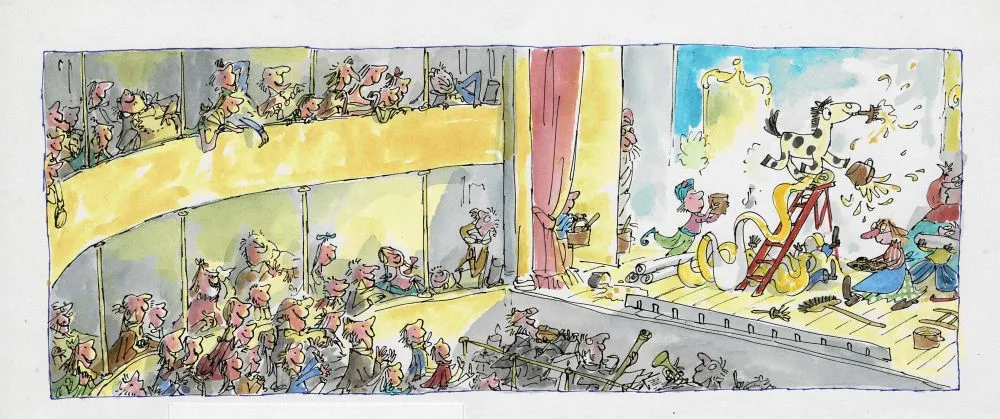
Quentin Blake: Performance brings together over one hundred original, rarely seen drawings that trace the theatrical influences running through Blake's nearly eighty-year career: from his early work illustrating opening night performances for Punch magazine, including Laurence Olivier's iconic turn in The Entertainer (1957), to the pantomime inspiration behind Roald Dahl's The Enormous Crocodile (1978), to nearly forty new depictions of Macbeth characters drawn as birds (2023), on public display for the first time. "Illustrating is like directing a play," Blake says, "except that you also get to design the scenery and play all the parts." The exhibition runs until May 2027.
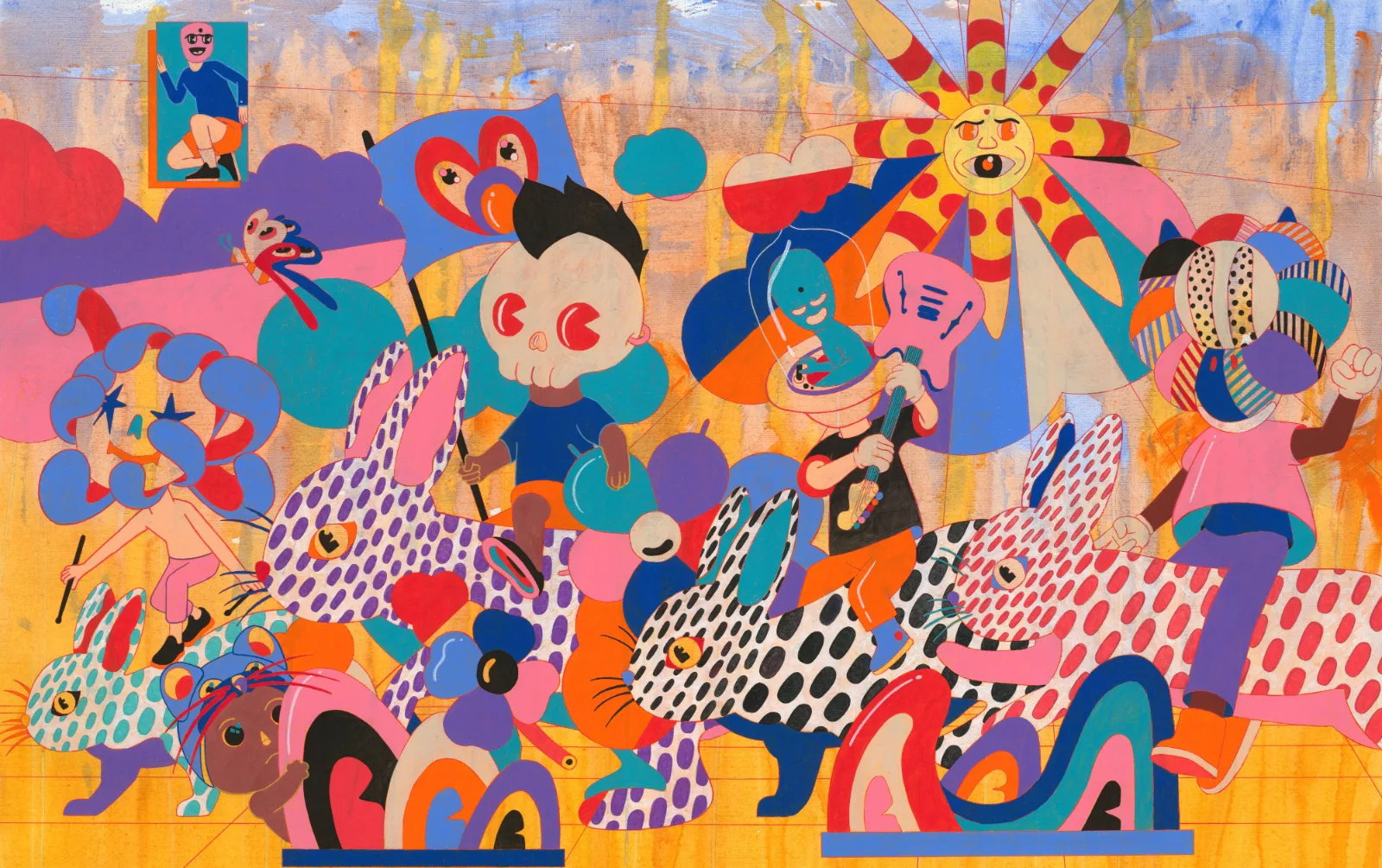
MURUGIAH: Ever Feel Like… is the first solo show by the British-Sri Lankan illustrator and designer whose work reflects on identity, heritage and disconnection through characters with flower heads, elephant heads and skull heads, drawn from a youth spent playing Nintendo, listening to pop punk and watching Saturday morning cartoons. Trained as an architect, MURUGIAH brings ambitious scale and a cinematic sense of perspective to illustration. The exhibition opens a series of collaborations with contemporary UK-based illustrators. It runs until 31 August 2026.
Band Practice Acrylic on 250gm paper 33 x 23
Queer as Comics is the first major exhibition of LGBTQIA+ comic-making in the UK, spanning eighty years from the 1940s to the present day, with previously unseen original works by over sixty artists. Curated by Paul Gravett, it includes Tove Jansson's Moomin strips for the London Evening News with characters based on herself and her lesbian community, Rupert Kinnard's Brown Bomber as the first gay Black superhero, and the UK's first published gay comic strip: a 1969 parody of James Bond. It runs until 4 October 2026.
Why We Are Looking
We have not visited the Centre yet. We will, this summer. What we are doing now is what AnotherStory does when a new space opens and the story behind it is too rich to wait: we read it, we research it, we write about the place before we write about the exhibitions. Because the place, in this case, is the story.
New River Head is a site where something essential has always flowed. For four hundred years it was water. Now it is images, stories, the visual language that Quentin Blake has spent a lifetime defending. We find this extraordinary. And we find it worth telling, in the way we tell all our stories: slowly, carefully, with attention to the layers underneath.
We will return with more. A portrait of MURUGIAH. A closer look at Queer as Comics. Photographs of the spaces and the gardens when we visit in person. For now, this is a note from the lab: a new source has opened in London, and the water is fresh.
Currently opening:Quentin Blake Centre for Illustrationqbcentre.org.uk, 1 Myddelton Passage, Clerkenwell, London EC1R 1AG Opening 5 June 2026 Wed–Sun, 10:00–17:00 Tickets: £16.50 adult / £6.60 child (incl. donation) / Members free Membership from £45
Opening exhibitions:Quentin Blake: Performance — 5 June 2026 – May 2027 MURUGIAH: Ever Feel Like… — 5 June – 31 August 2026 Queer as Comics — 5 June – 4 October 2026
The Journal is the place where AnotherStory thinks aloud — where films find context, projects take shape, and stories continue beyond the screen. Not a blog, not a magazine: a living archive, a house for the eye that learns to stay.
Half the title on the entrance panel has been struck through in red. Inside, sixty years of ink: maps that keep their coasts and lose their names, and the founding manifesto of Futurism blacked out in the house that holds its paintings.