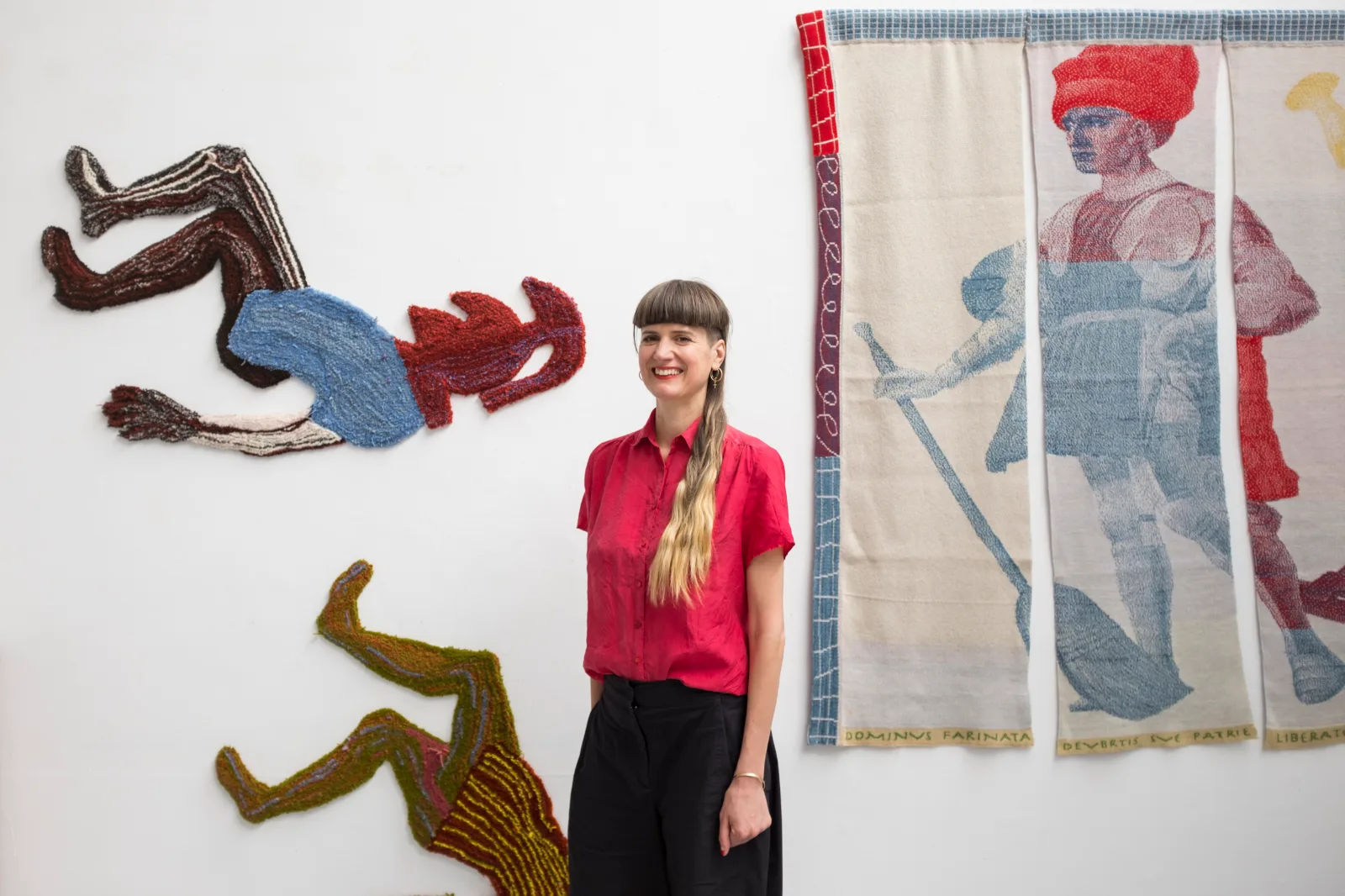
Art became a way of holding contradictions that history simplifies.
The Conversation
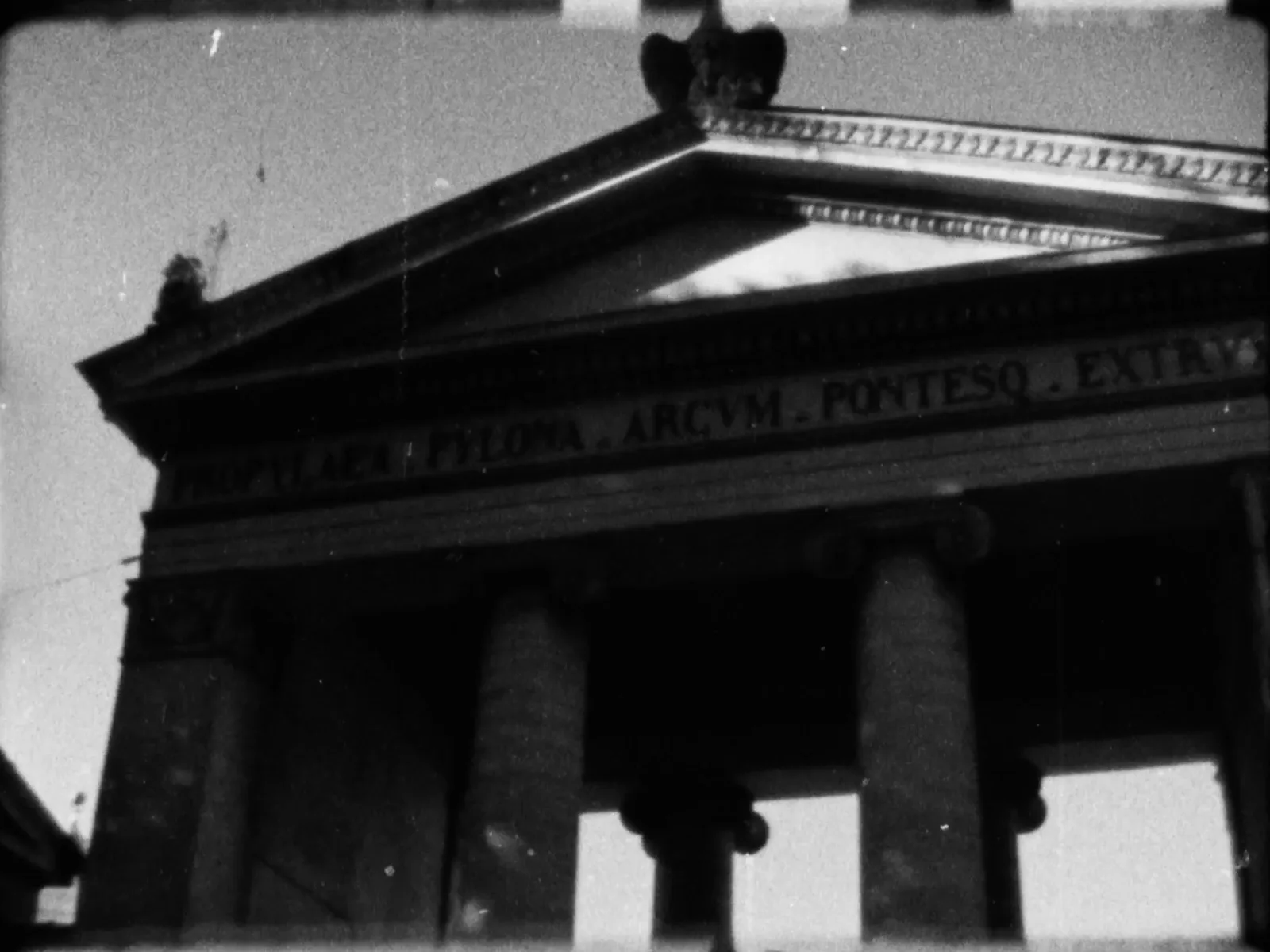
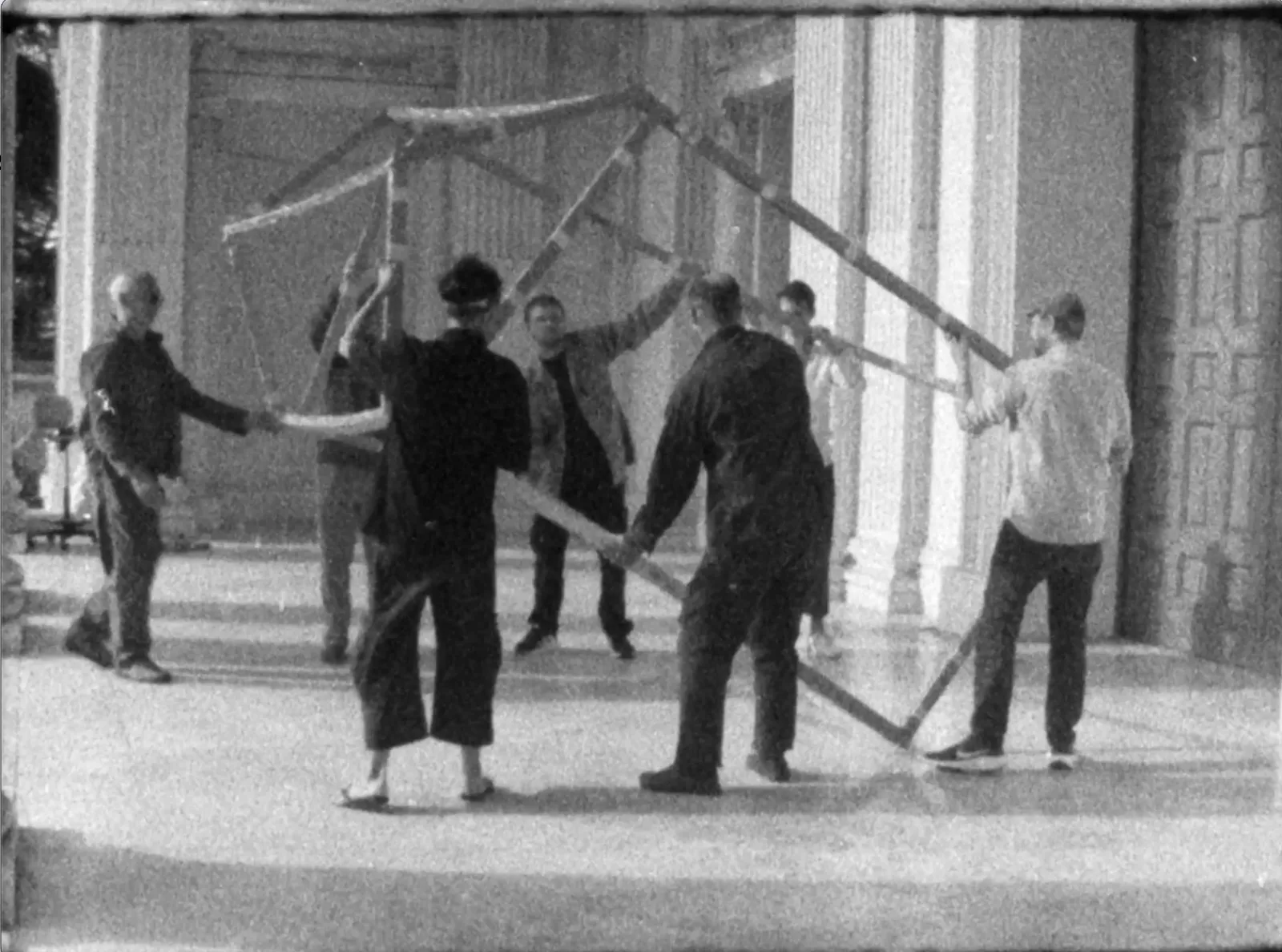
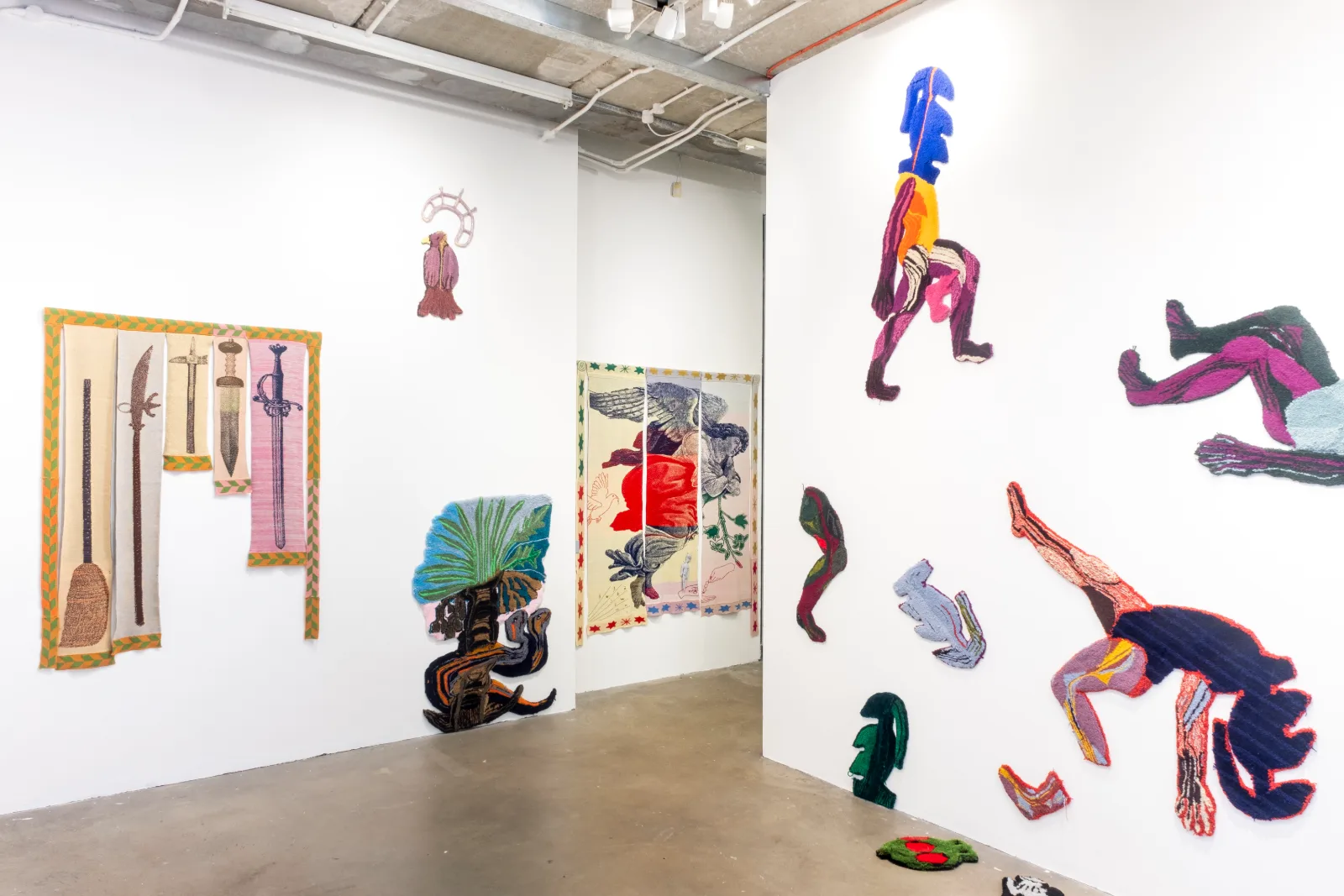
Eva Sajovic's Rise and Fall of a Temple is a project that unfolds across film, sculpture, tapestry, embroidery, ceramics, and participatory performance. It began at the British School at Rome, where Sajovic was the first ever recipient of the UAL Fine Art Research Fellowship, and it has been on view at Chelsea Space, Chelsea College of Arts (UAL), from February to July 2026. At its centre is a short film, shot on Super 8 and hand-developed in caffenol, in which a procession of messengers carries fragments of a temple through the gardens of the BSR, assembles it on the porch, and allows it to collapse.
The project examines how empires construct not only buildings but myths about themselves, and asks what might grow in the space those myths leave behind. But it is not an academic exercise. Sajovic's practice is shaped by something she did not choose to study: the disintegration of Yugoslavia during her teenage years, and the rapid passage from a socialist to a capitalist state that followed. What she witnessed in Ljubljana drives everything she makes.
We spoke with her about what it means to build and dismantle, about the materials that carry power and those that undo it, and about what happens when a project designed for a gallery finds a second life on a screen.
The film Rise and Fall of a Temple is now streaming on AnotherStory Film. A companion piece, Developed in Coffee: Eva Sajovic's Rise and Fall of a Temple, explores the film's material and visual choices.
Where It Begins: Not Rome, but Before Rome
The press release states that your practice is shaped by your personal experience of Yugoslavia's disintegration. I would like to start there: not from Rome, but from what came before Rome. What did it feel like, as a teenager, to watch the structures around you collapse? And at what point did you begin to understand that experience as something your work could hold?
Growing up during the disintegration of Yugoslavia meant witnessing the collapse of something that had once appeared permanent. As a teenager I observed the political change as well as experienced the fragmentation of social structures, collective identities, and systems of belief. What disappeared was not just a state but a shared narrative about how society was organised and what future it was moving towards.
At the time I did not think of these experiences as material for art. They existed as a feeling; an awareness that institutions, monuments, and ideologies are far more fragile than they appear. Later I realised that many of the questions driving my practice, for example how power is constructed, how collective identities are formed, and how systems collapse, were rooted in those early experiences.
Art became a way of holding contradictions that history simplifies. Instead of presenting collapse as a singular event I became interested in its longer afterlife: what remains, what is forgotten, and what new structures emerge from the ruins of the old. In that sense my work is not about documenting a specific political history but about examining the recurring cycles of construction, belief, decline, and renewal that shape societies.
Rome: The Layers Beneath the Surface
When you arrived at the British School at Rome as the first UAL Fine Art Research Fellow, you chose to research the systems and structures of the Roman Empire. Was this a decision you made before arriving, or did the city itself lead you there? What was the first thing you saw in Rome that connected to what you already carried?
The decision emerged from both prior interests and the experience of arriving in Rome. Before the fellowship I had already been thinking about empires as systems that shape collective imagination through architecture, rituals, and narratives of permanence. Rome offered an opportunity to study one of the most influential examples of this process at its source. It felt especially important as our Western civilization seems to be modelling itself on the example of Ancient Rome. Many 'pillars' on which Ancient Rome was built are still present in our civilization. The question I was interested in was whether they are still supporting or are they crumbling, which need to be replaced and by what.
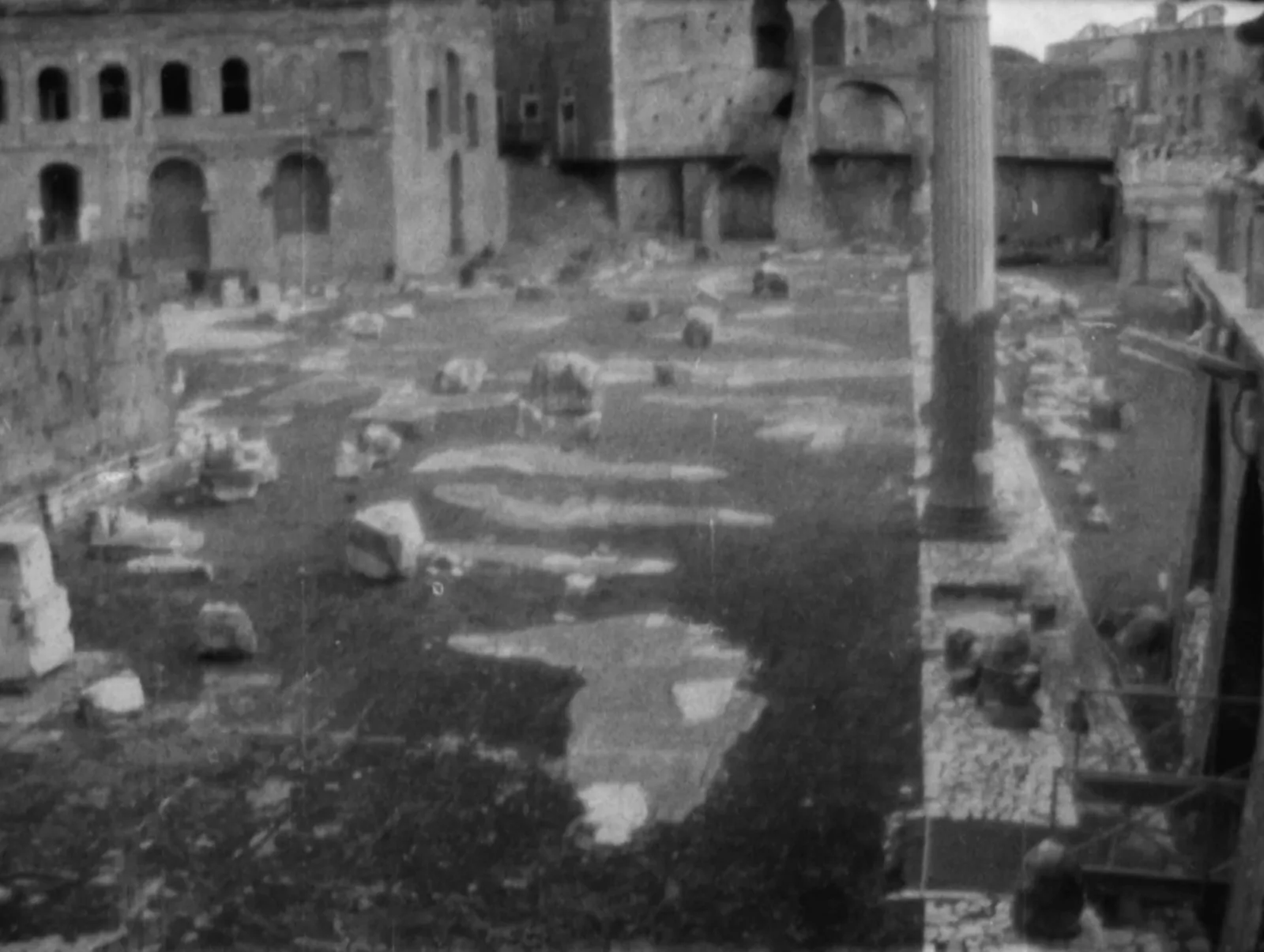
What struck me most upon arrival to Rome was not any single monument but the coexistence of different historical layers. In Rome the remains of empire are embedded within everyday life. Ruins exist alongside contemporary institutions, homes, roads, and public spaces. This layering resonated strongly with my own experience of living among the physical and psychological remnants of a vanished political system.
The city made visible something I had long been interested in: that power leaves traces long after the structures that produced it have disappeared. Walking through Rome I became increasingly aware that every empire constructs buildings but also myths about itself. The project developed from a desire to examine how those myths persist, transform, and are continually reinterpreted.
The Film: A Circulating Fragment
The film sits at the centre of the project. It was made during your time at the British School at Rome, and it shares the exhibition's title. In the film, a procession of messengers carries fragments of a temple through the gardens, assembles it on the porch, and allows it to collapse.
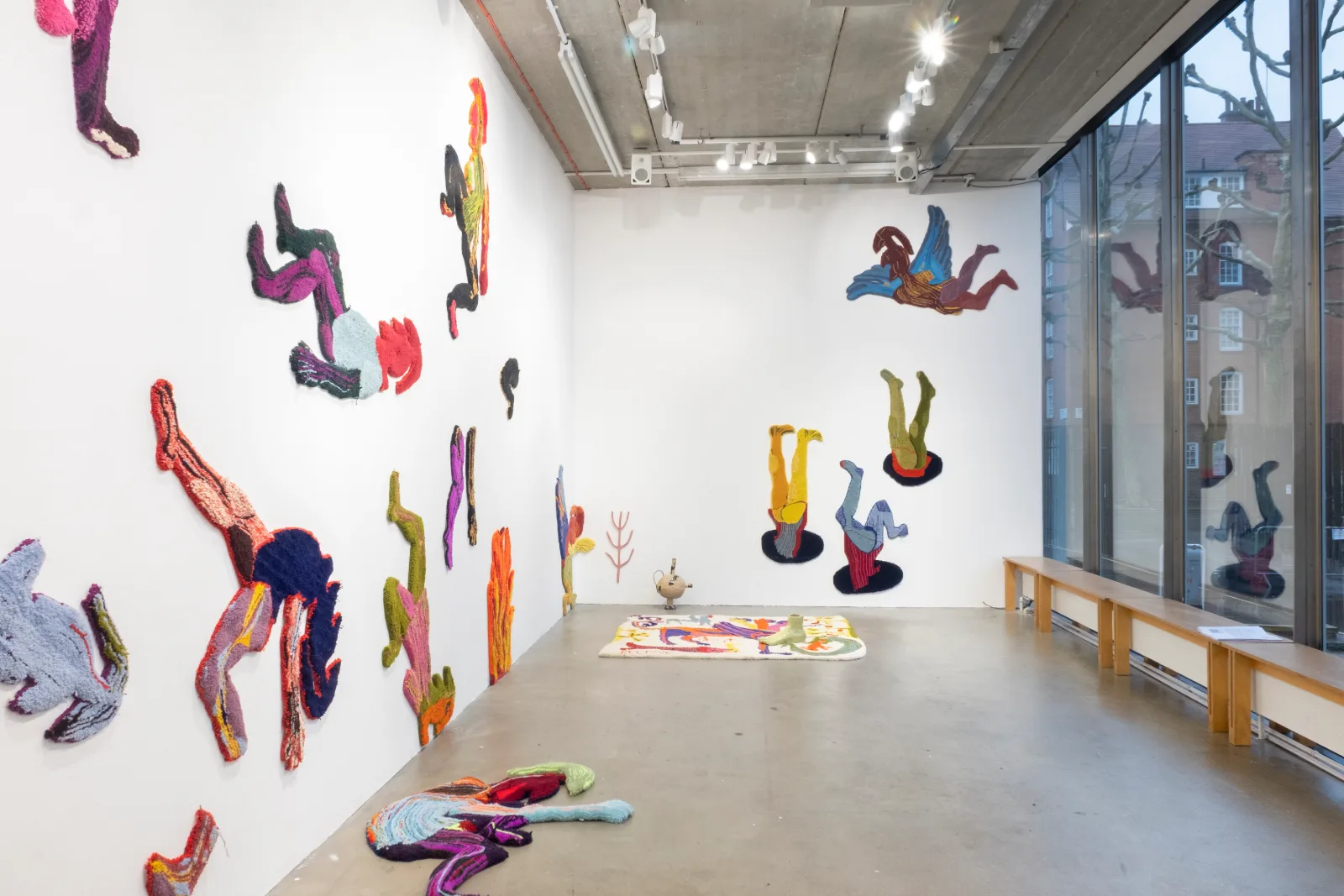
The film allowed me to work with time, movement, and collective action in a way that static objects cannot. It is the anchor to the project in a way. It introduces the character of the messenger, which then develops into the physical space of the exhibition through the tufted and knitted figures. In a way the film is more of an abstraction, an idea, whilst the space is a bit more concrete. The exhibition presents traces, fragments, and material transformations, but the film stages a process. It shows a community engaged in the acts of carrying, constructing, and dismantling. These actions become metaphors for how societies build systems of meaning and how those systems inevitably change or disappear.
The procession is particularly important. It shifts attention away from the monument itself towards the people who sustain it. The temple exists only through collective labour. Its collapse is not a catastrophe imposed from outside but part of the same cycle that brought it into being.
"When they came, they came from the earth: messy messengers with wide eyes and big hearts and mouths filled with questions. They pushed and pushed until the pillars started to fall."
What does the film hold that the exhibition alone could not? And what does it mean for it to continue existing, on a platform, after the physical show has closed?
The film's continued existence beyond the exhibition reflects one of the project's central concerns: that ideas and narratives often outlive the physical structures that contain them. Once the exhibition closes, the film remains as a circulating fragment, capable of entering new contexts and generating new interpretations. In that sense, it mirrors the afterlife of empires themselves, whose stories continue long after their monuments have fallen.
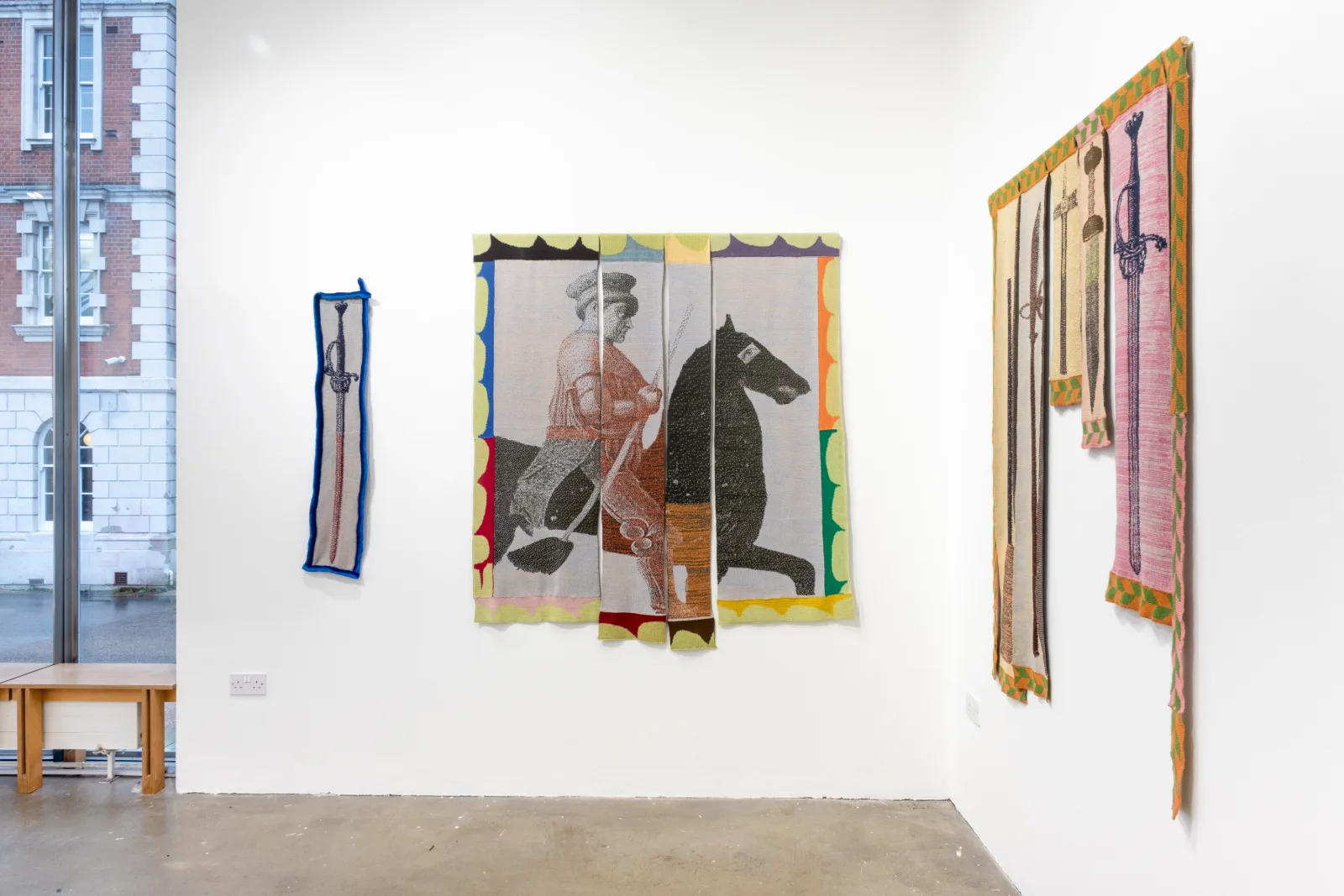
Three Acts: The Exhibition as a Living System
The exhibition unfolds across three acts, with new work added after each public event. This is unusual: the show is not fixed, it grows, it changes shape in response to what happens inside it. Can you talk about why this structure? Is the exhibition itself a kind of empire that builds and rebuilds?
The three-act structure emerged from a desire to challenge the idea of the exhibition as a finished and stable form. Most exhibitions present themselves as complete from the moment they open. I wanted this project to remain in a state of becoming, allowing public events, performances, and conversations to leave visible traces within the space.
In that sense, the exhibition behaves less like a monument and more like a living system. Each act accumulates new layers, reflecting the ways institutions and societies are continually shaped by participation and collective experience. The exhibition becomes a site where construction and transformation are ongoing rather than concluded.
Different acts offered distinct qualities and were designed with accessibility for diverse audiences in mind. For example, the symposium perhaps appealed to those interested in academic knowledge exchange, the exhibition invited people into an inside space, and the public performative action brought the work into a public, outside space.
I would not describe the exhibition as an empire in the traditional sense. Whilst it borrows from the logic of systems that constantly reproduce themselves through rituals, narratives, and public engagement, it also exposes the fragility of those processes by making change, adaptation, and eventual dissolution part of its structure.
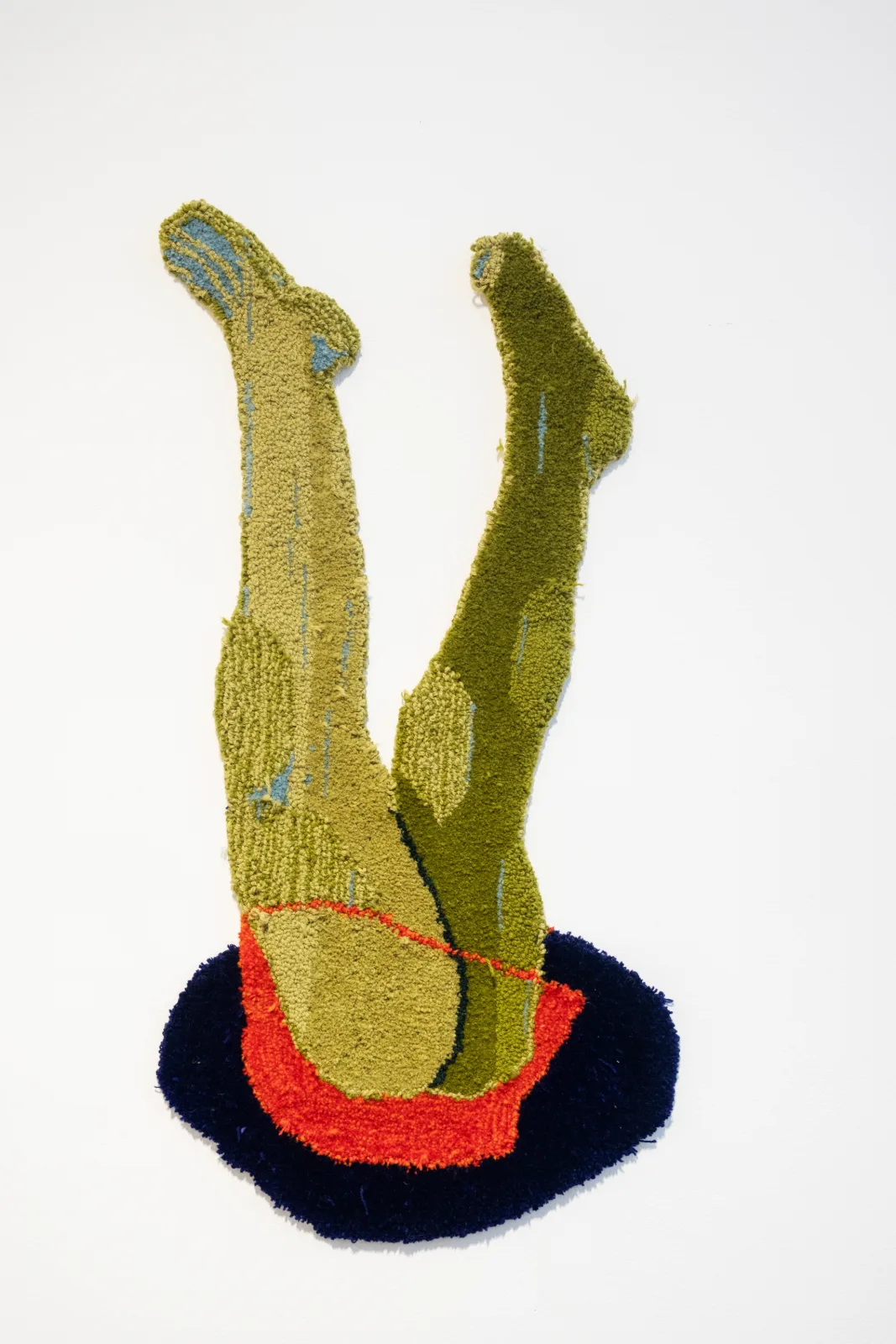
Soft Materials: When Power Is Remade in Wool
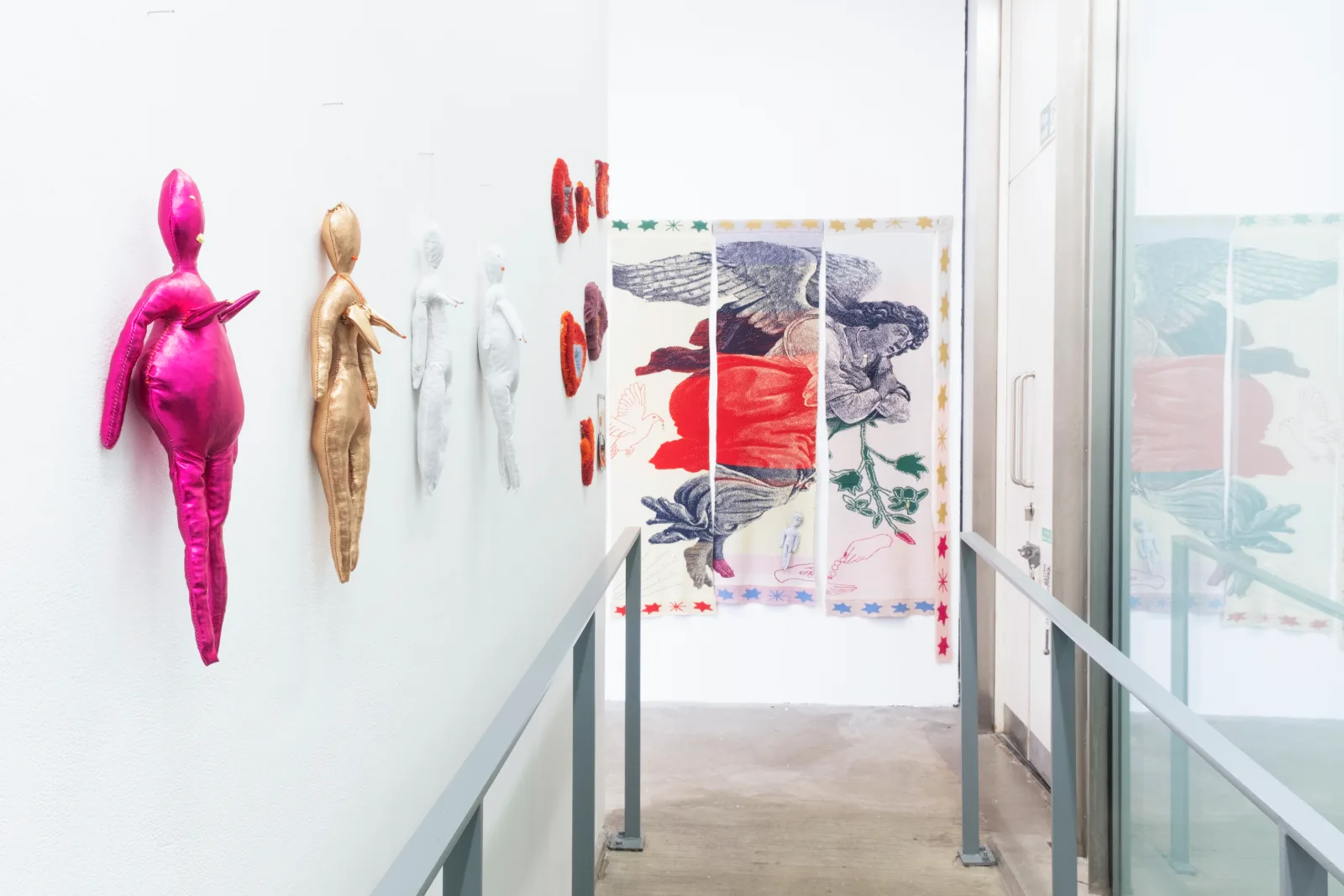
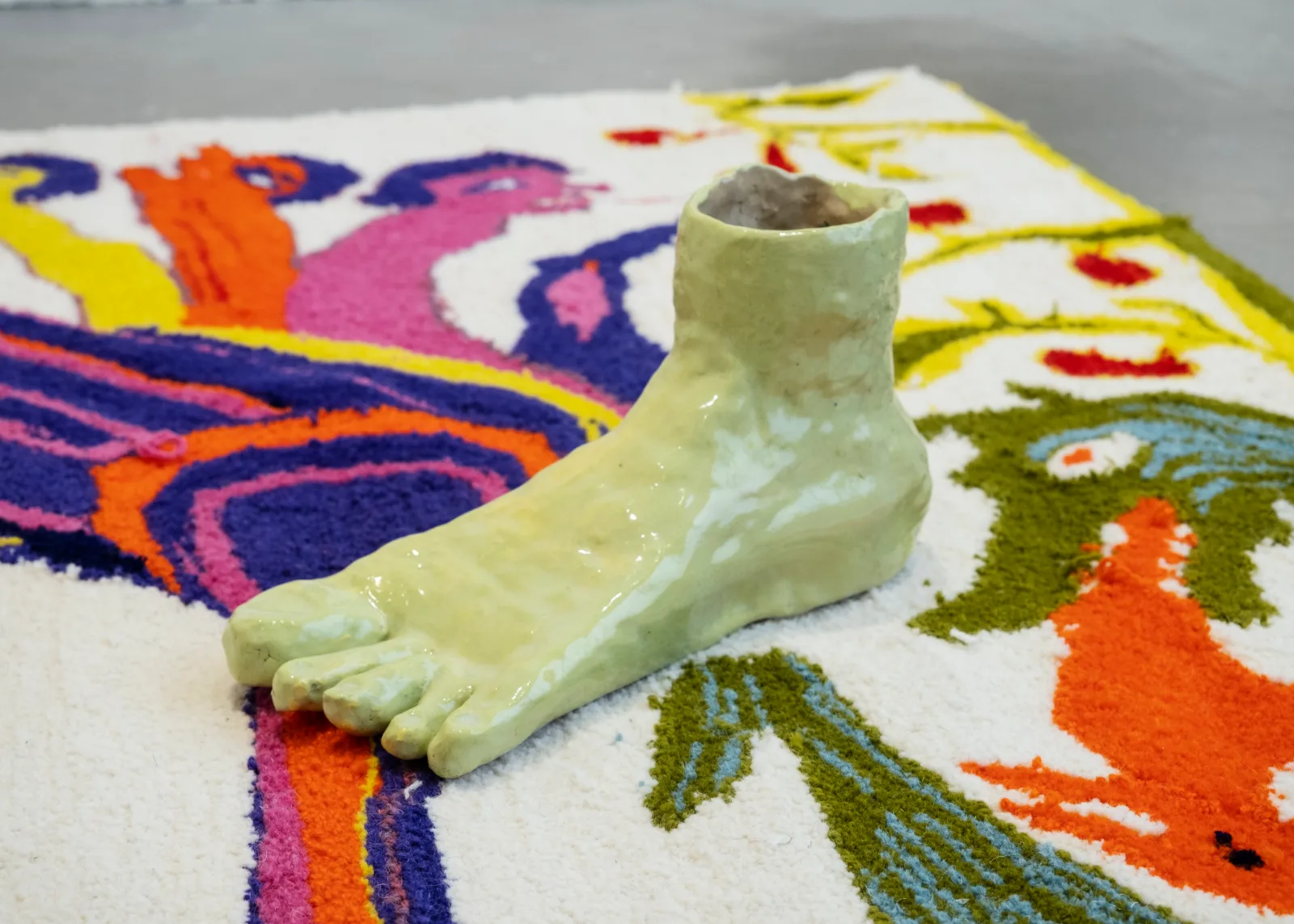
You work with materials that transform the monumental into the intimate: knitted tapestries, tufted floor works, embroidery, ceramics. Stone becomes wool. Iron becomes thread. Warriors carry mops instead of swords. What does this material transformation do to the idea of empire? What happens to power when you remake it in soft materials?
For me, material transformation is a way of questioning inherited ideas about power. Empires represent themselves through materials associated with permanence and authority; stone, marble, bronze, monumental architecture. By translating these forms into textiles, ceramics, and other handcrafted materials, I am interested in shifting the conversation from domination to care, labour, and vulnerability.
Soft materials introduce ambiguity. They carry histories of domestic work, maintenance, and collective making that are often absent from official narratives. A knitted tapestry or embroidered image can still communicate power, but it does so through a softer language, a language of touch rather than command.
When warriors carry mops instead of weapons the symbolism changes. The figure of conquest becomes a figure of maintenance. This transformation opens space to imagine alternative forms of social organisation based not on expansion and control but on responsibility, care, repair, and mutual dependence.
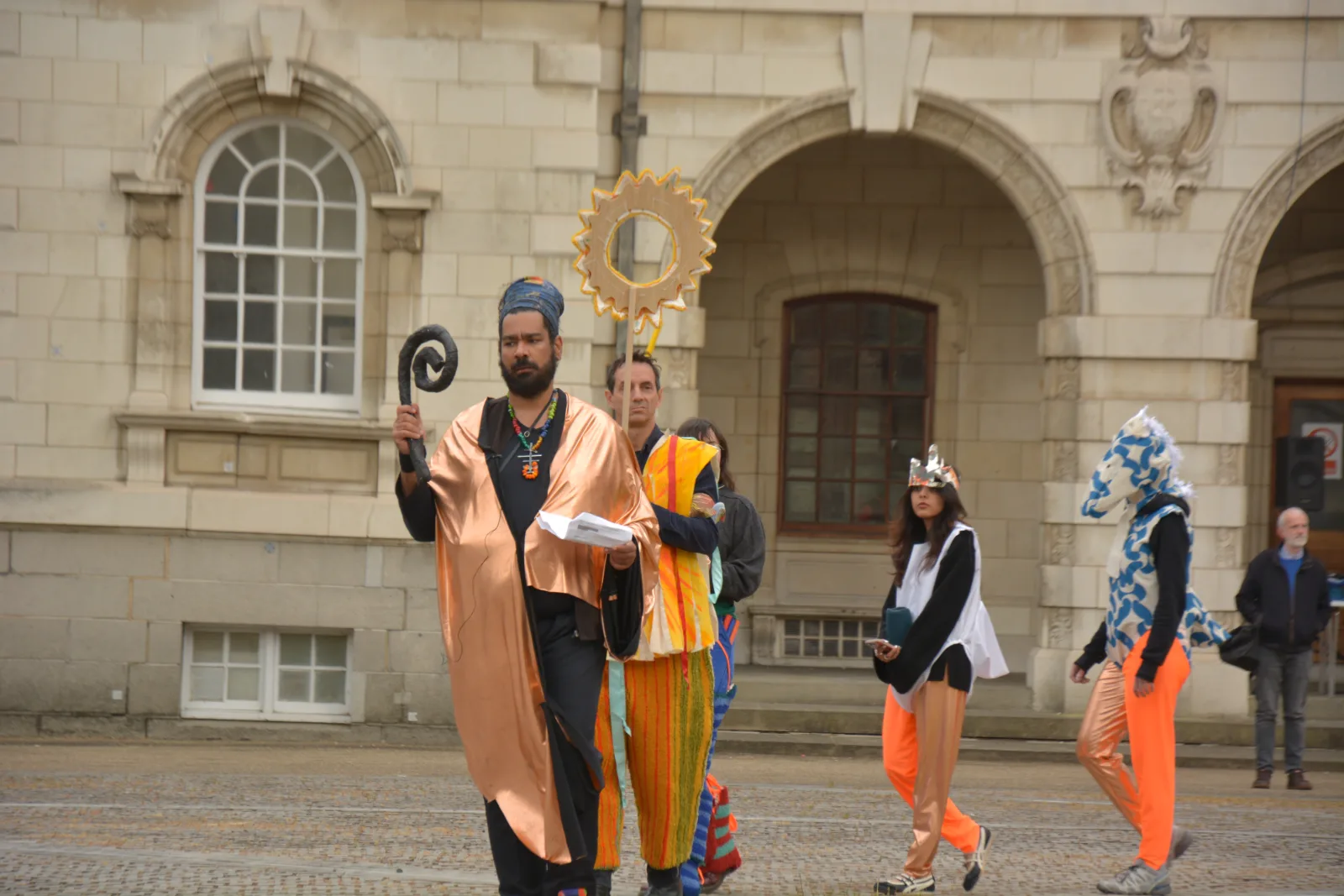
The Permission to Destroy
The participatory performance at Chelsea College of Arts invites the audience to physically build and then deconstruct a temple. The audience becomes a collaborator, a complicit actor in the construction and the collapse. What have you observed when people take part? What do they do with the permission to destroy?
One of the most interesting observations I had was how seriously people approach both construction and destruction. Building can generate a sense of collective purpose. Participants negotiate, collaborate, and invest meaning in what they are creating, even when they know it is temporary.
The moment of deconstruction produces a different kind of energy. Some people hesitate, reluctant to destroy something they have helped build. Others embrace the act immediately. What emerges is a visible demonstration of how attachment, responsibility, and power operate within groups.
The performance is not really about destruction itself. It is about revealing the social processes that make structures meaningful and about transformation. Once participants understand that they are responsible for both the creation and dismantling of the temple, questions arise about ownership, authorship, authority, and collective accountability. Those questions extend beyond the artwork.
What Art Can Do, and What Institutions Must
You have described the project as engaging with "the evolving role of the artist and the responsibilities of artistic institutions at this time of crisis." This is a large claim, and an honest one. What do you think an artist can actually do in a moment of institutional crisis? And what can an institution like Chelsea Space, or a platform like ours, offer that the work alone cannot?
Artists cannot solve institutional crises, but they can create spaces where dominant assumptions become visible and open to question. Art offers a way of examining systems critically while imagining alternatives. It can slow down processes that are experienced as inevitable and make room for reflection, dialogue, and collective imagination.
Institutions have a different but equally important role. They provide the conditions in which these conversations can take place publicly. At their best institutions are not simply venues for presenting finished work. They are platforms for experimentation, exchange, and collective learning.
Projects like Rise and Fall of a Temple depend on that relationship. The artwork can propose questions but institutions and platforms extend those questions into broader communities and public discourse. They help transform individual artistic inquiry into a shared conversation about the kinds of structures we inhabit and the kinds we wish to build.
Rise
The title is Rise and Fall. Not just fall. The rise is there too. After the collapse of Yugoslavia, something else was built. After the fall of Rome, something else grew. What do you see growing now, in the ruins of the structures your work examines?
What interests me is that every collapse creates both loss and possibility. The end of one system does not produce emptiness. It creates conditions in which new forms of organisation, identity, and imagination emerge. These new formations are often contradictory, carrying traces of what came before as they are attempting to move beyond it.
In today's world I see a growing awareness of interdependence. The polycrisis we face — political, environmental, economic, social — has exposed the limitations of systems built on extraction, hierarchy, growth and endless expansion. At the same time, we are seeing renewed interest in practices of care, participation, resilience and collective responsibility.
I do not believe history moves in a linear direction towards improvement. New structures can reproduce old forms of power as easily as they can challenge them. What gives me hope is not the certainty of progress but the possibility of reimagining how we live together. The ruins examined in this project are not only reminders of what has ended. They are also foundations for futures that have not yet been built.
Now streaming: Rise and Fall of a Temple — Eva Sajovic