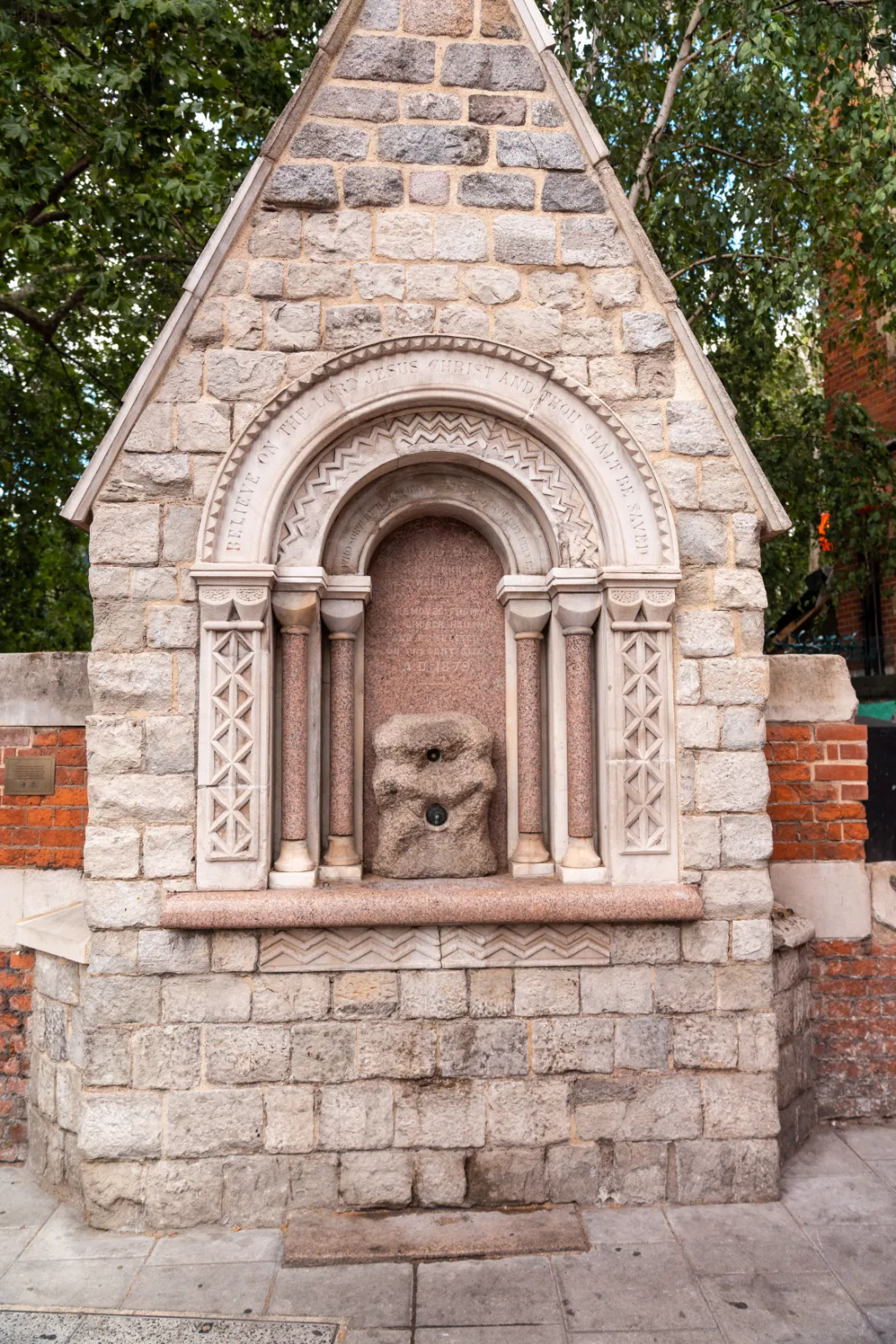
And our full hearts must make record of this.
Backwards Along the Road
The tour begins at the wrong end.
We meet where the Whitechapel Road stops being the Whitechapel Road and becomes the Mile End Road, pointing away from London towards Colchester and the sea. This was the great road east. Then we turn around and walk back down it, towards the beginning, which is also towards the gallery. Two hours to cover a distance you could drive in minutes.
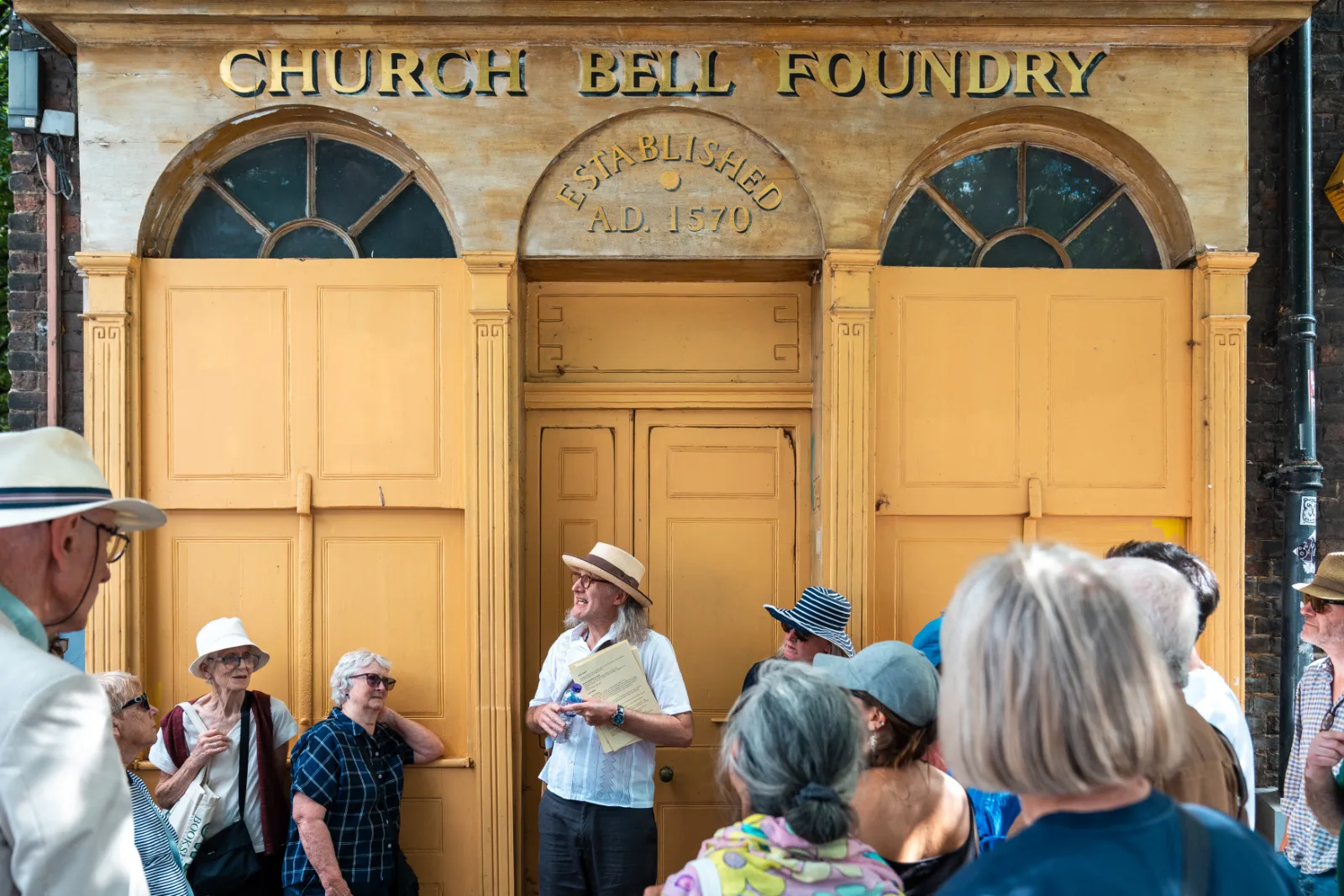
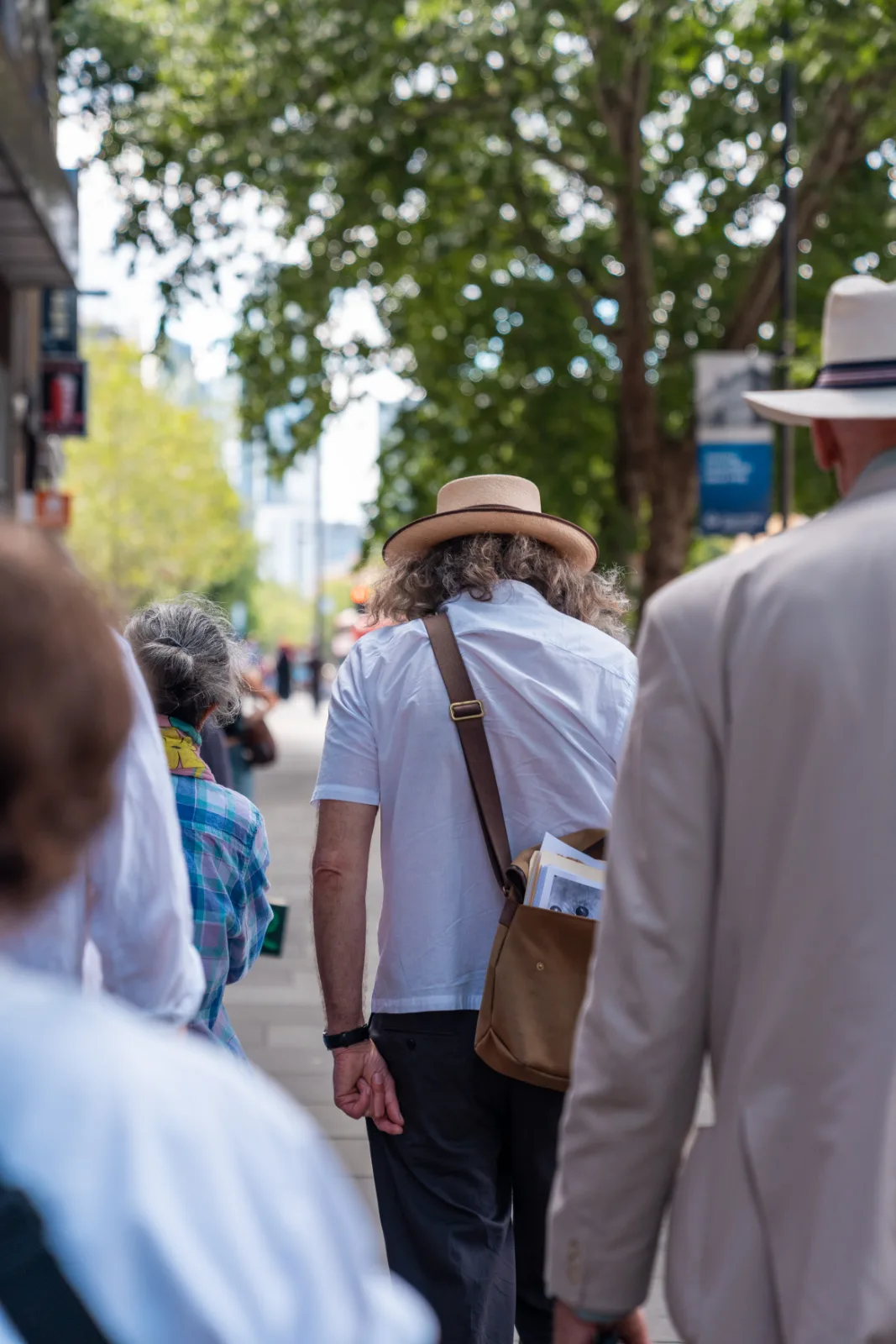
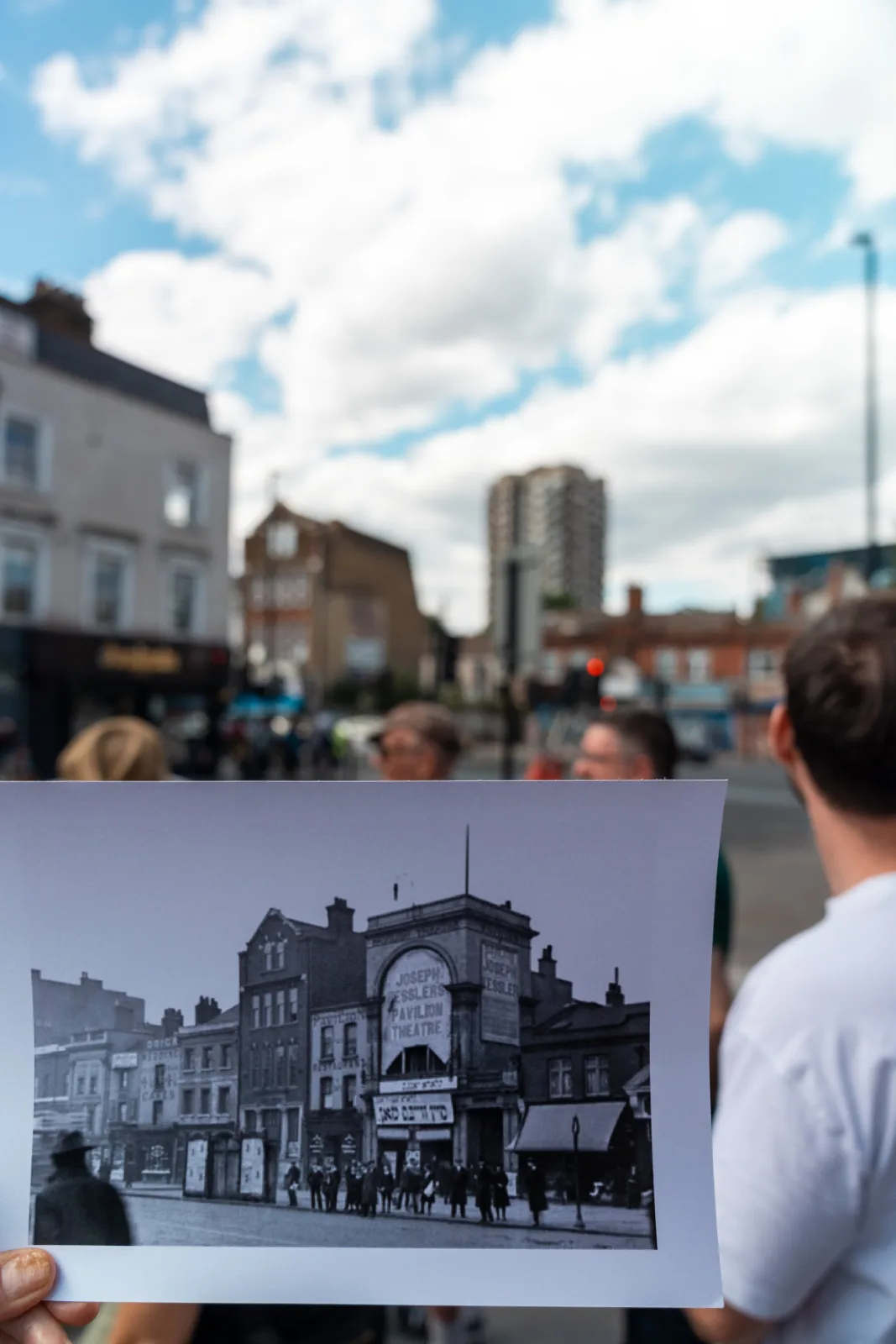
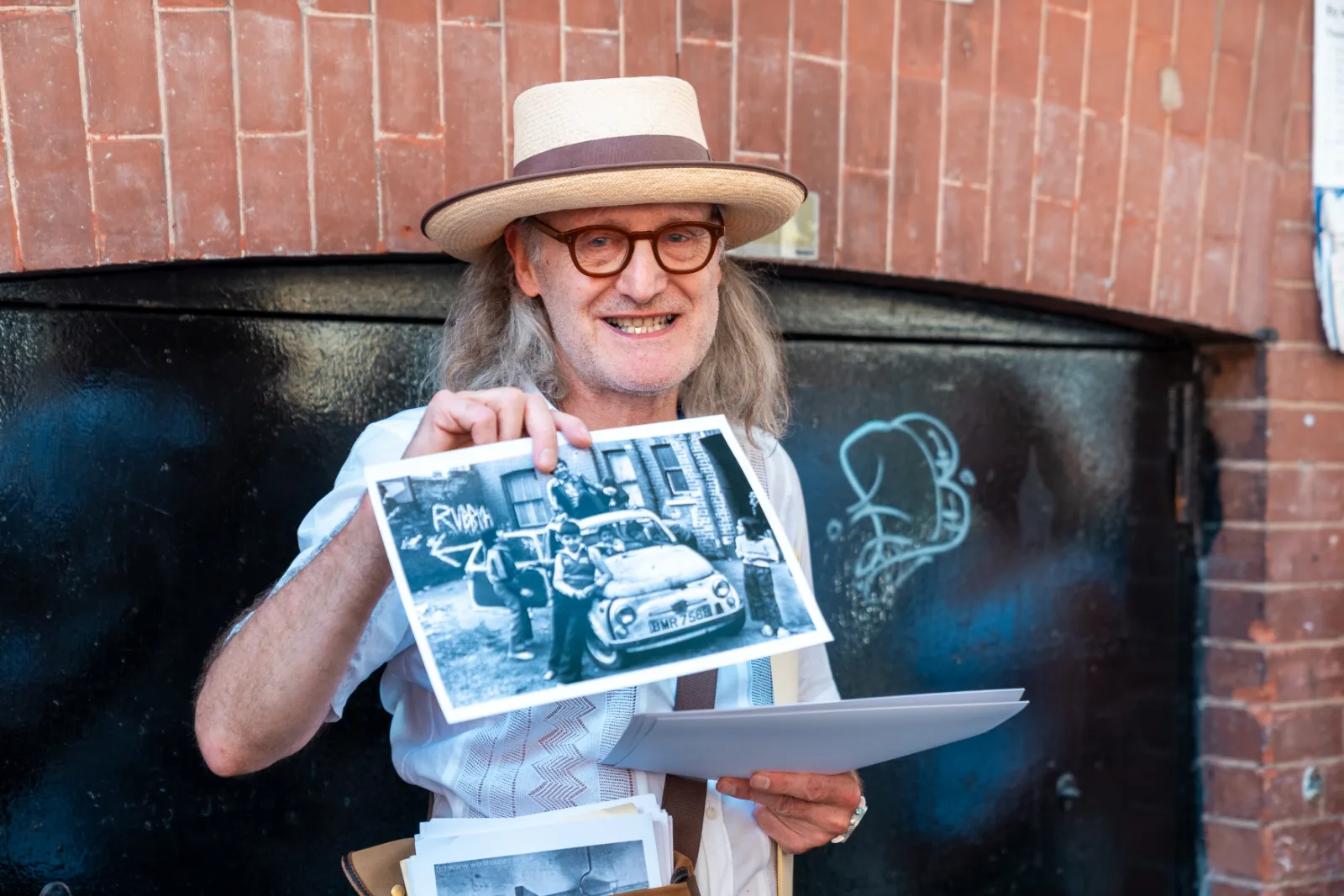
Our guide is the Gentle Author, who has been writing about this part of London daily for years under a name that is already a statement of intent. He carries a folder of pictures and produces them at intervals, holding them up against the buildings that replaced the buildings in them. It is a visually effective gesture: you look at a print of a coaching inn, then up at a mobile phone shop, and the two hold together for a second.
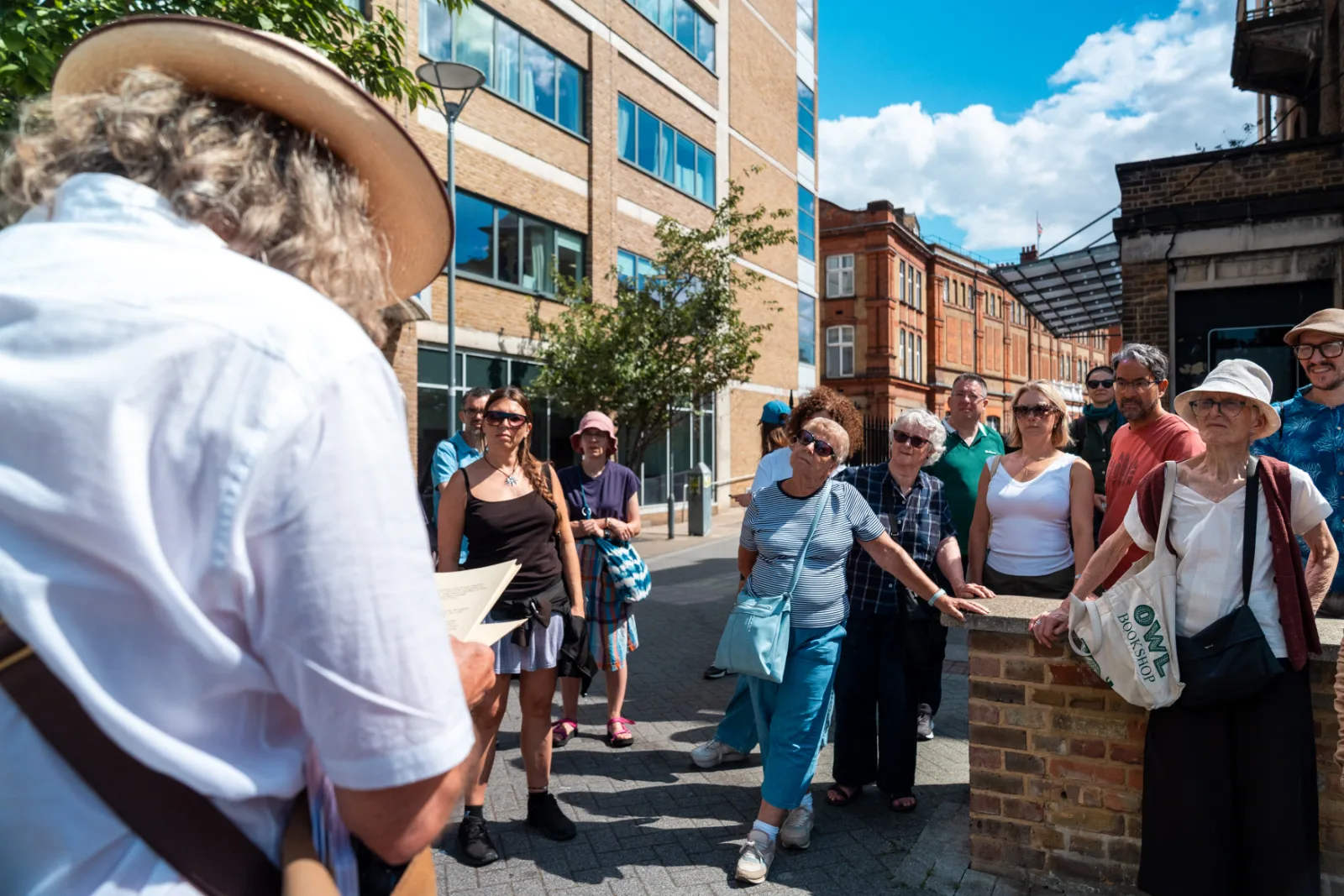
What follows is his account. It is spoken, it is walked, and it draws on years of research that mostly exists as writing published a day at a time. That matters more than it sounds, because almost everything this road has kept has been kept the same way: told, remembered, passed on, written down late or not at all. A festival that asks you to arrive on foot is asking you to receive a place the way the place has always transmitted itself.
And a festival called Backyard is making an argument before it shows you anything. It says: let us begin with what we already have behind the house, with the stories that have written and defined an identity. The walk is that argument tested on the ground, and the ground turns out to be fertile with narrative.
What One Street Holds
At the far end, we are told, there was a tollgate, and everyone driving cattle into London had to arrive before it shut for the night, because beyond it the country began and the country was not safe. So the animals were held here until dawn, and the road was made wide to hold them, and the taverns went up along both sides to hold the men who had brought them. That, the Gentle Author says, is why the high street is as broad as it is. It was built for livestock.

Underneath the road, he tells us, archaeologists found an Iron Age settlement: a ditch, roundhouses, a well, the bones of sheep and horses, the seeds of oats and barley and raspberries and figs. Someone was farming here long before there was a road to farm beside.
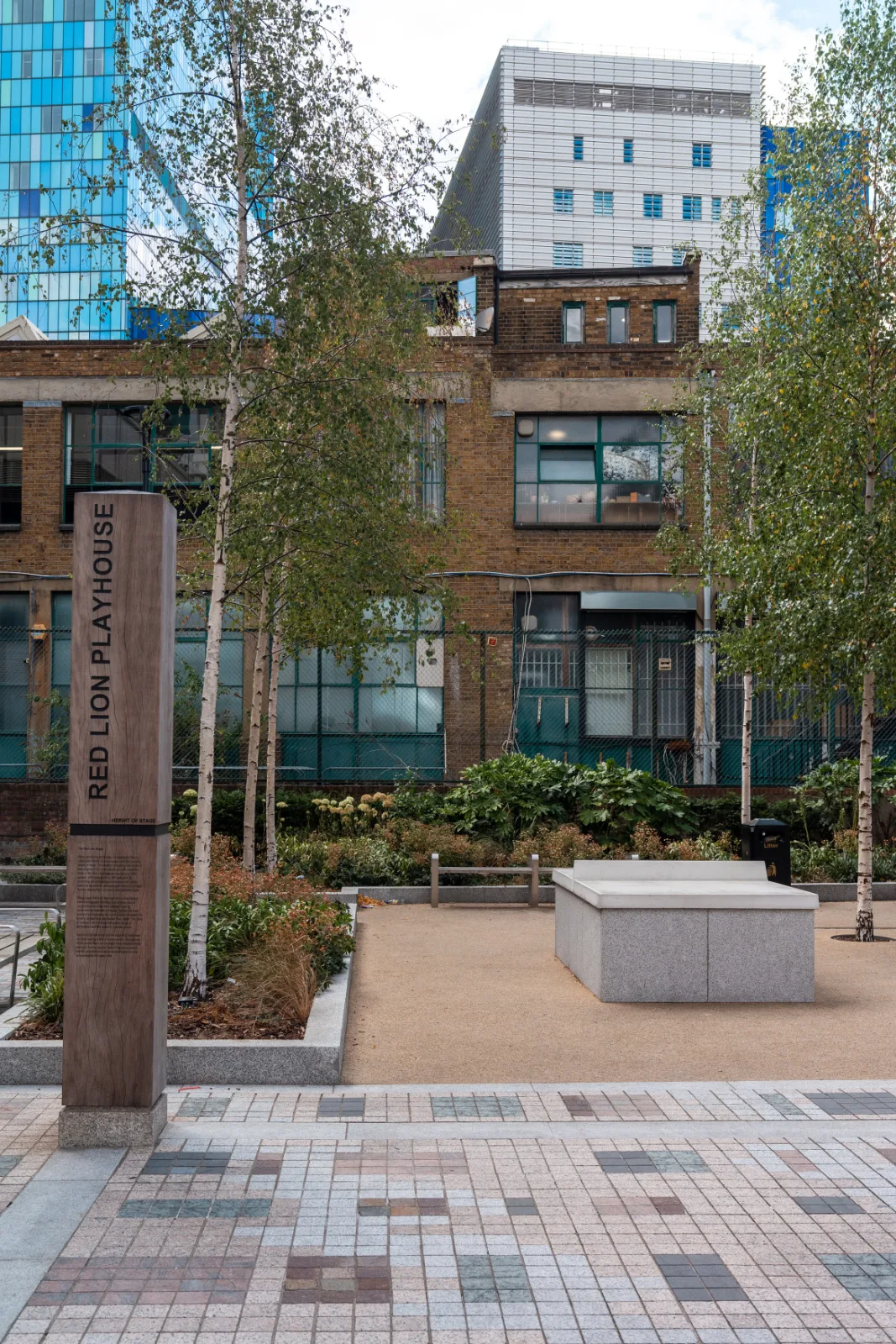
Further along, on a site that is now built over, stood the Red Lion. In 1567 a young grocer named John Brayne hired two carpenters to put a stage and galleries into the yard of a farmhouse that carried that name, and what he built is generally taken to be the first purpose-built playhouse in the British Isles since Roman times. Nine years later he and his brother-in-law James Burbage built the Theatre in Shoreditch, whose timbers would eventually become the Globe; Burbage's son Richard would be Shakespeare's leading actor. Almost nothing is known about the Red Lion. Two lawsuits, the dimensions of a stage, and the name of a single play, The Story of Sampson, which was to be performed on 8 July 1567 and of which no text survives.
The list keeps going, and the Gentle Author delivers it without hurry, as though it were the most natural thing in the world. And yet it strikes us at once how extraordinary it is that a single street should hold all this.
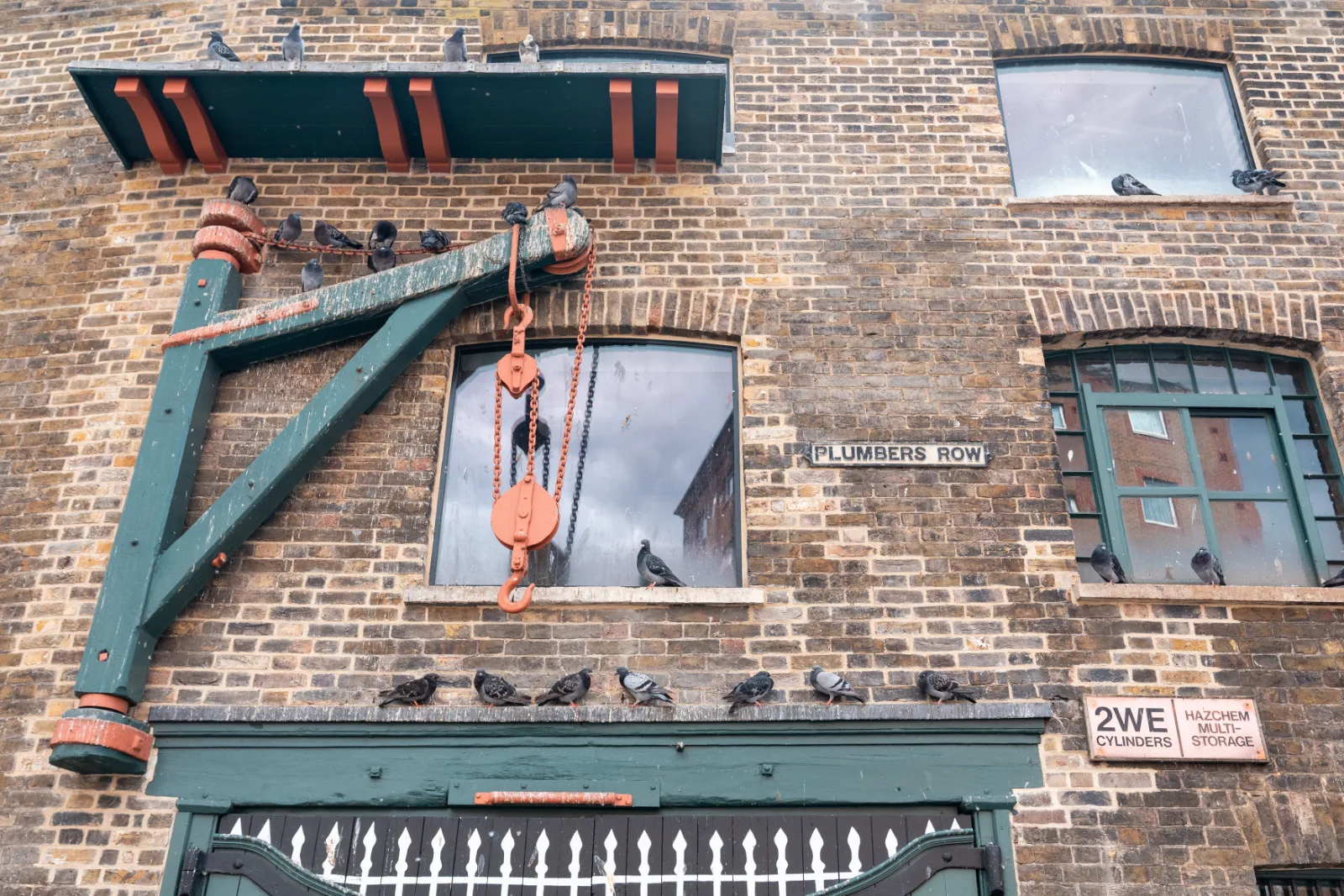
Delegates to the Fifth Congress of the Russian Social Democratic Labour Party met on this road in 1907, and Lenin and Trotsky and Stalin were among those in London for it. The Salvation Army began, more or less, with a man preaching outside a pub on this pavement that is no longer here. The Pavilion opened in 1827 with nautical dramas for the men off the ships, became a Yiddish theatre for the people who arrived later, and was one of the largest auditoriums in London before it closed in 1934 and was pulled down in 1961.
Everyone Came From Somewhere
The oldest fact on the road, in his telling, is a migration.
The people who left the earliest tools here walked from mainland Europe, across a stretch of dry land that is now the bottom of the North Sea. They brought agriculture with them from further east still. They arrived, in other words, and the people already here had been living differently before they came.
Everything after that is a variation. When the ships still came up the river and the masts were visible from the road, this was Sailortown, and men from every port on earth walked through it; the Gentle Author calls it Britain's first multi-racial neighbourhood, and standing on it, it is hard to argue. In the 1780s, he tells us, a relief centre operated near here giving broth and bread and a piece of meat to people the language of the time called the Black Poor: some escaped from slave ships at Wapping, some former soldiers freed in return for fighting on the British side in America. A daily allowance was available. It came with a condition, which was that you agree to be removed to Sierra Leone. Hundreds went. Most did not survive long.
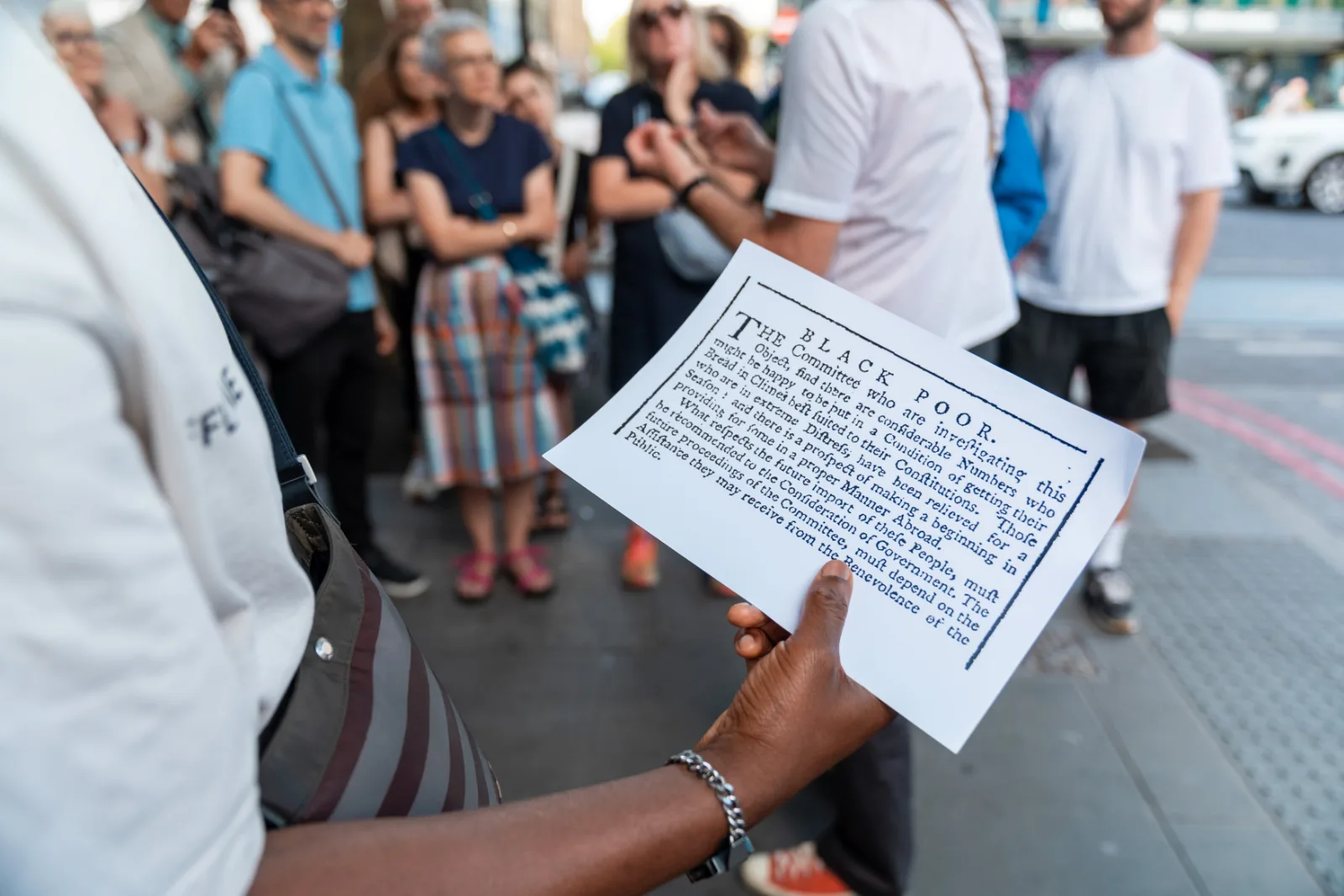
The welcome has never been uncomplicated. He quotes a Rector of Whitechapel who, early in the eighteenth century, described the refugees arriving in his parish as the offal of the earth, people who wanted to grow rich at the expense of the poor of his own country and to rob it of its religion too. The words are three hundred years old and entirely recognisable.
On 4 May 1978, a twenty-four-year-old garment worker named Altab Ali was stabbed to death in Adler Street, beside the park then called St Mary's Gardens, walking home from work. His killers were three teenagers, the youngest sixteen. It was the night of the local elections, and the National Front took a tenth of the vote in the borough. Ten days later, seven thousand people walked behind his coffin from Brick Lane to Downing Street. The park carries his name now.
There is a bust of Sheikh Mujibur Rahman on this pavement, and one of General Booth. There is a mosque that began as a fund early in the last century, moved twice, and now fills for a single prayer. There is a day centre that has opened every morning since the 1890s, whose manager has lived in the building for decades, and which in the First World War, the Gentle Author says, was the only place in London that would give a bed to Black servicemen.
The Man They Got Wrong
The most famous person from this road is the one whose name nobody knows.
Joseph Carey Merrick was exhibited in a shop on the Whitechapel Road in 1884, opposite the London Hospital, where the surgeon Frederick Treves came to look at him. He had proposed the exhibition himself, took a share of the takings, and was saving towards a house. When the police closed the shows down, he went abroad, was robbed, and came back destitute. Treves took him into the hospital and he lived there until he died in 1890, aged twenty-seven.
Treves also wrote the memoir that made him famous, and in it he called him John. The error passed into the biographies, into Bernard Pomerance's play of 1977, into David Lynch's film of 1980, and it is still repeated. A man was exhibited for money, then exhibited unclothed before a medical society, then given the wrong name for a century by the person who rescued him.
The Ones Who Made Things Here
What the road does to artists is the part that stays with us.
Isaac Rosenberg was born in Bristol in 1890 to Lithuanian Jewish parents who had left the Russian Empire, and the family moved to the East End when he was seven. He was apprenticed to an engraver and hated it. He drew at evening classes, was let go in 1911, and was copying a Velázquez at the National Gallery when a chance conversation found him three women willing to pay his fees at the Slade. There he met Mark Gertler and David Bomberg, and with them and John Rodker formed the group that named itself the Whitechapel Boys. He exhibited paintings at the Whitechapel Gallery in 1914. He enlisted in 1915 and was killed near Arras at dawn on 1 April 1918, aged twenty-seven. His body was never identified. Beneath his name on the headstone are the words Artist and Poet, cut at his family's expense because the Commission would not pay for them.
Eva Frankfurther got out of Berlin as a child in 1939. She studied at St Martin's alongside Leon Kossoff and Frank Auerbach, and then did something none of her contemporaries did: she left the art school world, moved to Whitechapel, and took a job at a Lyons Corner House and afterwards in a sugar refinery, painting the people she worked next to. She died in 1958, aged twenty-eight.
Edith Tudor-Hart photographed poverty in this borough in the 1930s with the explicit intention of making people act on it. She had been thrown out of Austria for being a communist, and she went on to recruit Kim Philby. Anthony Blunt, confessing years later, called her the grandmother of them all. She was never charged, was watched until her death, and disappeared from the history of British photography for decades.
Sally Flood worked a machine in a Princelet Street factory and wrote poems on the paper that backed the embroidery, tearing them up whenever the boss came near. In the mid-seventies, the Gentle Author tells us, she found a leaflet for a group called the Basement Writers, sent them one poem, and was asked for more.
Four people, one road. Two died before thirty. One was erased on purpose. One destroyed her own poems for years before somebody asked to see them.
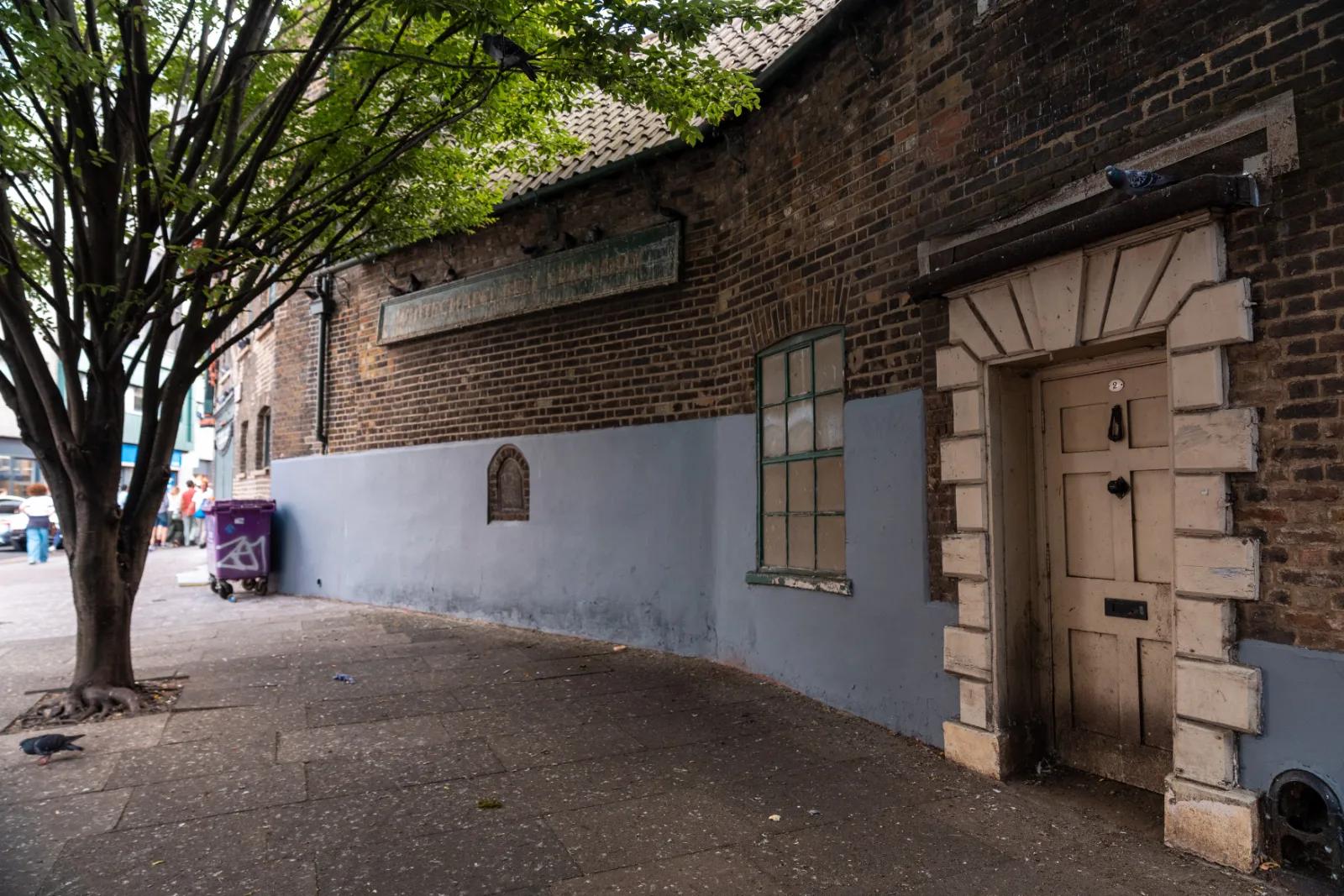
The walk ends outside the Whitechapel Library, known to the people who used it as the University of the Ghetto. Rosenberg read there. So did Gertler, Arnold Wesker and Bernard Kops, who wrote a poem about it that is really about escaping a house with no room in it for a reader. The library is closed.
East of the Aldgate Pump: The Exhibition Named After a Threshold
A little further on, and a hundred and twenty-five years old this year, the Whitechapel Gallery is doing what the walk has just done, in a building.
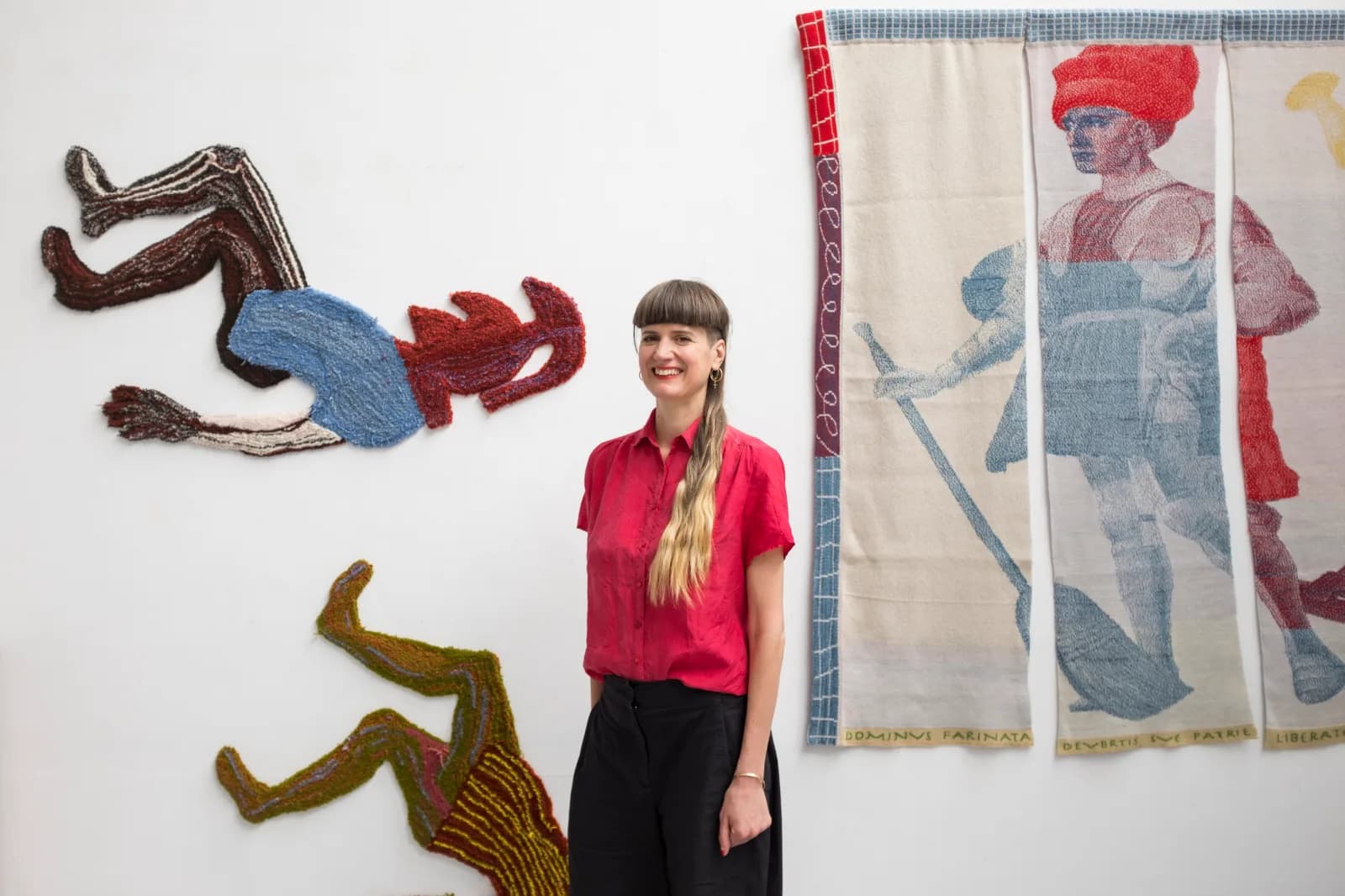
The pump stands where the City stops and the East End begins, and it has marked that boundary informally for centuries. Thousands of people cross it every morning on foot and almost nobody looks at it. The exhibition, curated by Katrina Schwarz, gathers twelve artists across three galleries around migration and patchwork, city life and kinship, food and inheritance and belonging: Marwan Bassiouni, Jyll Bradley, Adam Farah-Saad with Ezra Lloyd Jackson, Denzil Forrester, Rachel Garfield, Kabir Hussain, Laisul Hoque, Nour Jaouda, Rene Matić, susan pui san lok, Reetu Sattar, Rehana Zaman.
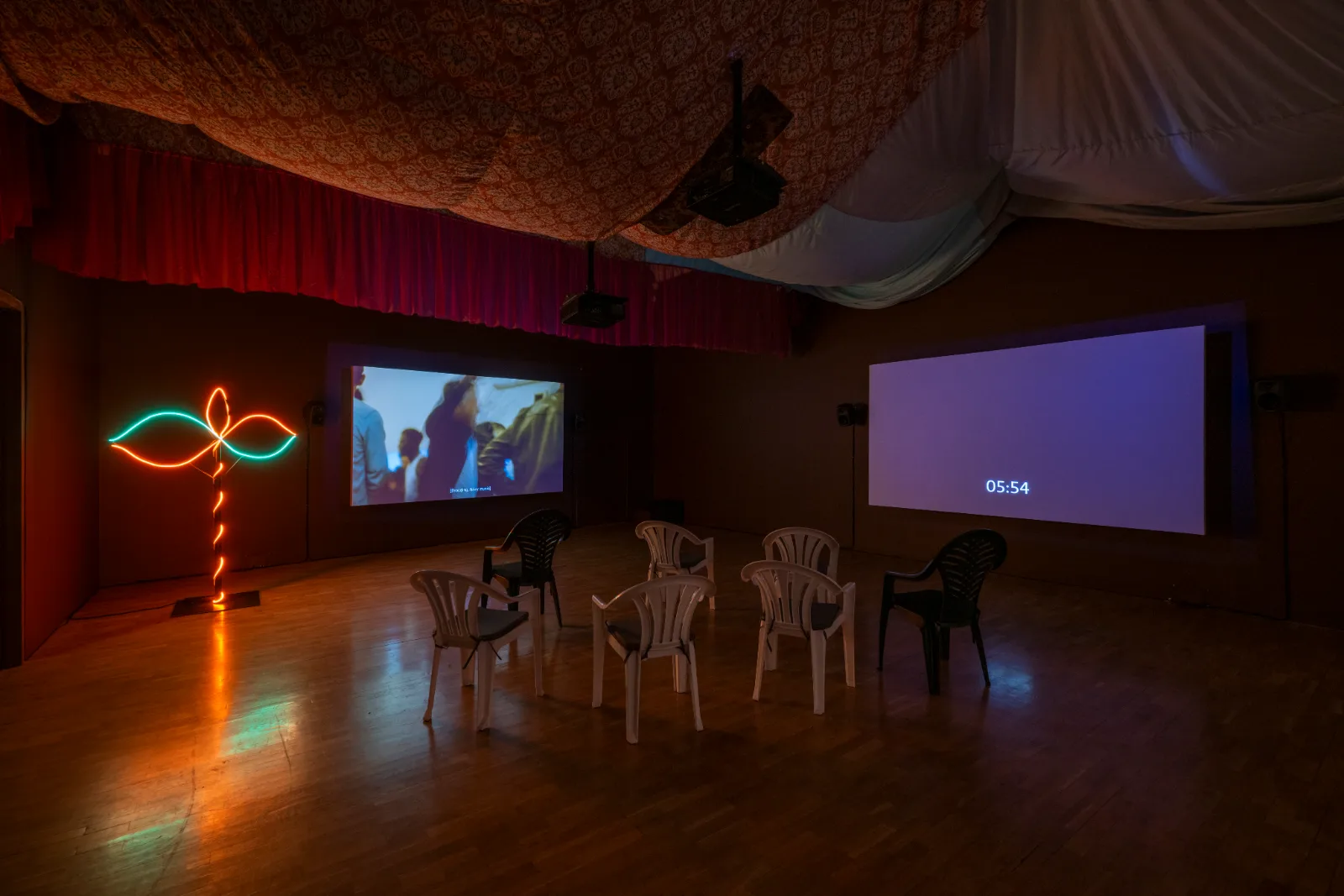
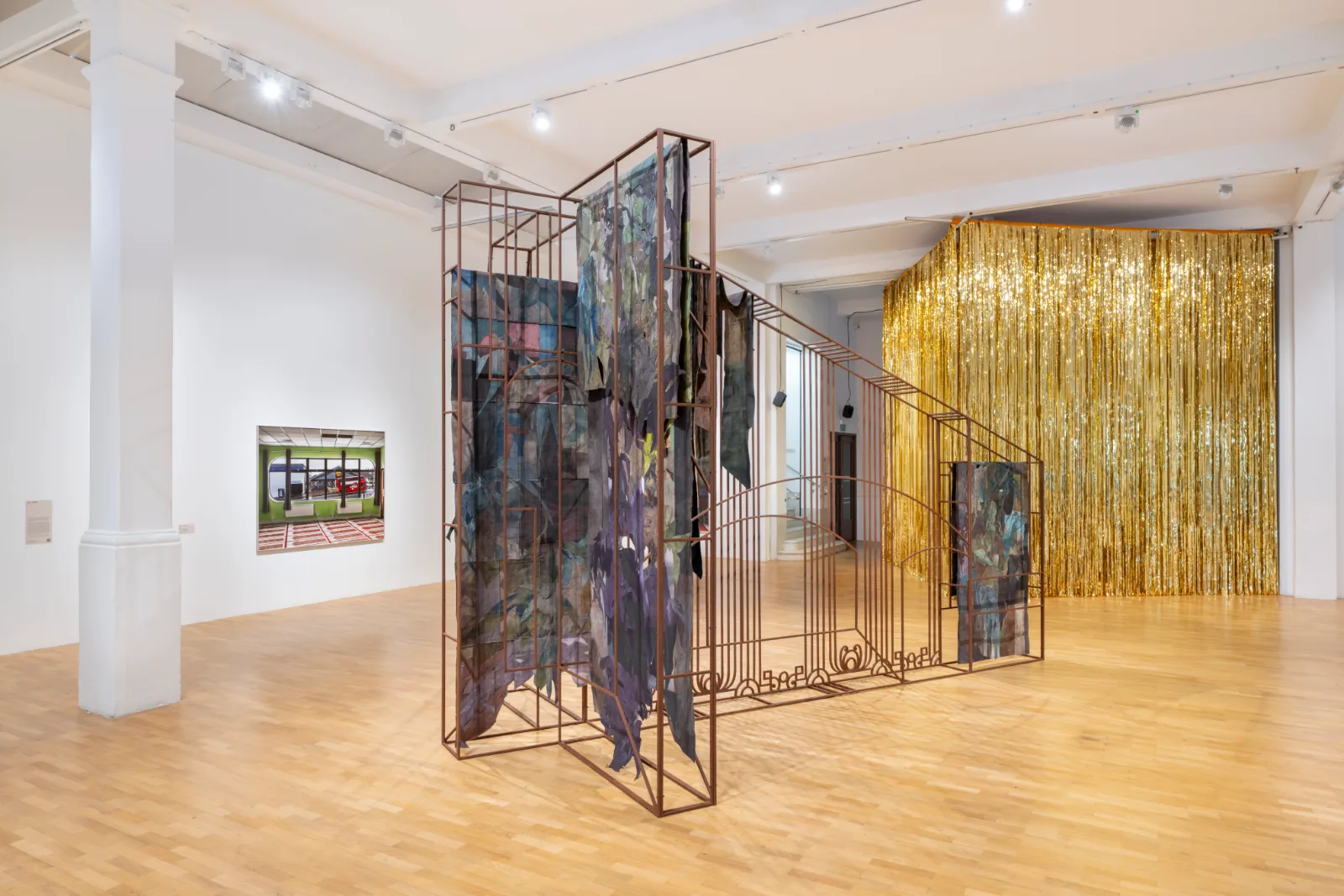
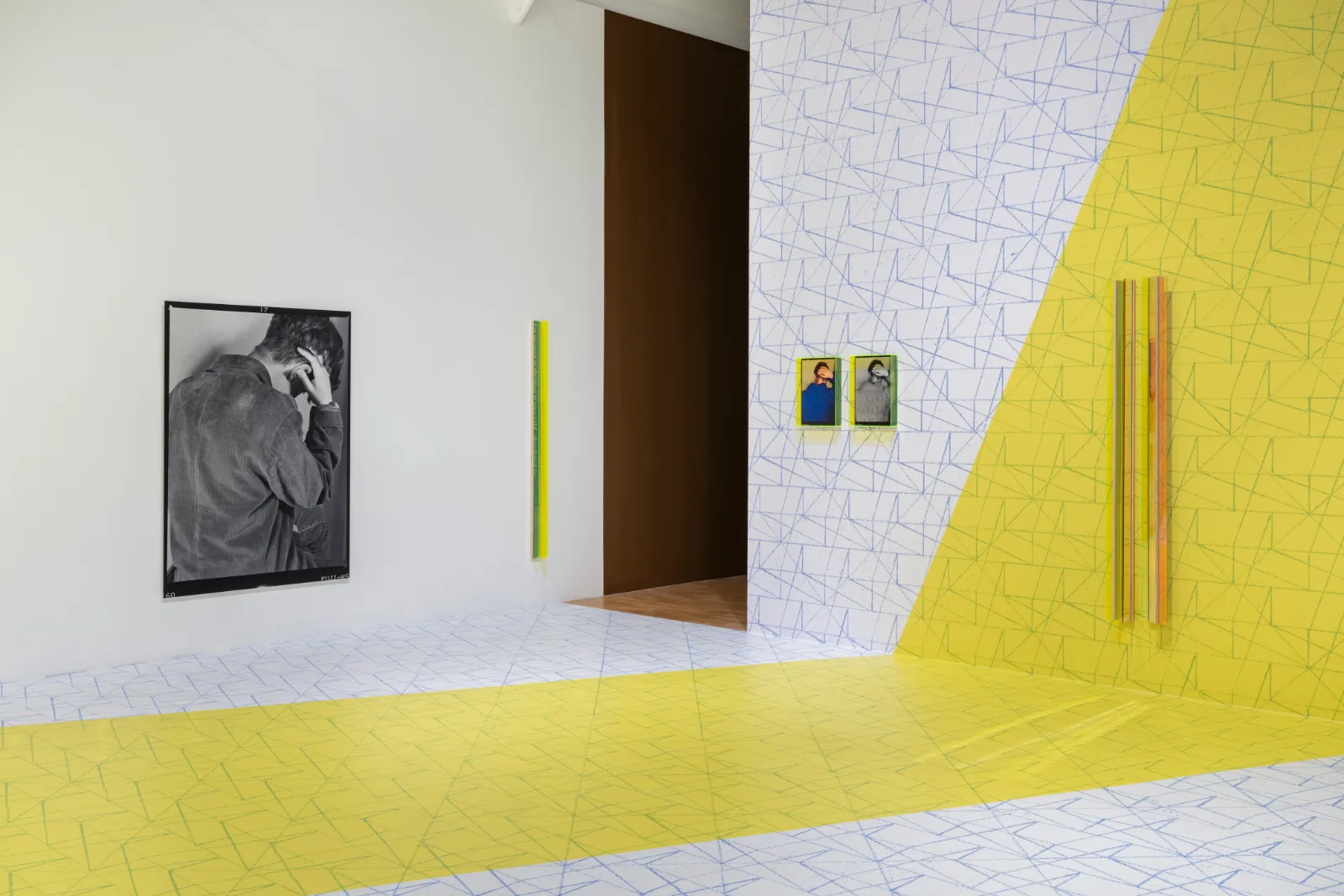
Patchwork is the right word, and it is doing double duty: a technique that turns offcuts into something whole, and a way of thinking about a place assembled from whatever and whoever arrived. It is also, quietly, how the exhibition itself is built.
Admission is free, which for a show of this scale on this road is not a detail.
The Ropery: The Weave Between Gallery and Community
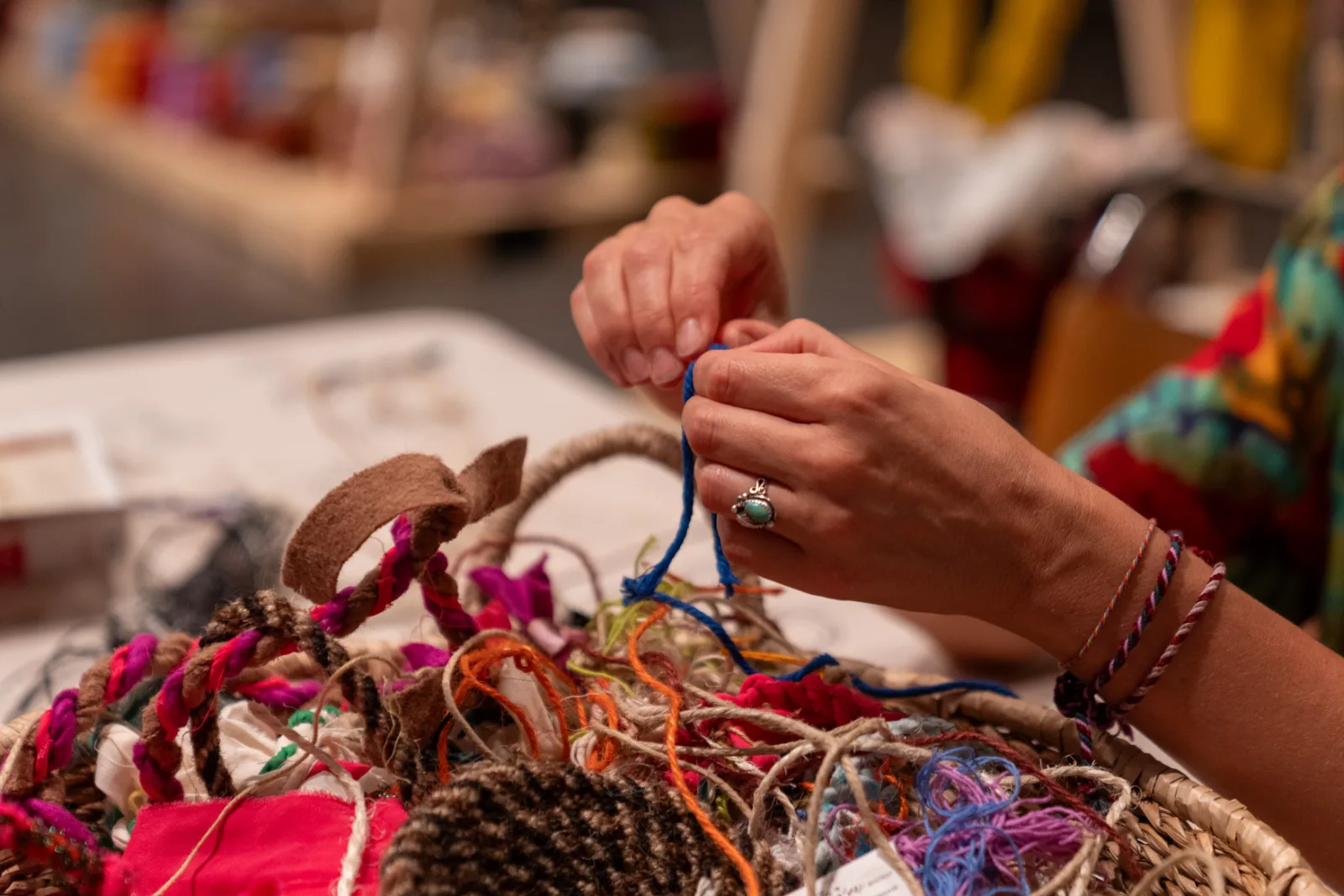
East London made rope. The Ropery took that fact and turned it into a table you could sit at: cord, twine, instruction, and an installation that grew all summer as visitors added to it. You went in to look and came out having twisted something.
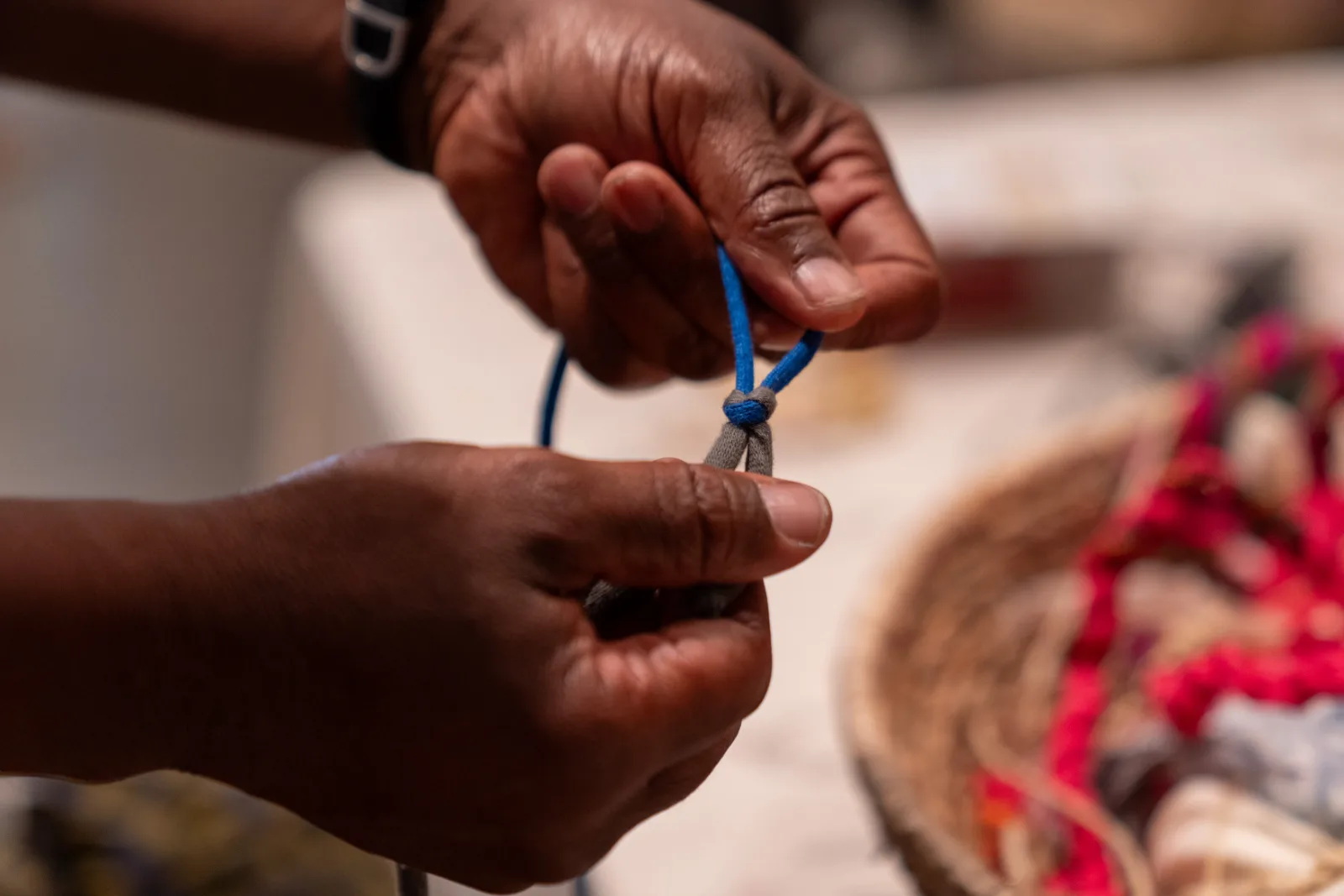
It is worth stating plainly what that does. This exhibition asked for hands. And the thing standing at the end of the summer was not made by an artist assisted by the public; it was made by the public, over weeks, in a public gallery of contemporary art, with the artist providing the conditions. This is how a festival becomes a model that generates participation, and interaction with the community.
The Room Upstairs: The Film Programme
The Zilkha Auditorium runs films every day the gallery is open, and it runs two different propositions in the same room.
One of them is East End Voices, in three parts. Four Corners, which has been on Roman Road since the 1970s, shows seventeen short films made by local participants working with archive material, most of whom had never made a film before. Among the titles is a film by Afia Khatun about the Whitechapel Library, the building where the walk had ended a few hours earlier.
Then, in turn, the London Community Video Archive, and this is where the room turns strange in the best way. The programme covers the first half of the 1970s: the Basement Project, the E1 Festival, and the Tower Hamlets Arts Project. In 1976 the THAP took over the Whitechapel Art Gallery for a month with something called the Big Show. Fifty years later, the film of that occupation is playing inside the same building. The gallery is screening footage of the last time the neighbourhood moved in.
There is a second circle in that hour. The programme includes the Basement Writers' television show, made for the BBC in 1976: the group Sally Flood had joined, after finding a leaflet.
Then OITIJ-JO, working now in Tower Hamlets, with a programme made with Adit Dewan of SHALA in Dhaka and taking its cue from Begum Rokeya's feminist science fiction of 1905. A festival about the backyard that includes a backyard on the other side of the world is either contradicting itself or making a point, and on this road it is clearly the second.
Then, in the afternoon, the room changes hands. John Smith has selected seventy-five minutes of his own work from across fifty years, almost all of it made within a few miles of this building. We saw two of the six. In The Black Tower, a man is followed around London by a building; we had spent the afternoon being shown buildings.
A Settled Home
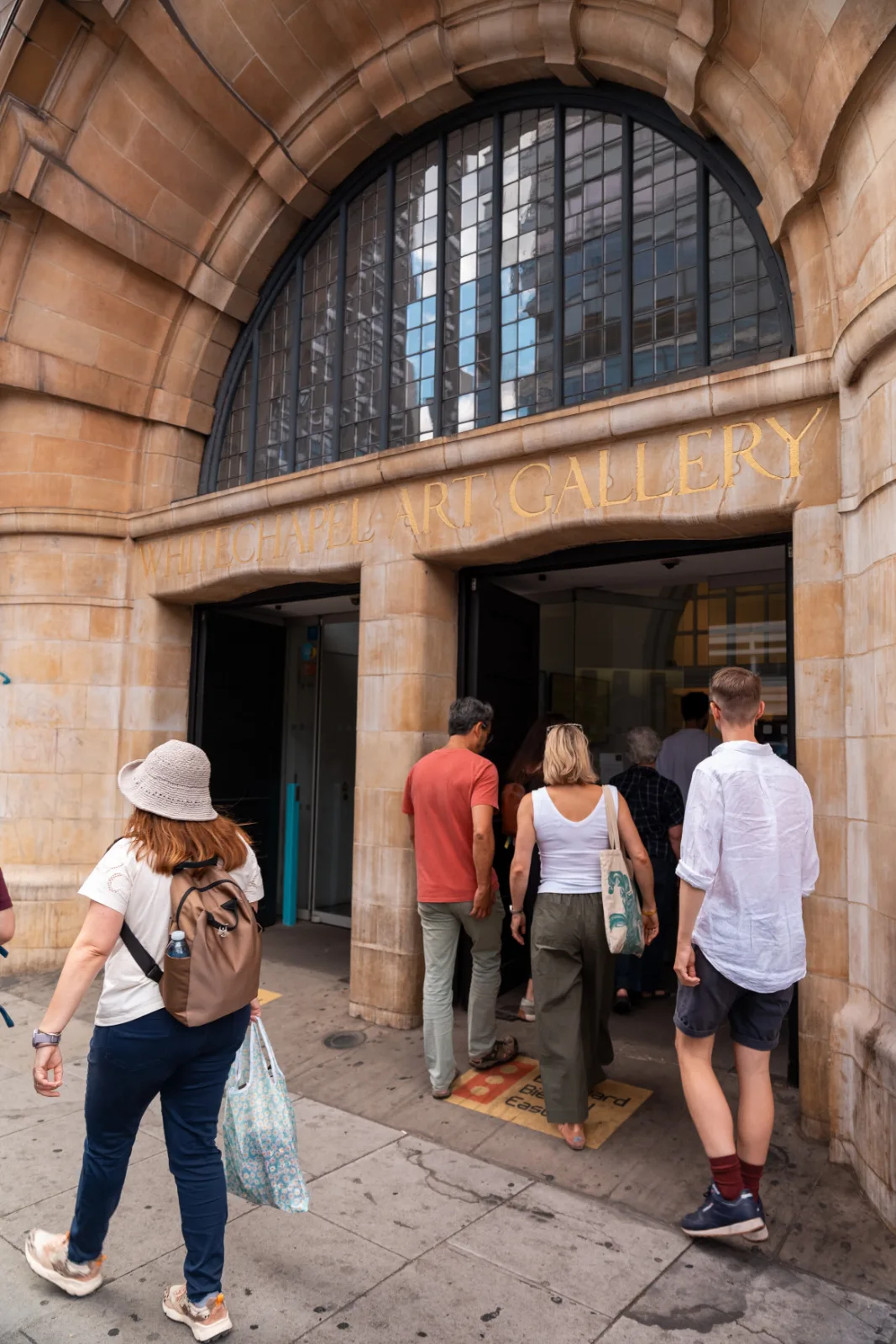
Backyard Biennial: East is in the last week of its first edition. More than forty venues, no ticket, and a shape that lives between the inside and the outside: the heart stays the Gallery, and around it live artist-led walks, a workshop that teaches you to build a tour of your own street, and a closing procession on 5 September carrying banners and instruments made in workshops from Oxford House to its door. It is a festival that would rather you arrived on foot.
What the walk makes visible is the thing the festival is betting on. This road has been demolished repeatedly, and it keeps rebuilding places where art and shared life can be held. Sometimes the rebuilding holds and sometimes it does not. The Pavilion did not survive. The Rowton House, where Stalin stayed and Orwell was turned away, is flats now. The library that Rosenberg read in has closed.
The bell foundry a little further along, which cast the Liberty Bell in 1752 and recast Big Ben in 1858, and was still Britain's oldest manufacturing company when it closed in 2017, has been argued over ever since. The yellow shopfront is still there. The bells are not.
The gallery, a short walk from it, is a hundred and twenty-five years old.
It was opened in 1901 by Samuel and Henrietta Barnett, in a parish where a great many people could not read or write, on the conviction that art might hold together a population speaking a dozen languages. The first exhibition drew two hundred and sixty thousand people. The building has no permanent collection and never has: it exists to show things and then let them go, which may be why it has lasted. What it keeps instead is an archive, a reading room, and a clinic where local groups can bring their own papers and learn how to look after them.
Rosenberg used both institutions. He read in the library and he hung paintings in the gallery. One of those doors is shut now. The other is a hundred and twenty-five, and it has spent its anniversary summer telling people to go outside.
On 5 September they come back. Banners and instruments made in workshops all summer, carried on foot from Oxford House to the door on the Whitechapel Road: a neighbourhood arriving at its own gallery the way it has always arrived anywhere, walking, together, carrying what it made.
The Biennial was itself built that way. Before any of it was programmed, the gallery convened a series of gatherings and let more than forty local organisations decide together what the thing should be. Nobody designed a festival and then went looking for a community.
Which is the answer to the question a road like this keeps asking. A community is not only an audience that takes part. It is a place moving through its own stories.
Backyard Biennial: East runs until 6 September 2026 across more than forty venues in east London. Admission free. whitechapelgallery.org
Related reading
Nothing You Can Point At — a Dialogue from the ICA on refusal, beauty, and images that will not settle.
A House for Stories — the editorial manifesto of the Journal.
AnotherStory — curated films, portraits and visual trajectories.