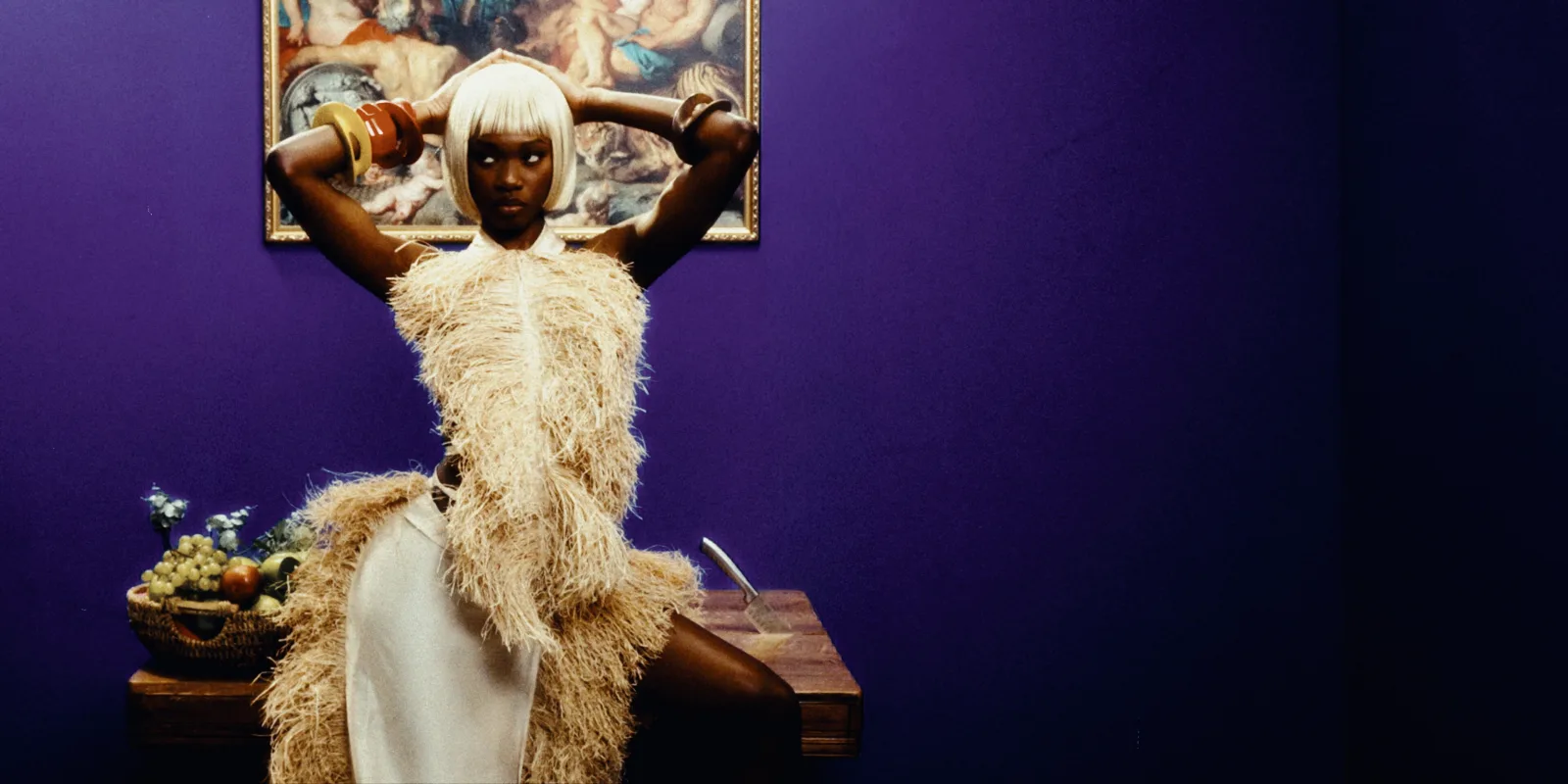
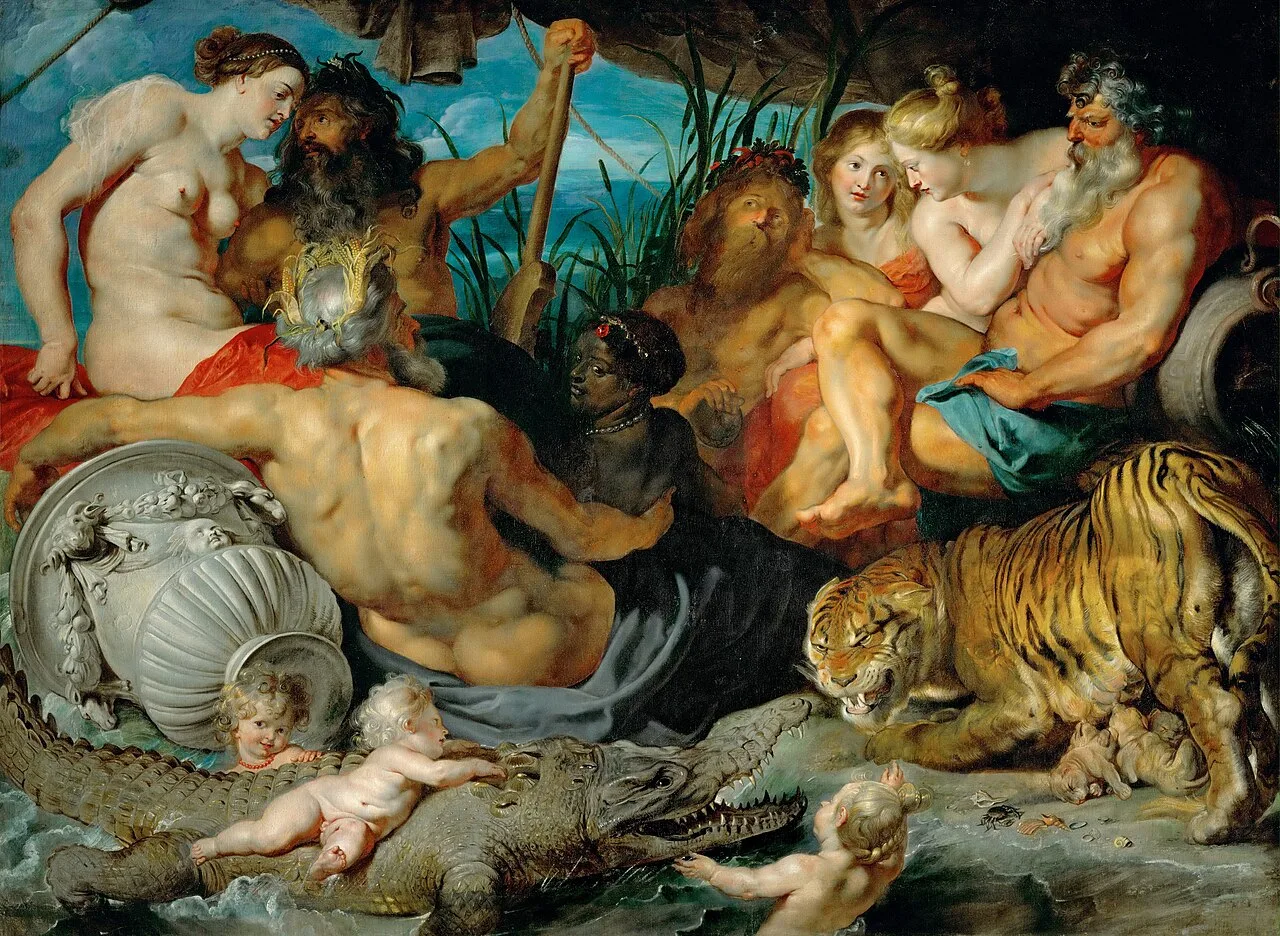
At the centre of The Four Continents, the painting Peter Paul Rubens made around 1615, now in the Kunsthistorisches Museum in Vienna, sits a Black woman. She is Africa, one of the four figures through which Rubens represents the continents then known, each beside its river. Next to her, the river god of the Nile wraps an arm around her waist. Of the four women in the painting, she is the only one who looks at the viewer.
From Her, the Sea starts here. At first the painting was meant to play a minor role. Then Jaeschel Acheampong, who signs the film's creative direction, music and set design, sent it to Julius Ewungkem Jr., a Cameroonian-American director who lives and works in New York, and the painting became the frame of the entire film.
While he was thinking about the film, Julius was reading about Olokun. In Yoruba religion, Olokun is the orisha of the ocean floor, lord of all waters and keeper of the riches the sea holds hidden: pearls, trade, fertility. The name also entered the religion of the Edo, in the Kingdom of Benin, and through the Atlantic slave trade the worship of Olokun crossed the ocean, as far as Brazilian Candomblé and Cuban Santería. Olokun is a deity of the threshold, between land and abyss, between what is seen and what remains submerged. When Jaeschel sent him the painting, Julius understood that the two things belonged together. In Rubens's painting, Africa has the Nile beside her: her figure is already bound to water. Olokun dwells at the deepest point of all waters. The film traces a path between the two, from the bank of a painted river to the bottom of the sea.
From Painting to Film
Julius and Jaeschel read The Four Continents starting from the woman at its centre, and through her they look at the way the colonial powers would later treat Africa: a land and a wealth to be possessed. The film takes up that premise and moves it elsewhere.
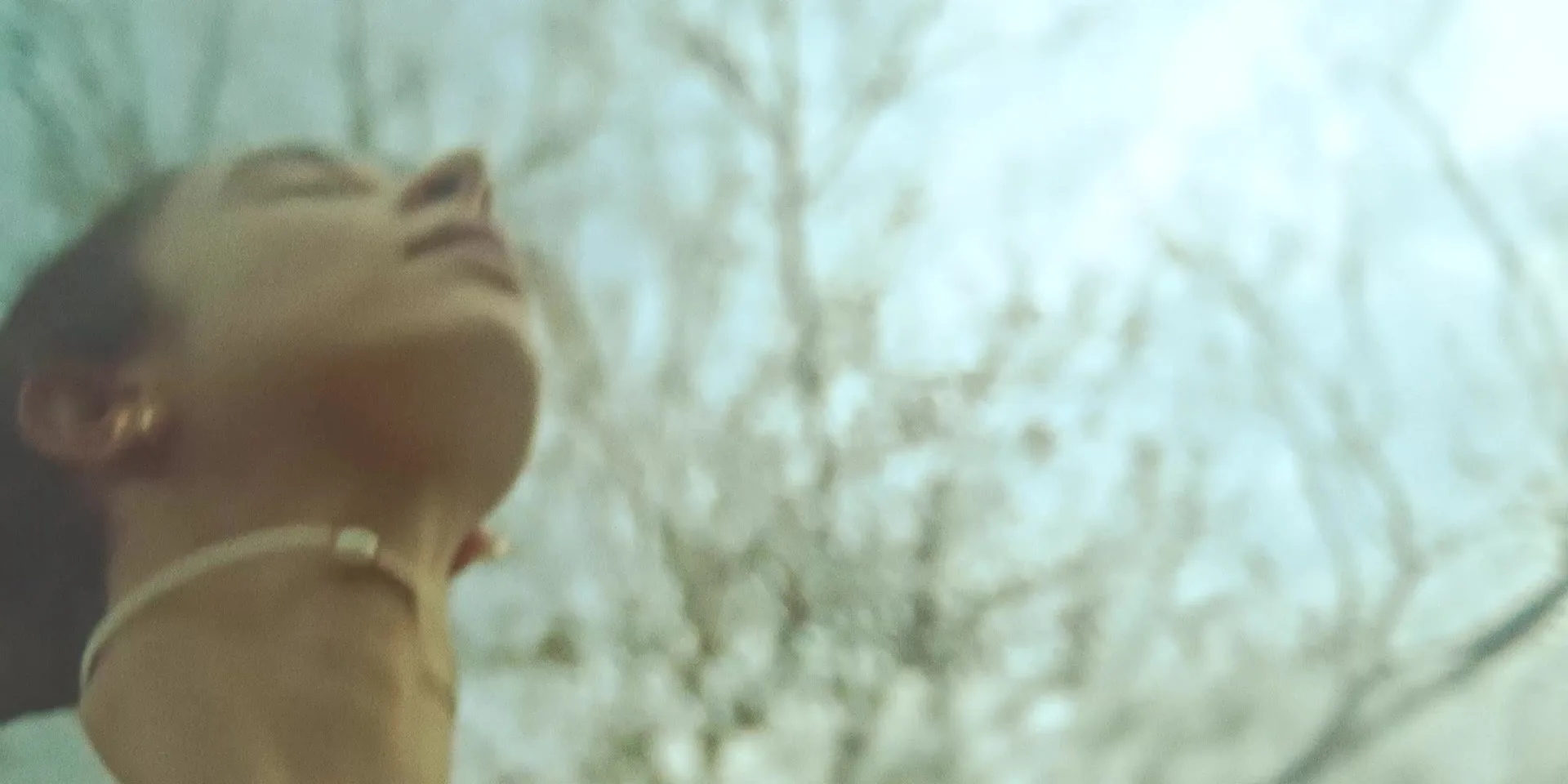
Out of the painting steps Anuket, the mythic figure played by Aida Niang. Hers is the name of an ancient Egyptian goddess of the Nile, the same river that sits beside Africa in the painting. Julius chose it deliberately: he was looking for "a name that felt really old, almost timeless, something that carried a certain weight and history before you even understood who this figure was, a mythology that felt like it existed long before the film itself." The link with the painting and with the Nile came afterwards, as a second layer of historical and mythological meaning. For Julius and Jaeschel, Anuket embodies what the colonial powers wanted to take and could not. And she is the one who calls.
The Return to the Water: A World Without Separation
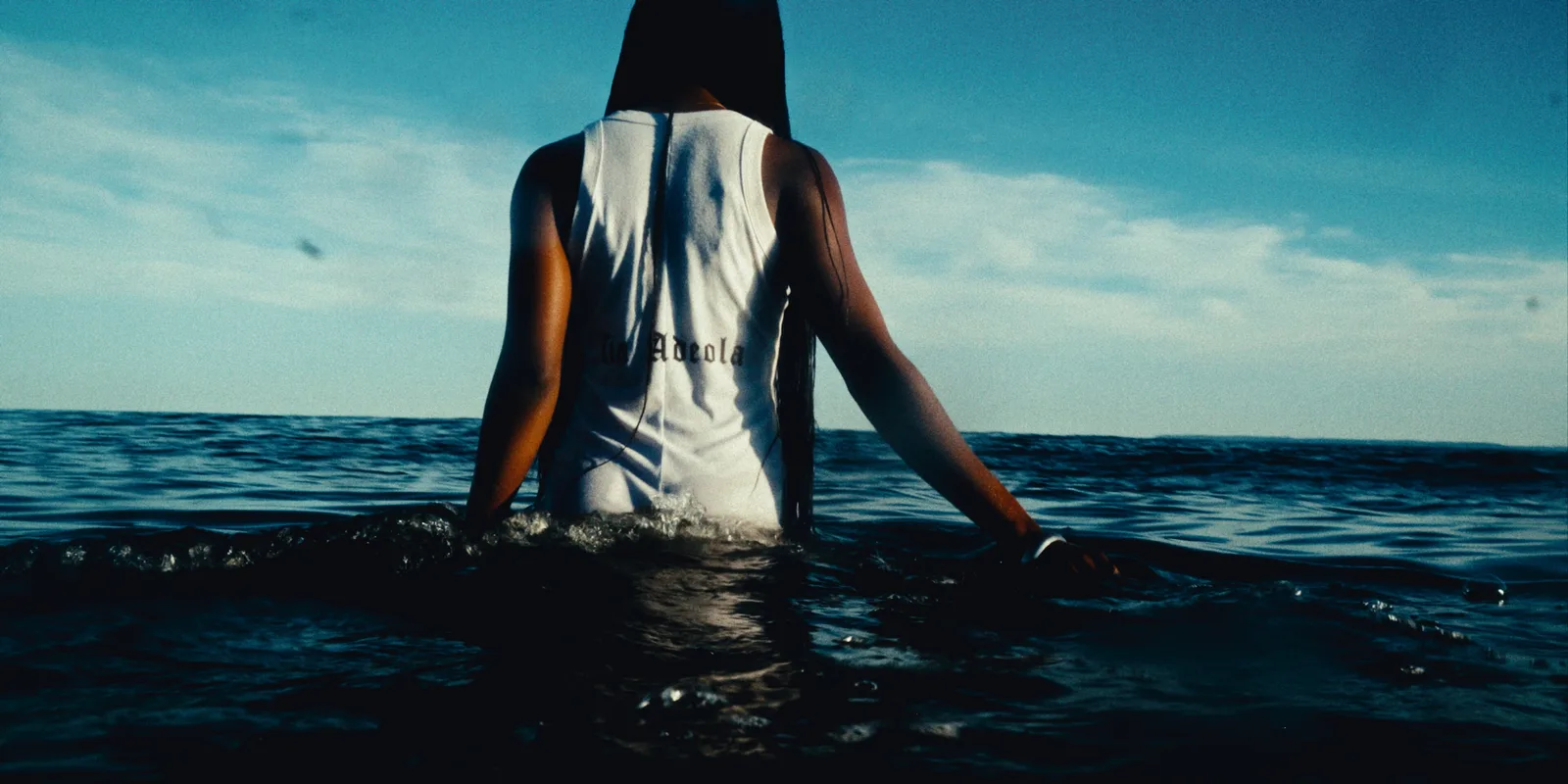
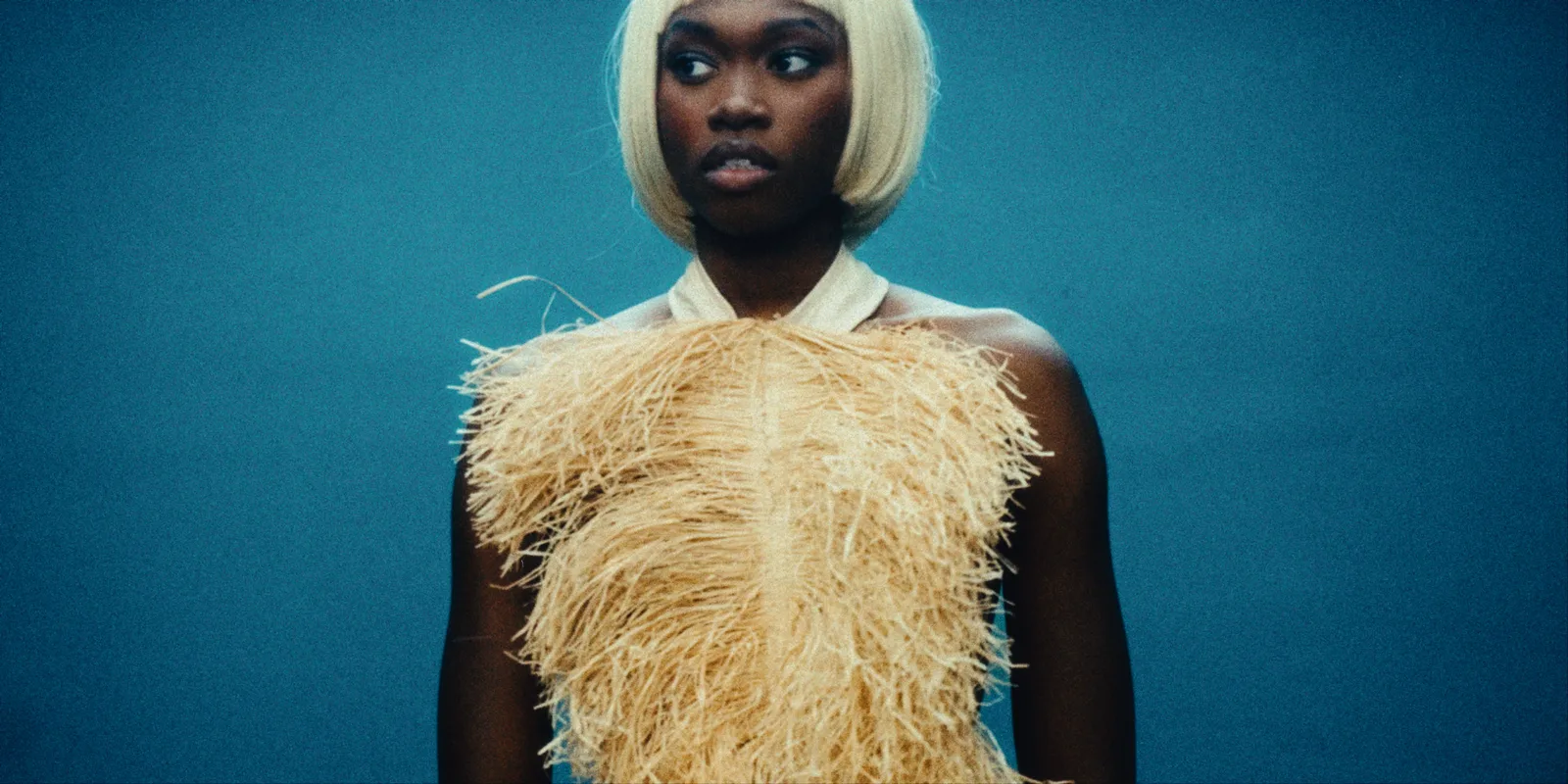
Answering the call is a woman of today, played by Dionne Mante: the human protagonist of the film. Julius describes her like this: Dionne is experiencing "a deep, almost inexplicable calling toward the water: something ancestral drawing her toward it, prophetical, but she doesn't fully understand what it is or where it's coming from; she just knows there's something she needs to pursue."
The idea for the film, Julius says, began with a conversation about femininity and confidence: someone had said that wearing Tia Adeola's clothes made them feel more confident in their femininity and womanhood. Julius took that feeling and extended it into an entire world. "I was interested in imagining a world where Black femininity could exist entirely on its own terms, what a world might look like if the many constraints had never developed in the first place. What would femininity look and feel like if it had been allowed to flourish, uninterrupted, over generations?"
The synopsis speaks of a prophecy: beneath the ocean lies a world built on feminine expression, and its goddess is Olokun. In Yoruba and Edo traditions, Olokun is revered as a male, female or androgynous figure depending on the community; here Olokun is reimagined as a female figure, a goddess. Among the stories Julius read, there is one he held on to: Orunmila, the Yoruba orisha of divination, is invited into Olokun's underwater realm and is so taken by the richness and hospitality of that world that he stays there for many years. It is the wonder of someone who enters the sea and discovers, beneath the surface, a world they had never imagined.
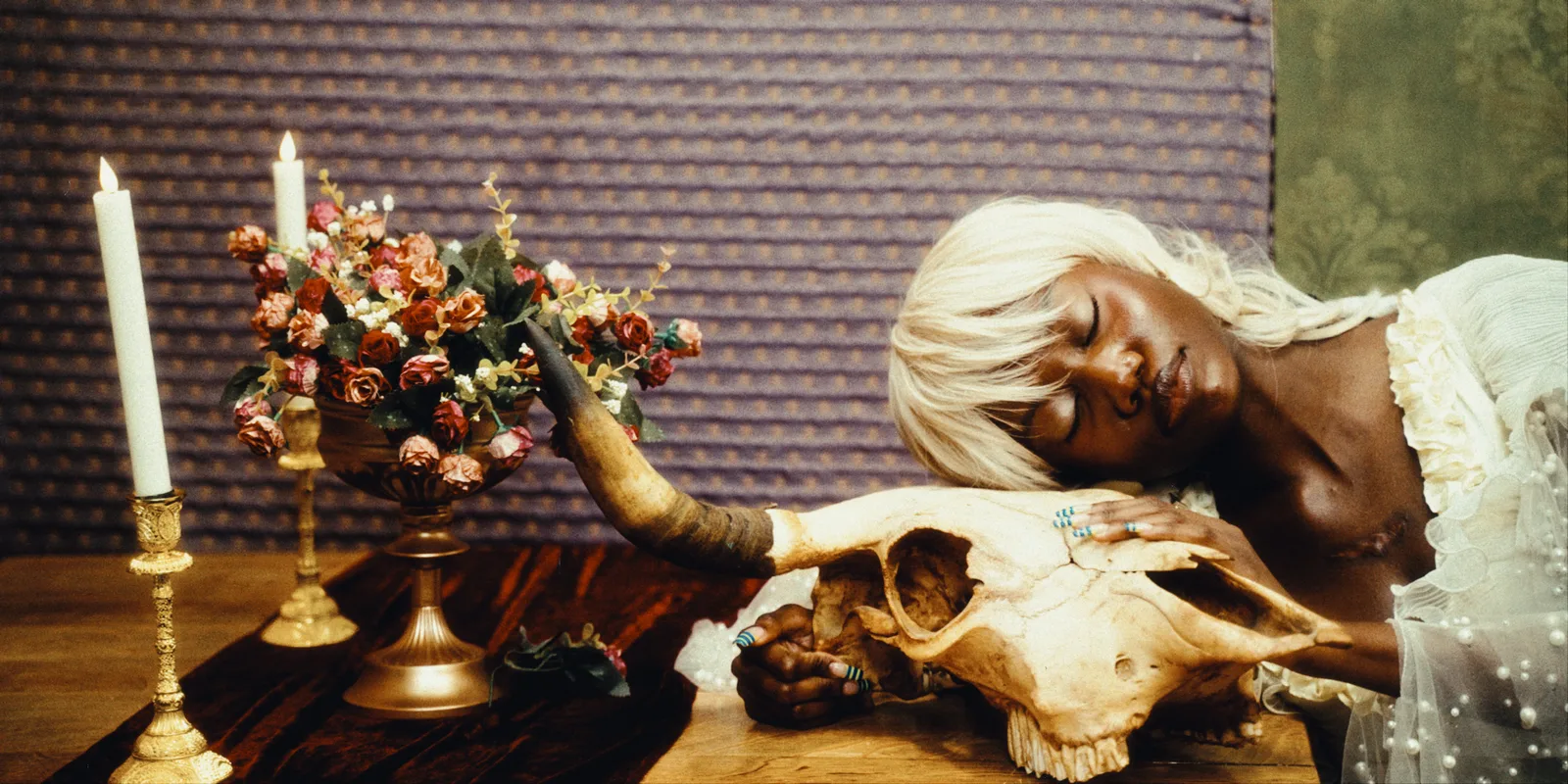
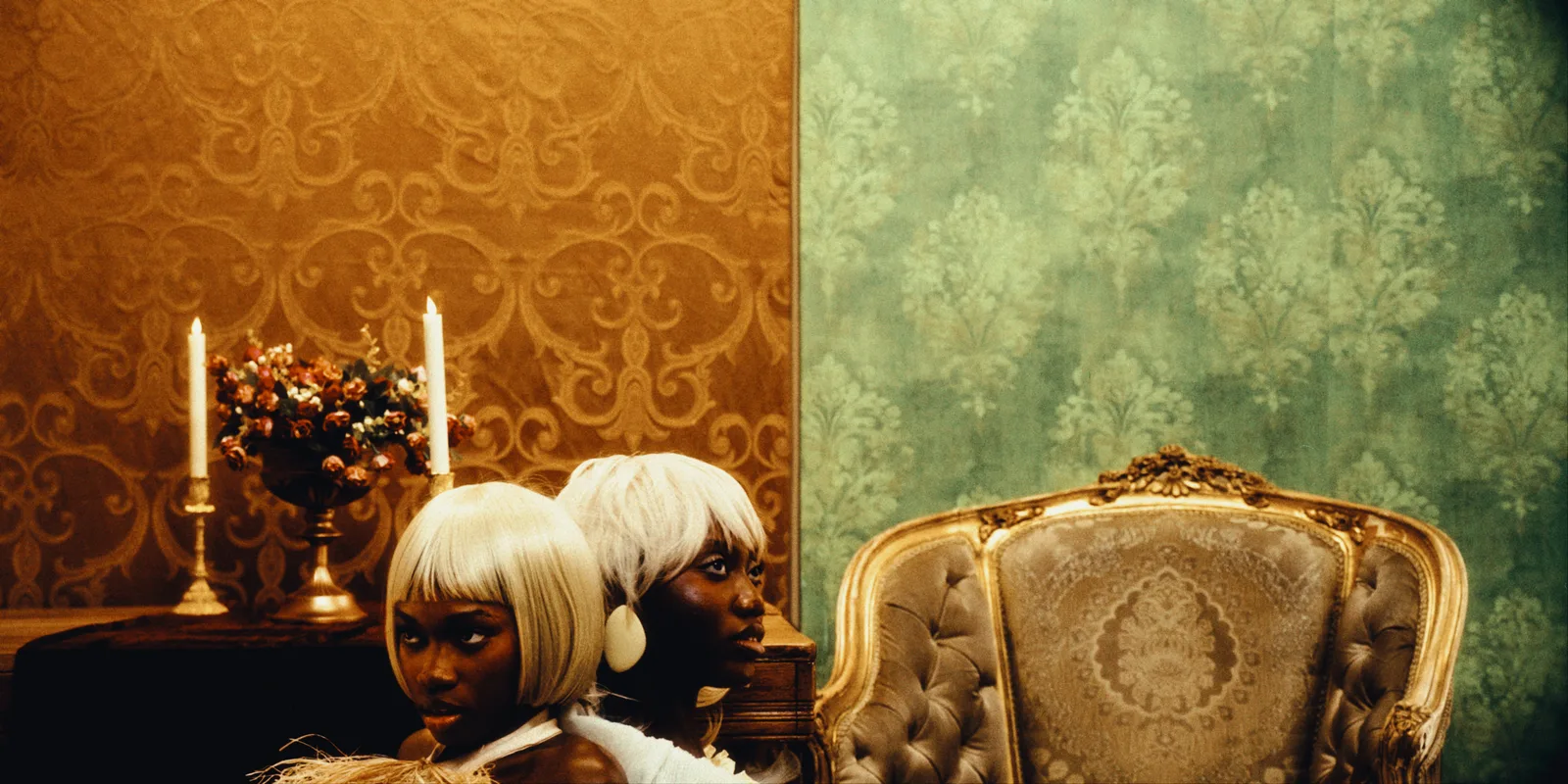
The images of the film give shape to that world: blue and violet rooms, a woman asleep on a bull's skull, a figure dressed in raffia in an empty room, the water.
Baroquen
The film speaks the language of the Baroque in order to rewrite it from within. Julius and Jaeschel drew on Stanley Kubrick's Barry Lyndon, the film in which every shot looks like a painting, and lit the rooms like the canvases of the old masters. The clothes are by Tia Adeola, for whom the film began as a fashion film.
The music is by Jaeschel. It is called "Baroquen" and it is an interpolation of Johann Sebastian Bach's Cello Suite No. 5. The title plays between baroque and broken, and the film does the same with its images: it takes the form of the Baroque, breaks it and puts it back together as a new world.
Why We Are Hosting This Film
From Her, the Sea began as a commissioned fashion film: a work of under three minutes that holds together art history, myth, fashion and music, and enters an image from the past to reopen it from another point of view, that of the figure seated at its centre. This is the ground of our Art & Moving Image collection, where the moving image meets different worlds. With AOTA, Julius is building a creative collective, and the film carries the signature of several authors: Julius's direction, cinematography, editing and colour; Jaeschel's creative direction, music, sound and set design; Tia Adeola's clothes; the bodies, gestures and performances of Dionne Mante and Aida Niang.
Julius Ewungkem Jr. says his films begin with questions he cannot resolve. We are drawn to stories that open up questions and spaces for reflection and exchange, more than they offer answers, and we like that Julius sets out to build exactly those spaces, where the viewer can stay inside the tension. "Dionne enters the water in search of something she can feel but can't quite articulate," Julius says, "something that connects her to a much older sense of womanhood and femininity, something that perhaps has always existed within her but that she hasn't yet been able to access. She's entered this otherworld, experienced something that she perhaps didn't know was possible, and encountered a version of femininity and freedom that exists without the constraints she's accustomed to."
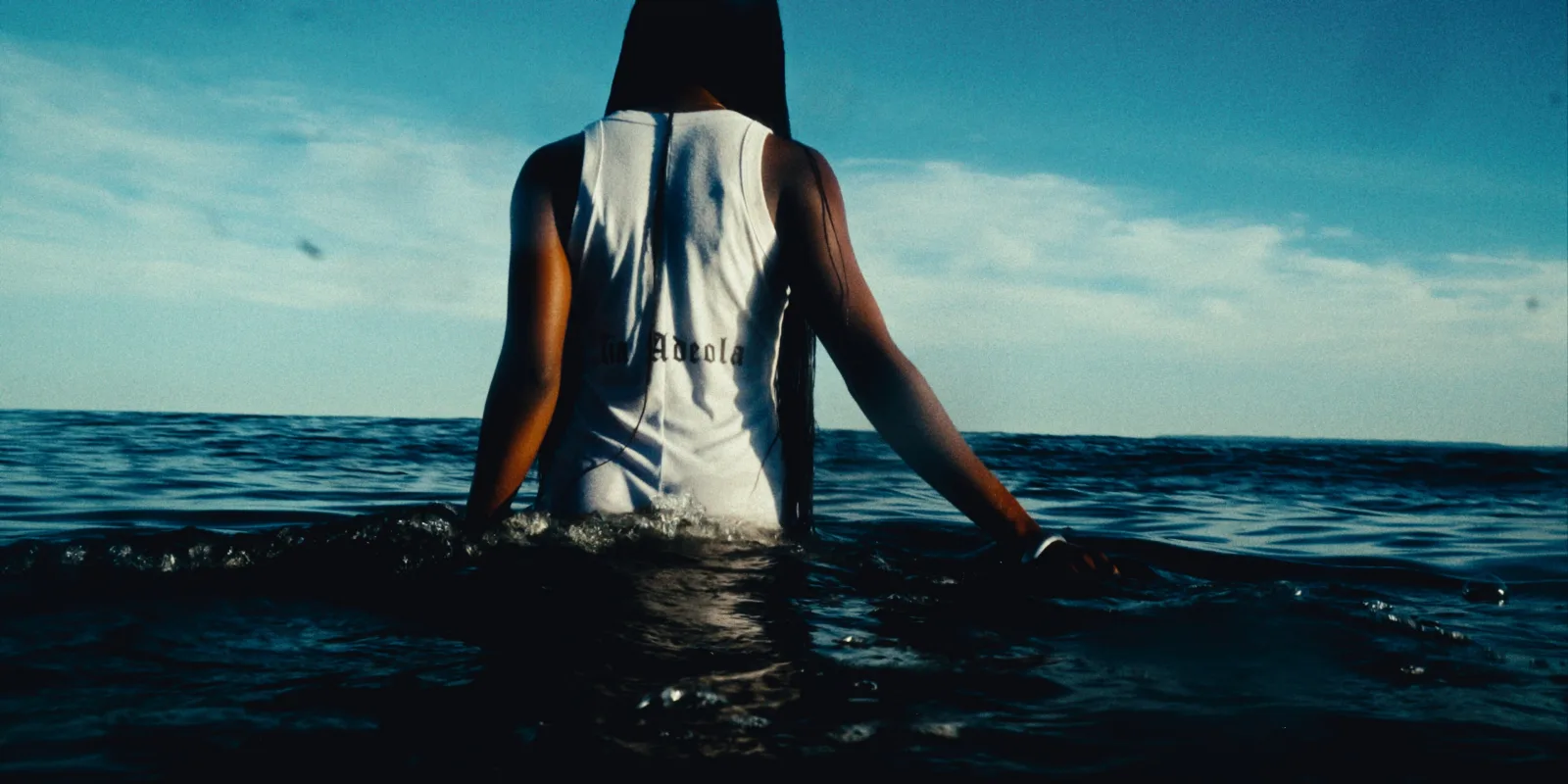
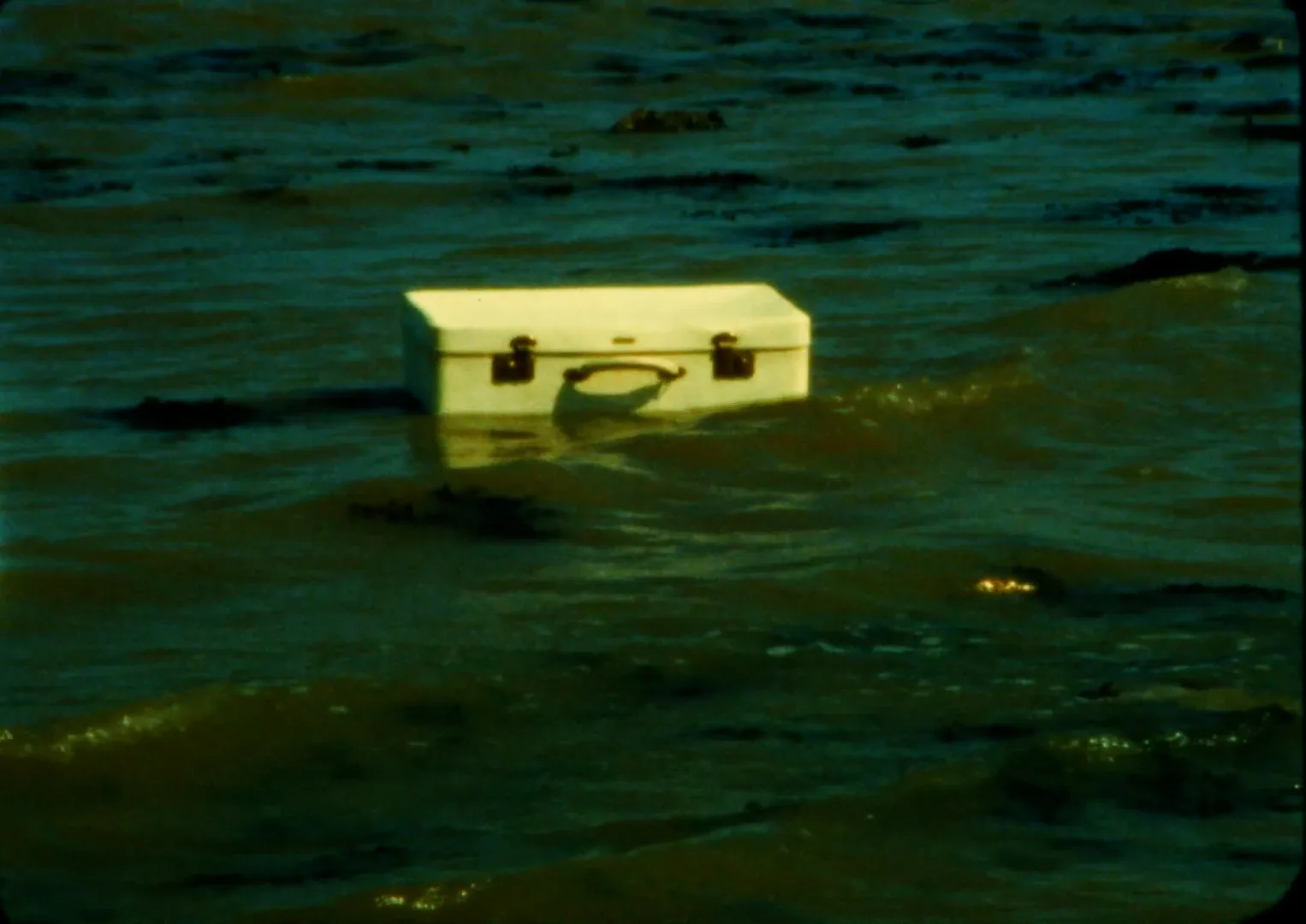
This is not the first time that the sea, in our catalogue, has received or given back a figure from myth. In Perseus a closed chest, holding the story of a mother and a child, is entrusted to the waves. In Ill Fares The Land the sea leaves a mermaid on the shore at Dungeness, and the story carries with it the wish to return to the world she comes from, as our Visual Notes in seventeen frames tell it, from the sea to the shore and back to the sea. In From Her, the Sea a mythic figure steps out of a Baroque painting, and a woman answers her call by going to meet the water, to find again a world built on feminine expression: a world without separation.
From Her, the Sea now has a home here.
Watch
Now streaming: From Her, the Sea, Julius Ewungkem Jr.